Poisonous & Toxic Species
Never touch, taste, or consume any species you cannot positively identify. This guide is for educational purposes only. When in doubt, consult a local expert. Use the iNature app for quick AI-powered identification in the field.

Horseradish
Armoracia rusticana P.Gaertn., B.Mey. & Scherb.
Armoracia rusticana, or horseradish, is a widely cultivated plant grown for its pungent root, used in cooking and for an enzyme in biomedical research.
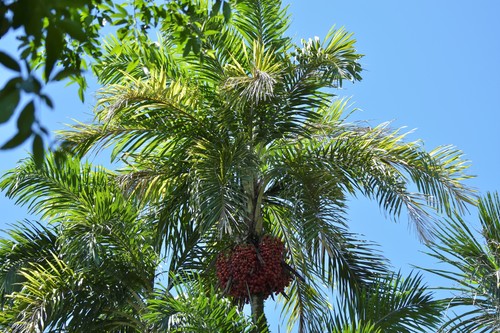
peach-palm
Bactris gasipaes Kunth
Bactris gasipaes, or peach palm, is a Neotropical domesticated palm grown for edible fruit and heart of palm.
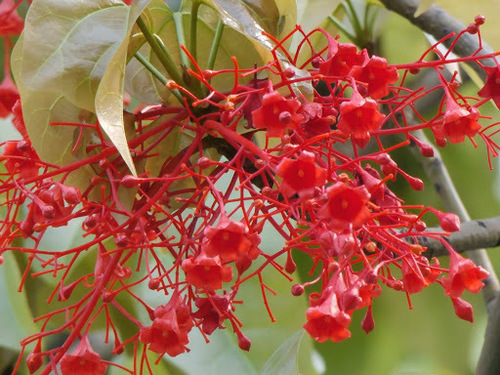
flame tree
Brachychiton acerifolius (A.Cunn. ex G.Don) F.Muell.
Brachychiton acerifolius, the Illawarra flame tree, is an Australian large ornamental deciduous tree with bright red flowers

kurrajong
Brachychiton populneus (Schott & Endl.) R.Br.
Brachychiton populneus (kurrajong) is a drought-tolerant Australian tree with two subspecies and a long history of varied human uses.
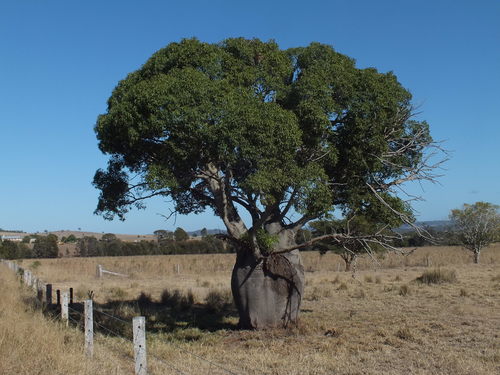
Queensland Bottle Tree
Brachychiton rupestris (Lindl.) Schum.
Brachychiton rupestris, the Queensland bottle tree, is a succulent tree native to central Queensland with many human uses.
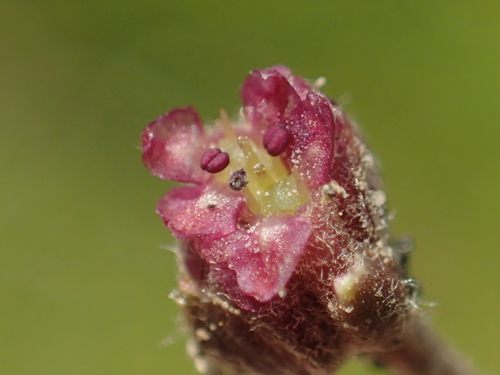
Indian pennywort
Centella asiatica (L.) Urb.
Centella asiatica is a creeping wetland plant native to multiple regions, used in traditional medicine and studied for phytoremediation.
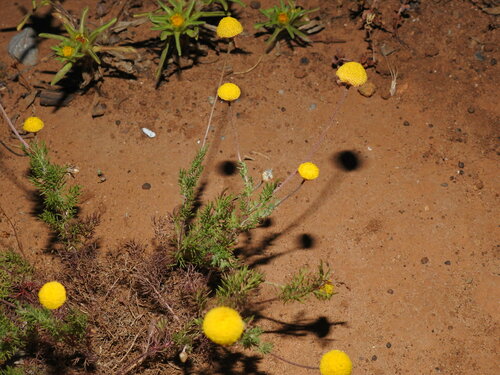
Roman Chamomile
Chamaemelum nobile (L.) All.
Chamaemelum nobile, commonly called Roman chamomile, is an aromatic plant widely used in cosmetics, aromatherapy, and lawn gardening.
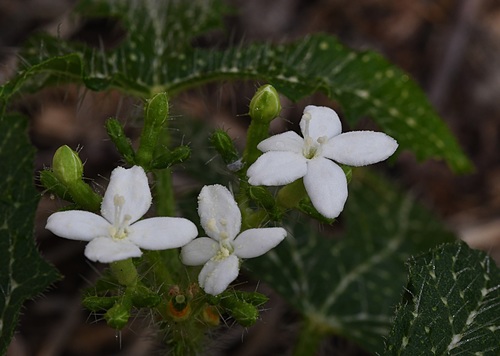
spurge nettle
Cnidoscolus stimulosus (Michx.) Engelm. & A.Gray
Cnidoscolus stimulosus is a stinging-hair covered herb native to the southeastern US Coastal Plains with edible taproots.
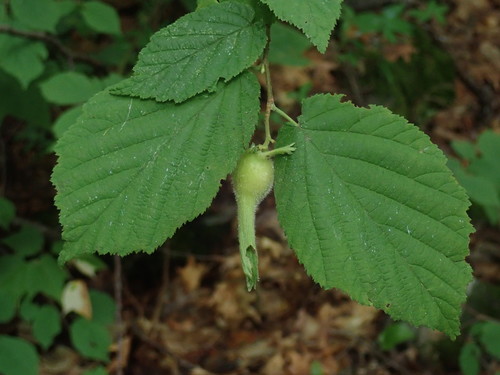
beaked hazelnut
Corylus cornuta Marshall
Corylus cornuta (beaked hazelnut) is a hardy North American shrub with edible nuts used by wildlife and people.
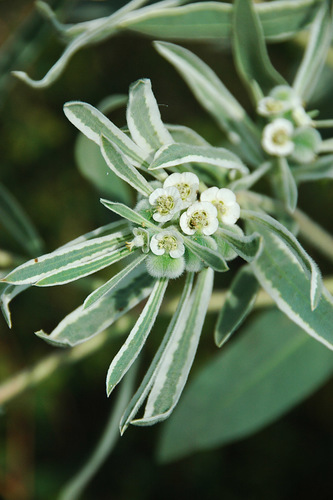
snow-on-the-prairie
Euphorbia bicolor Engelm. & A.Gray
Euphorbia bicolor, or snow on the prairie, is a flowering spurge native to the southern US with irritant sap and studied analgesic extract.
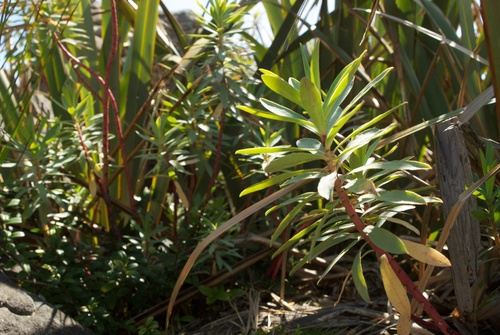
Shore Spurge
Euphorbia glauca G.Forst.
Euphorbia glauca is a New Zealand endemic perennial herb that produces irritating milky sap.
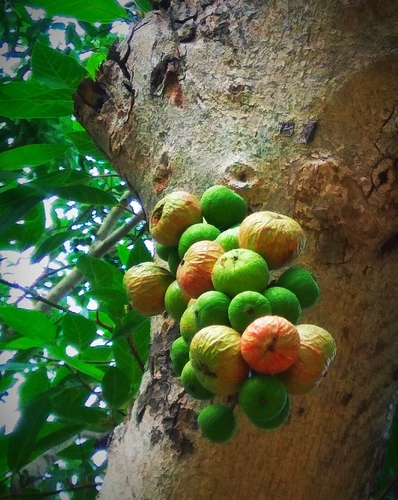
Cluster Fig
Ficus racemosa L.
Ficus racemosa (cluster fig) is a tree native to South Asia, Southeast Asia and northern Australia, grown for edible parts and traditional remedies.
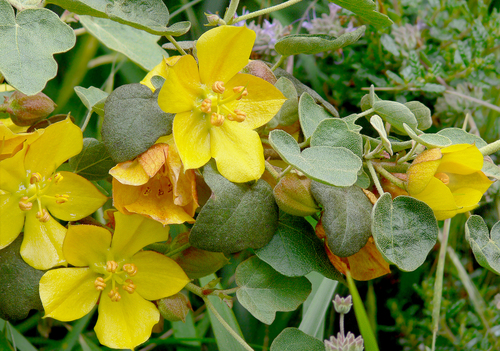
California flannelbush
Fremontodendron californicum (Torr.) Coult.
Fremontodendron californicum is an irritant-hairy flowering evergreen native to western North America, cultivated ornamentally and used by Indigenous peoples.
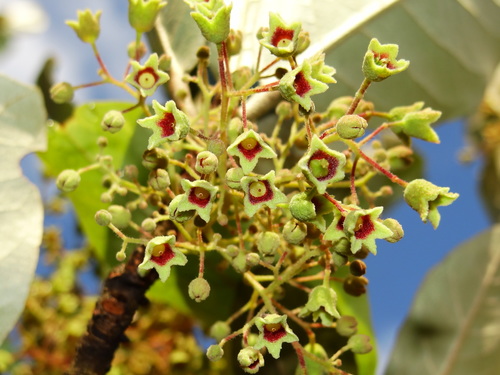
Looking-glass mangrove
Heritiera littoralis Dryand. ex Aiton
Heritiera littoralis Dryand. ex Aiton is an evergreen mangrove-edge tree harvested for durable salt-resistant timber with multiple traditional uses.
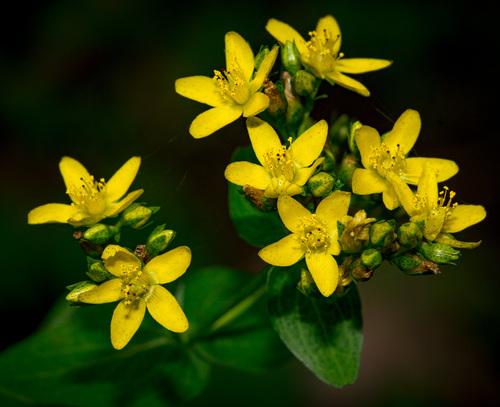
spotted St. John's wort
Hypericum punctatum Lam.
Hypericum punctatum Lam. is a spotted-stemmed herb native to North America, that grows in moist open habitats and supports local pollinators.
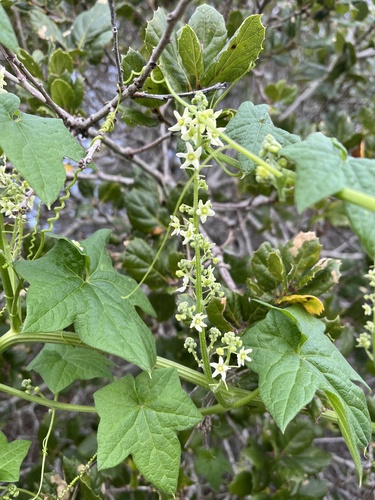
California manroot
Marah fabacea (Naudin) Greene
Marah fabacea, California manroot/bigroot, is a common native California vine with traditional Native American fishing uses.
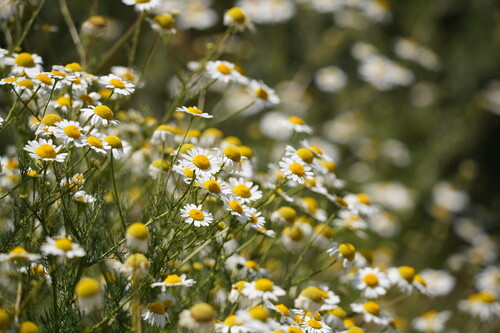
German Chamomile
Matricaria chamomilla L.
Matricaria chamomilla (German/blue chamomile) is an aster used for tea and herbal medicine with potential adverse effects.
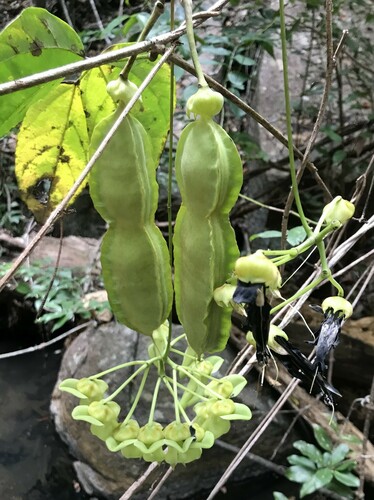
Burny Bean
Mucuna gigantea (Willd.) DC.
Mucuna gigantea is a large woody tropical climbing vine with documented human uses including food and medicine.
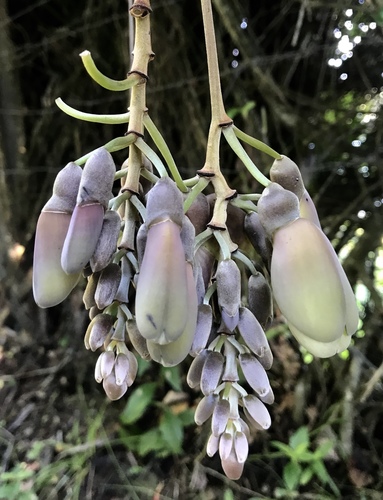
Ox-eye Bean
Mucuna urens (L.) Medik.
Mucuna urens is a climbing neotropical liana used in traditional medicine and for practical products.
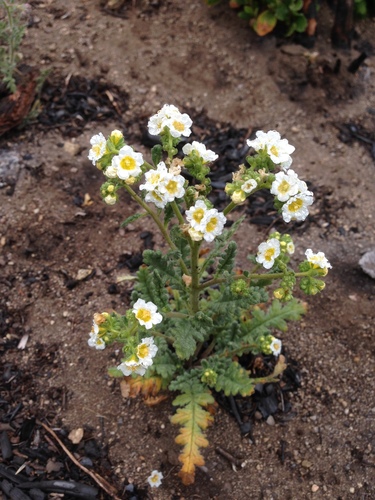
Shortlobe Phacelia
Phacelia brachyloba (Benth.) A.Gray
Shortlobe phacelia (Phacelia brachyloba) is an annual fire-following herb native to California and Baja California that may cause skin rash.
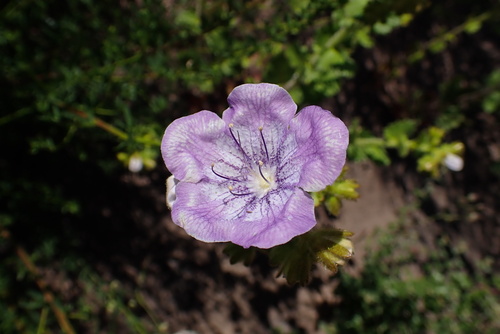
Large-flowered Phacelia
Phacelia grandiflora (Benth.) A.Gray
Phacelia grandiflora is an annual herb with purple-blue bell flowers, whose glandular hairs may cause contact dermatitis in some people.
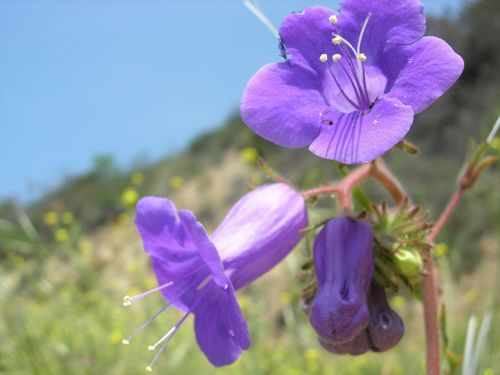
wild canterbury bells
Phacelia minor (Harv.) Thell.
Phacelia minor is an annual flowering herb reported to cause contact dermatitis in some people via secreted glandular hair oils.
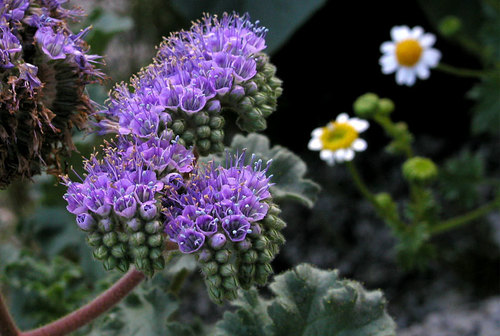
pedicellate phacelia
Phacelia pedicellata A.Gray
Phacelia pedicellata, or specter phacelia, is an annual flowering herb native to southwestern North America that can cause contact dermatitis.
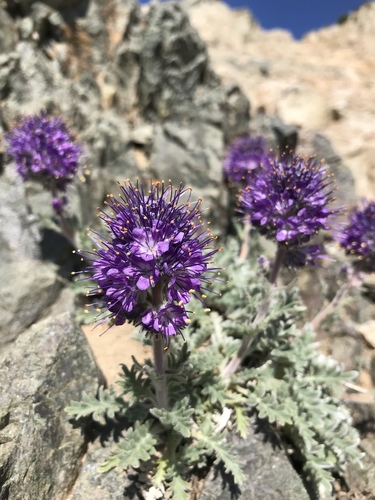
Silky Phacelia
Phacelia sericea (Graham) A.Gray
Phacelia sericea is a silvery-haired subalpine-alpine flowering plant native to western North America, suitable for Colorado roadside landscaping but may irritate skin.
Start Exploring Nature Today
Download iNature for free. 10 identifications on us. No account needed. No credit card required.
Download Free on App Store
