About Podocarpus macrophyllus (Thunb.) Sweet
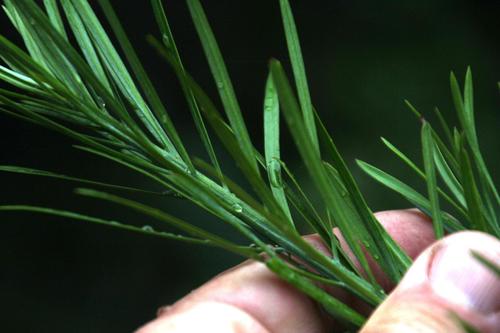
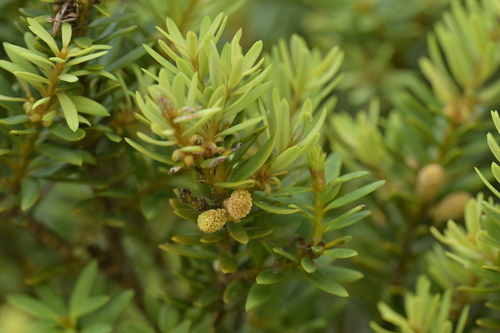
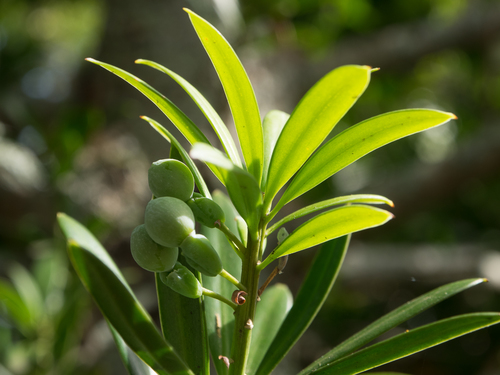
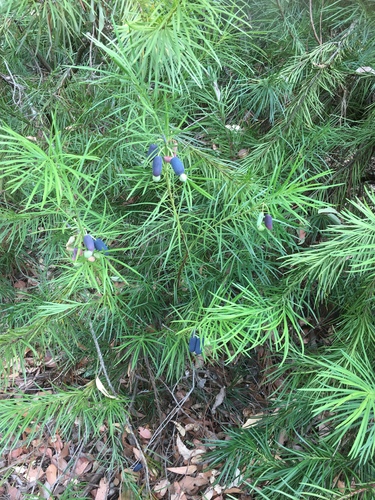
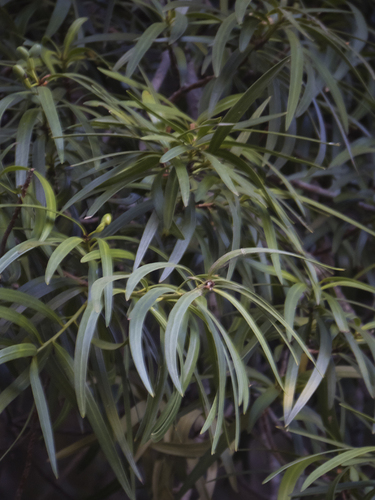
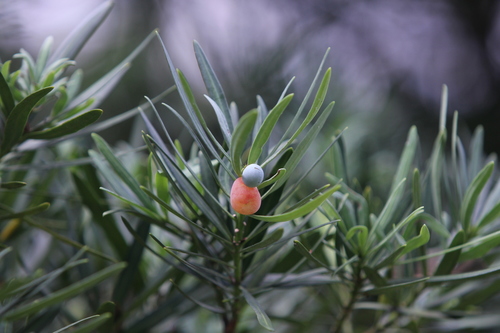
Podocarpus macrophyllus (Thunb.) Sweet is a small to medium-sized evergreen tree that grows up to 20 m (66 ft) tall. Its leaves are strap-shaped, measuring 6–12 cm (2.4–4.7 in) long and around 1 cm wide, with a distinct central midrib. Its cones grow on short stems and have two to four scales; usually only one, and sometimes two, of these scales are fertile. Each fertile scale holds a single apical seed 10–15 mm in size. When the cones reach maturity, the scales swell and turn into reddish purple, fleshy, berry-like structures 10–20 mm long. Birds eat these mature structures and disperse the seeds through their droppings. This species grows in forests, open thickets, and roadsides at elevations ranging from near sea level up to 1000 m above sea level. Also known as kusamaki, inumaki, and Buddhist pine, it holds multiple cultural and practical roles. Kusamaki is the official state tree of Chiba Prefecture, Japan. It is a popular large shrub or small tree for garden planting, especially in Japan and the Southeastern United States. The ripe fleshy cone arils are edible, but the seed itself should not be eaten. Because it resists termites and water damage, inumaki wood is used to build quality wooden houses in Okinawa Prefecture, Japan. In Hong Kong, Buddhist pine is highly valued as a feng shui tree, which gives it a very high market value. In recent years, illegal digging of Buddhist pine has become a problem within the city. This species can also be trained and grown as a bonsai.