About Podarcis erhardii (Bedriaga, 1882)
Size
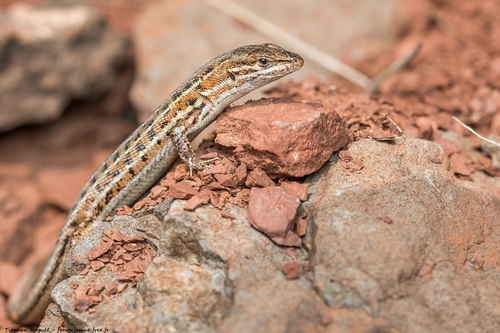
Erhard's wall lizard, Podarcis erhardii (Bedriaga, 1882), has a snout-to-vent length of approximately 7 cm (2.8 in), with a tail twice as long as its snout-to-vent measurement. It has a rather wide head and smooth skin.
Coloration Variation
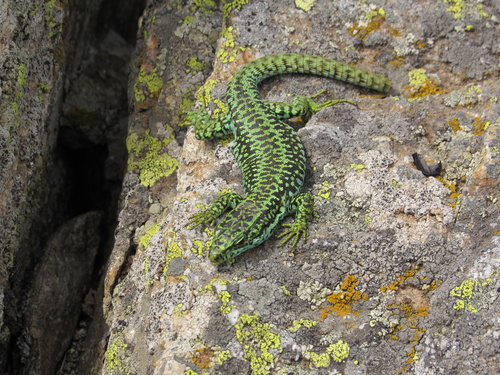
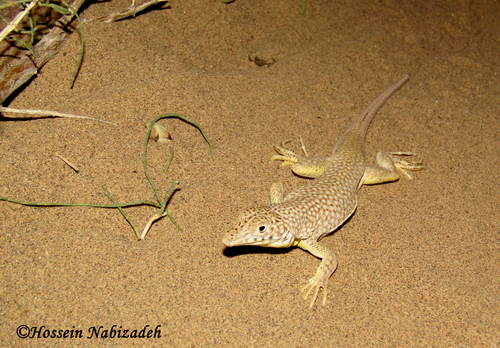
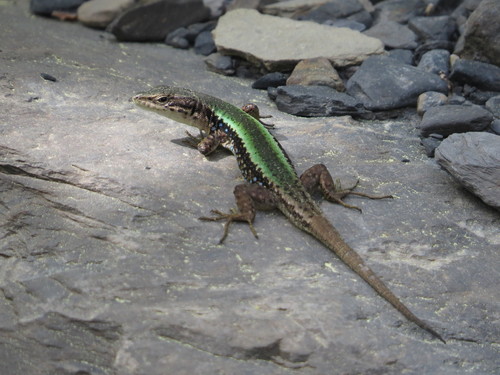
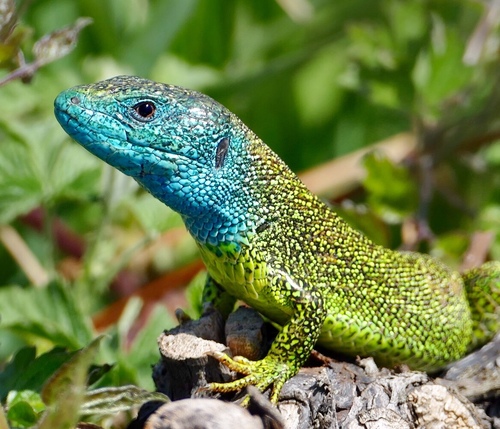
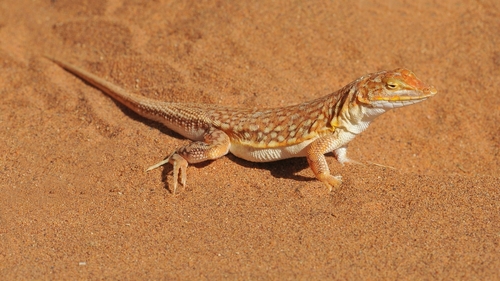
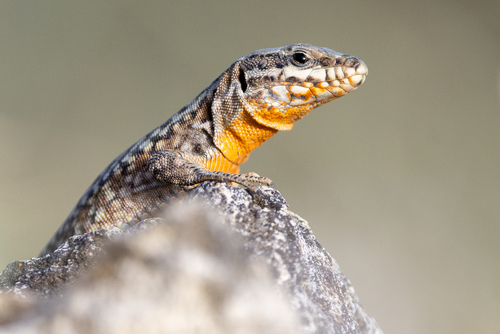
This species displays extensive variation in color and patterning. Its main base color is typically grey or brown, and is sometimes green.
Body Patterning (Females)
Females in particular often have striped patterning. Along the edges of the back, two white stripes border two dark stripes or lines of spots.
Dorsal Patterning Details
A dark line may be present down the middle of the back. Some males have net-like patterning that mixes longitudinal and transverse lines with spots.
Ventral and Limb Coloration
The belly, and often the throat, are white, yellow, orange, or red; on the Aegean Islands, these areas can also be green, blue, or grey. The belly is never spotty, but blue spots sometimes appear on the hind legs.
Species Distribution
Podarcis erhardii is native to the Balkan peninsula and the Aegean islands. On the mainland, its range extends from Albania, North Macedonia, extreme southern Serbia, and southern Bulgaria to the northeastern portion of the Peloponnese peninsula in Greece.
Aegean Archipelago Distribution
Within the Aegean archipelago, it is not found on Milos or the surrounding islands, where it is replaced by the Milos wall lizard.
Habitat Preferences
Erhard's wall lizard inhabits dry or rocky locations with dense, low bushes, and is a very good climber. Populations in the Aegean archipelago also live in open areas such as plant-covered dunes.
Reproduction
Podarcis erhardii mates in spring and lays eggs at the start of summer. Hatchlings emerge in September and measure 3 cm (1.2 in) at that time.