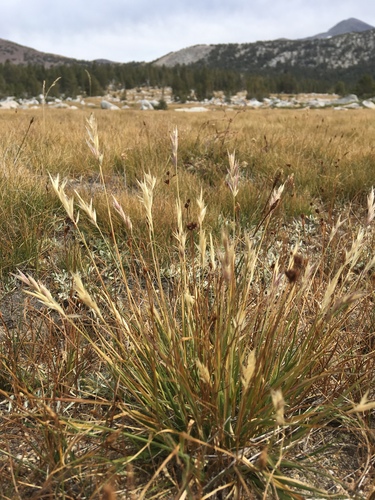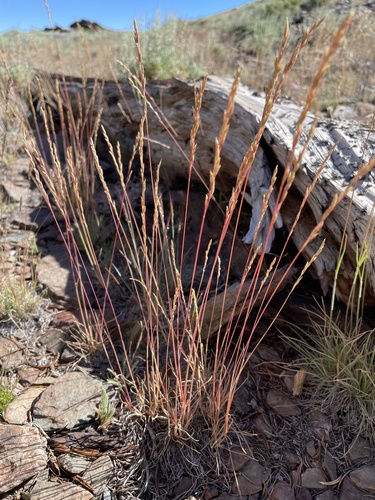
About Poa secunda J.Presl
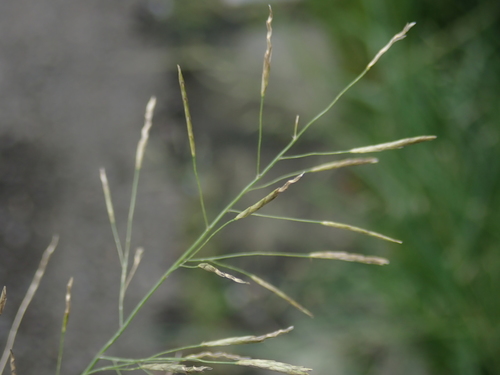
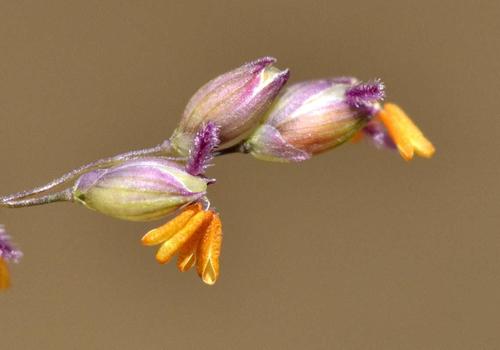
Poa secunda J.Presl has many common names, including Sandberg bluegrass, alkali bluegrass, big bluegrass, Canby's bluegrass, Nevada bluegrass, one-sided bluegrass, Pacific bluegrass, pine bluegrass, slender bluegrass, wild bluegrass, and curly bluegrass. It is a widespread species of perennial bunchgrass native to North and South America. This species is highly resistant to drought, provides excellent fodder, and is used for soil erosion control and revegetation, most often after forest fires. Its known cultivars are 'Canbar', 'Service', 'Sherman', and 'Supernova'. Historically, Indigenous American groups such as the Gosiute of Utah have used Poa secunda as food. It was first formally described botanically in 1830 by Jan Svatopluk Presl, based on a holotype collected in Chile by Thaddäus Haenke in 1790. In North America, Poa secunda is native to Canada (Alberta, British Columbia, eastern Quebec, southern Saskatchewan, southern Yukon Territory, and rarely occurs in Ontario), the United States (southeastern Alaska, Arizona, California, Colorado, the Dakotas, Idaho, Isle Royale in Michigan, Montana, northwestern Nebraska, Nevada, New Mexico, Oregon, Utah, Washington, and Wyoming), and northwestern Mexico. In South America, it is native to Argentina (found in Chubut, Neuquén, and Santa Cruz) and central Chile.