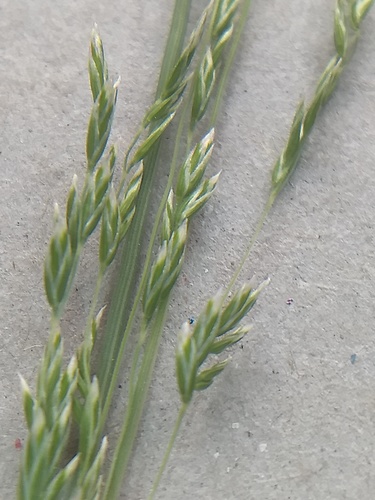
About Poa labillardierei Steud.
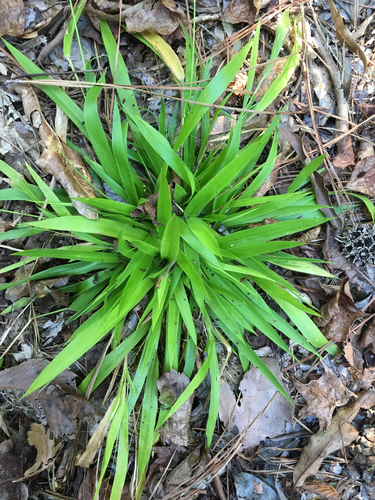
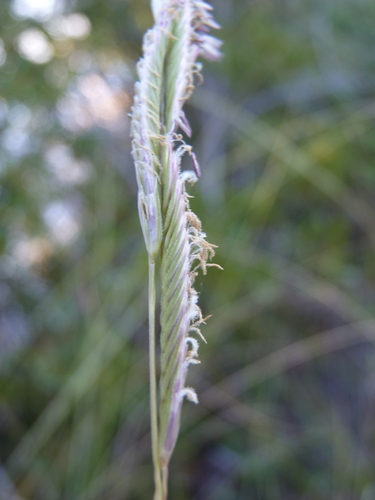
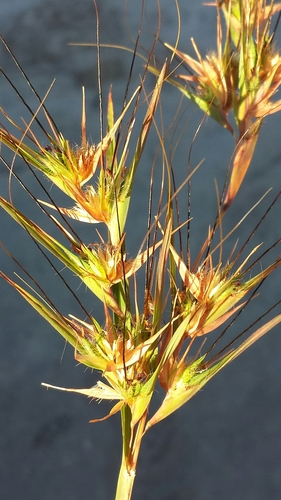
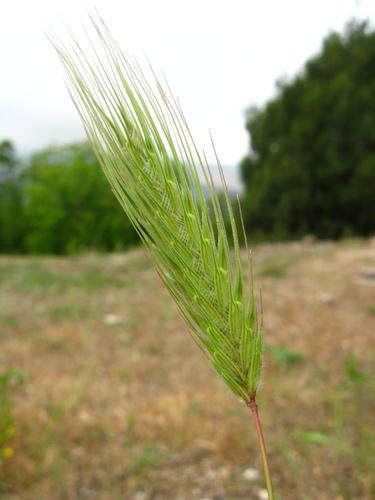
Poa labillardierei Steud. is a dense, coarsely tufted perennial grass that can reach a height of 120 cm. It germinates from seed or by division. Most of its leaves are basal and very long; the leaf sheath is usually pallid at the base, and the upper sheath is roughly scabrous. The ligule is approximately 0.5 mm long and truncate. Blades grow up to 80 cm long, are flat or inrolled, up to 3.5 mm wide, scabrous, moderately rigid, and end in a fine, setaceous tip. Poa labillardierei flowers from spring to summer. Its inflorescences are 10–25 cm long, with erect or loosely erect, spreading branches. Spikelets hold 3–4 (up to 8) flowers, and are strongly laterally compressed. Glumes range from broad to rather narrow, and are subacute to occasionally subacuminate. Lemmas are firm, narrow to moderately broad, and usually hairy; a copious web of long hairs is usually present. The palea is firm, with closely scabrous keels. Poa labillardierei grows most commonly in open forest communities, grassy woodland communities, and moister frequently wet areas on low slopes and valley floors. It also grows on river flats and can extend up open sheltered slopes. This species is frost tolerant. It is very commonly used in home gardens and landscaping. It is a vigorous and tolerant grass that adds vertical interest to landscaping settings. Poa labillardierei regenerates well after burning, as long as the fire is not very hot for an extended period of time. Poa labillardierei is found in southern and eastern Australia, including Tasmania. This common tussock-grass can form the dominant ground layer in South-East Australian grasslands, with examples including the Victorian Volcanic Plains and Gippsland Plains Grassy Woodland. This is partly due to its ability to regenerate well after fire and outcompete other species. Common tussock grass provides excellent habitat for invertebrates, supporting both high abundance and species richness. A study comparing plantings in urban parks that were either indigenous (with species endemic to the area), native, or non-native found that one patch of Poa labillardierei supported more indigenous insect species than any other plant across all groups. This suggests the species is ideal for supporting biodiversity, especially in urban settings that support few invertebrates. Reptiles also rely on the habitat provided by common tussock grass, including the tussock skink and blue tongue lizard. First Nations peoples use the long leaves and stems of Poa labillardierei as string for basket making. Recorded Indigenous names include Bobat (Woi wurrung) and Bowat (Wurundjeri).