About Poa fendleriana (Steud.) Vasey
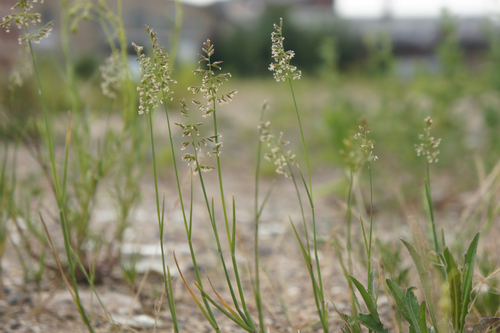
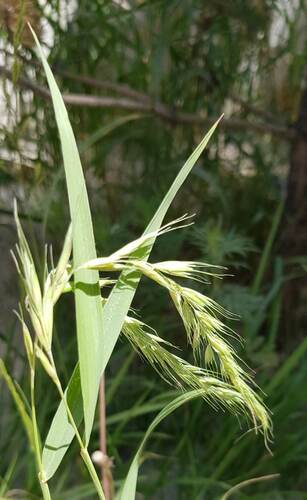
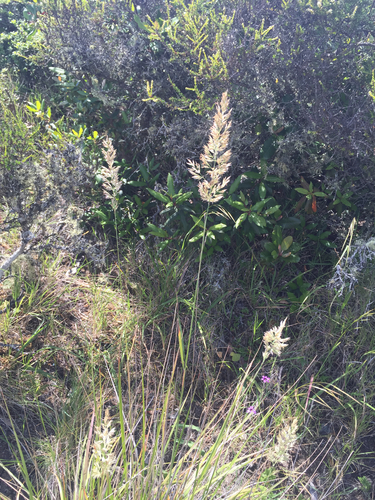
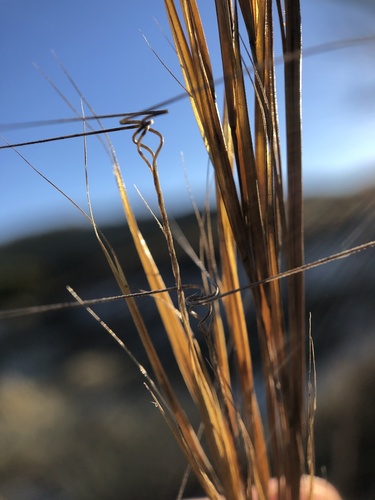
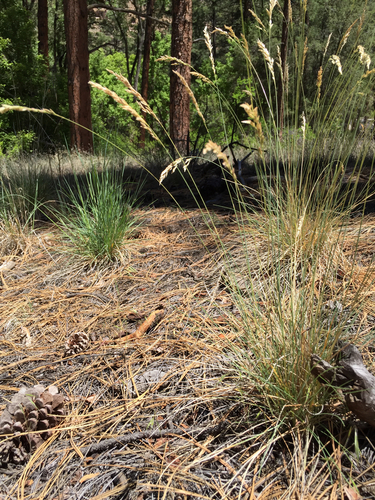
Poa fendleriana (Steud.) Vasey is a perennial grass that grows from small rhizomes. Its stems can reach up to 70 centimeters in height, and dead leaf sheath bases stay attached to the plant for a long time. It produces a narrow panicle with up to 8 erect branches packed tightly with spikelets, and a single inflorescence may hold over 100 spikelets. This grass is dioecious, meaning male and female flowers grow on separate individual plants. Some populations have no male plants, while others are capable of sexual reproduction. Asexual reproduction is more common than sexual reproduction, and most populations consist entirely of female plants. All-female populations produce seeds without fertilization from pollen. Sexually reproducing populations typically grow in warmer climates that receive summer precipitation, while all-female populations can tolerate colder climates and survive across a wider range of elevations. This species is a common grass native to western North America. It grows in a wide variety of habitat types, including sagebrush, oak woodlands, pinyon-juniper woodlands, desert grassland, and coniferous forest. It most often occurs in dry areas, but it can also grow in moist habitats like riversides. It tolerates many different soil types, and grows primarily on open sites or in partial shade; it cannot survive in the full shade of a closed forest canopy. It acts as a dominant plant species in several habitat types.