About Poa cita Edgar
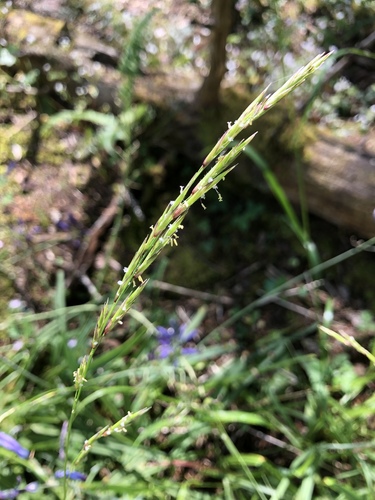
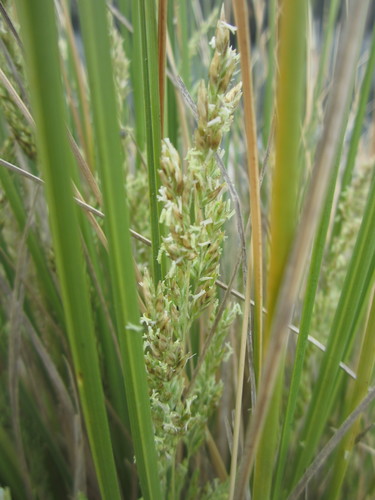
Poa cita, commonly called silver tussock, is also known by the Māori names wī and pātītī. It is a grass species in the family Poaceae that is endemic to New Zealand. It was first formally described and named Poa cita by Elizabeth Edgar in 1986; before this, it was classified under the name Poa caespitosa. This grass occurs across most of New Zealand, ranging from the Kermadec Islands south to Stewart Island / Rakiura, and east to the Chatham Islands. It has not been recorded from the area between Raglan and Manawatū on the western North Island, with the only exception being Mount Taranaki. It typically grows 0.3 to 1.0 metres tall. When growing on steep banks, it can hang downwards to reach 2 metres in total length. It produces very fine, narrow leaves, that are most commonly 1 to 1.5 millimetres wide, and can grow up to 2.5 millimetres wide. Leaf width of this species varies across New Zealand: plants in the central North Island have narrow, needle-like leaves, while plants in the northern North Island have relatively wider leaves.