About Pluchea camphorata (L.) DC.
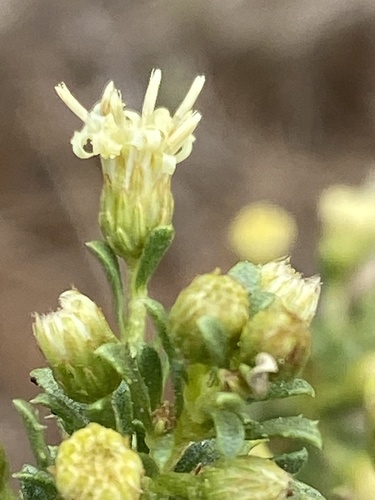
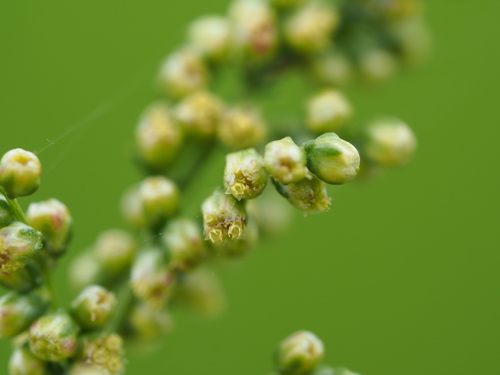
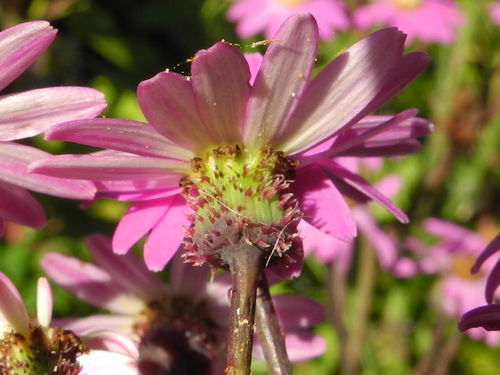
Pluchea camphorata (L.) DC. is a small herbaceous plant that reaches approximately 3 feet (0.91 meters) in height. It produces purple-pink flowers arranged in small heads grouped into rounded clusters. Its leaves are alternately arranged, serrated, and shaped elliptic to ovate or lanceolate, growing on short petioles. Granular, sessile resin globules are present on the leaves, as well as at the tips of the plant's stems and branches. This species' nutlets range in color from pink to tan, and it has fibrous roots. Pluchea camphorata grows primarily in the eastern United States, occurring from Florida to Texas and ranging as far north as Michigan. It is native to the contiguous lower forty-eight United States. Its typical habitats include alluvial swamps, seasonally flooded sloughs, floodplain oxbow ponds, wet clay flatwoods, wet clearings, ditches, and impoundment shores. The plant blooms between August and October. It is listed as endangered in Maryland and Ohio, and is threatened by dredging and filling activities, water pollution, and invasive exotic species. In traditional medicine, leaves of Pluchea camphorata are applied to wounds to reduce swelling and speed healing. Some cultures hold that camphorweed stimulates tissue by drawing blood to the skin's surface. While these uses are culturally significant, more research is needed to confirm they are safe for use.