About Pleuropogon refractus (A.Gray) Benth. ex Vasey
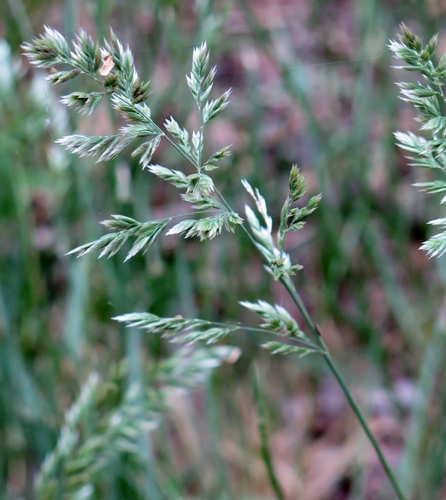
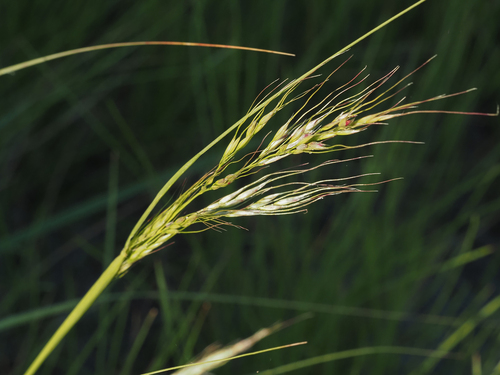
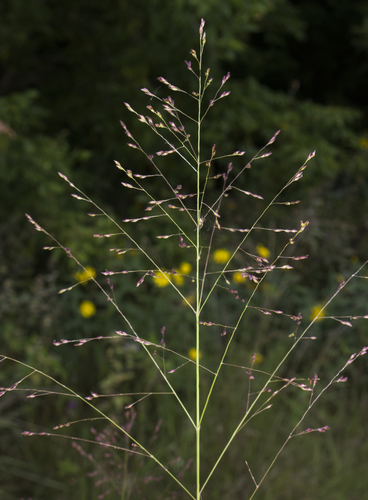
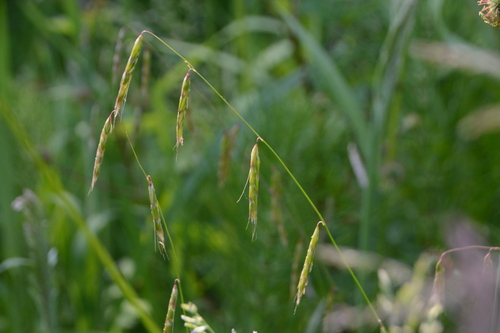
Pleuropogon refractus, the nodding semaphore grass, is a perennial bunchgrass that reaches a maximum height of around 5 feet. It produces caryopsis-type fruit, and blooms between April and August; its flowers are brown. The species' inflorescence holds widely spaced cylindrical spikelets that hang sideways off the stem, looking like semaphore signals. Each spikelet can grow up to 2.5 centimeters long and hold up to 14 flowers. As spikelets develop, the stem may bend over or nod, causing the spikelets to point downward. The only other Pleuropogon species found in Oregon is Pleuropogon oregonus. The two can be distinguished by height: Pleuropogon refractus is taller, and the two have different ranges. Pleuropogon refractus occurs west of the Cascade Mountains, while Pleuropogon oregonus occurs east of the Cascade Mountains. This grass grows in wet meadows, riverbanks, and shady locations, at elevations from sea level up to around 1000 meters. It grows within redwood forests, Douglas-fir forests, yellow pine forests, and wetland-riparian communities. It has a global G4 NatureServe rank, meaning it is apparently secure. It holds the same G4 rank in California and British Columbia; Washington and Oregon do not have a assigned local rank for this species. The IUCN Red List ranks it as Least Concern, with an assessment date of April 1, 2015. Its current population trend is unknown.