About Plestiodon obsoletus Baird & Girard, 1852
Common Name and Genus Placement
Plestiodon obsoletus, commonly known as the Great Plains skink, is one of the largest species in the genus Plestiodon, along with the broad-headed skink.
Size Measurements
This species reaches a snout-to-vent length (SVL) of 9 to 13 cm, with a maximum total length including the tail of nearly 34 cm.
Adult Body Coloration
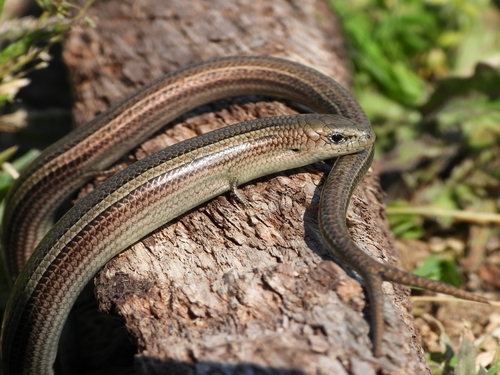
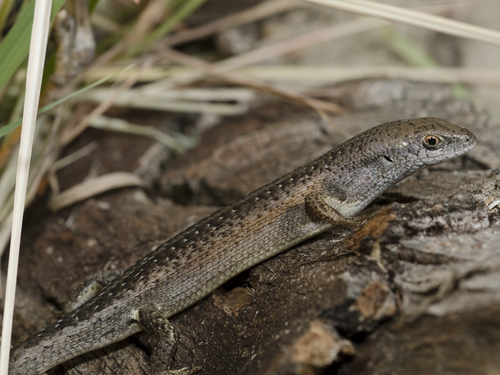
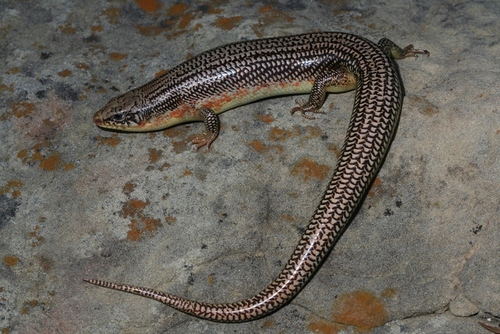
Adult Great Plains skinks are light gray or beige, with black or dark brown edges along their dorsal scales.
Scale and Belly Characteristics
Scales on the sides are arranged diagonally, and the belly is yellow.
Juvenile Appearance
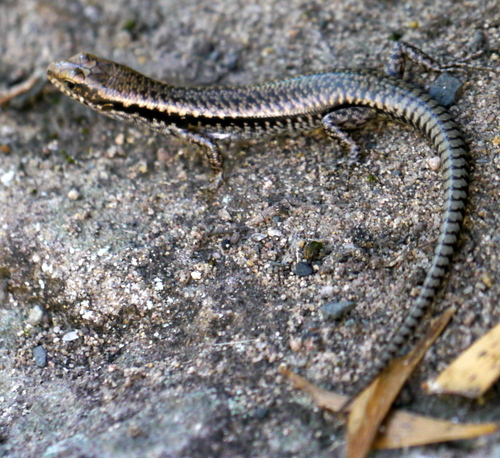
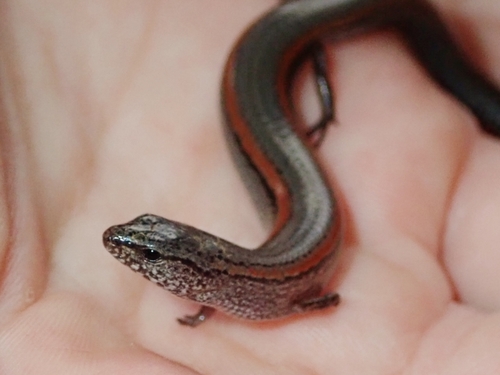
Juveniles of this species are black with white spots on the lips and head, and have a blue or bluish tail.
General Distribution Abundance
The Great Plains skink is very common across the Great Plains.
Detailed Geographic Range
Its geographic range extends from southeastern Wyoming and Nebraska, plus Fremont County, Iowa, southward through eastern Arizona, New Mexico, and Texas, and into Mexico.
Habitat Preferences
This skink inhabits open plains and the eastern foothills of the Rocky Mountains, occurring in areas near water such as irrigation ditches.
Elevation Range
In southeastern Colorado, it can be found at elevations up to approximately 1900 m (7200 ft), while in northern Colorado it only occurs at elevations below around 1400 m (4500 ft).
Mating Period
The mating season of the Great Plains skink falls in April or May.
Egg Laying Details
Females lay between 5 and 32 eggs, averaging around 12 eggs, in early summer.
Egg Guarding Behavior
The female guards the eggs until they hatch in late summer.