About Plectranthus ecklonii Benth.
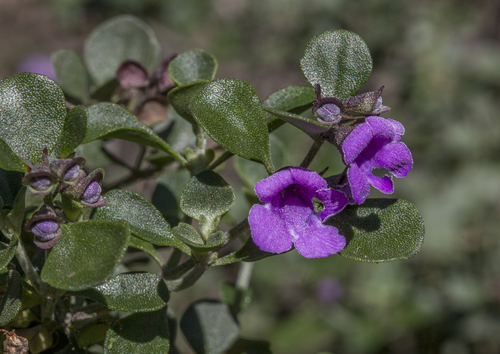
Plectranthus ecklonii Benth. is native to the Eastern Cape, KwaZulu-Natal, and Mpumalanga provinces of South Africa. It is an aromatic, semi-succulent, fast-growing, erect shrub that can reach a height of 3 metres (9.8 ft). It has ascending branches covered in short, multicellular hairs that point upward. Its somewhat large leaves are ovate to elliptical, measuring 7.4 cm–19 cm long by 3.5 cm–11.5 cm wide. Leaves are arranged in opposite pairs on square-shaped stems, have a cuneate base and acute apex, and the stem nodes have clumps of purplish hairs. When crushed or rubbed against skin, the leaves leave a nicotine-like smudge. This species grows in damp, partly shaded areas in coastal subtropical and temperate forests and their margins. It is most often found in the understorey at forest margins or on wooded creek banks, in regions where precipitation falls mainly in summer, with annual totals between 1000 and 1750 mm. Outside its native South African range, it has been recorded at forest margins in the Blue Mountains of New South Wales, in Victoria, and in New Zealand. Its fruits are small brown to black nutlets, 0.2 cm in length. The plant can reproduce both by self-seeding and via broken stems, which root easily. In cultivation, it is grown for its profuse flower display (it can bloom in the first year after planting) and its fast growth in gardens. It tolerates mild frost, but will die off in severe frost. It is easily propagated by cuttings, which root readily in soil. It benefits from mulching and occasional fertilizing. It tends to look best when replaced with new cuttings, as it becomes straggly and woody after a few years. It wilts during severe drought, but rejuvenates after rainfall. Three cultivars of this plant are recognized: P. ecklonii 'Medley-Wood', the common blue-flowered cultivar; P. ecklonii 'Tommy', which has white flowers; and P. ecklonii 'Erma', a pink-flowered variety with pink-speckled leaves and stems.