About Platycryptus undatus (De Geer, 1778)
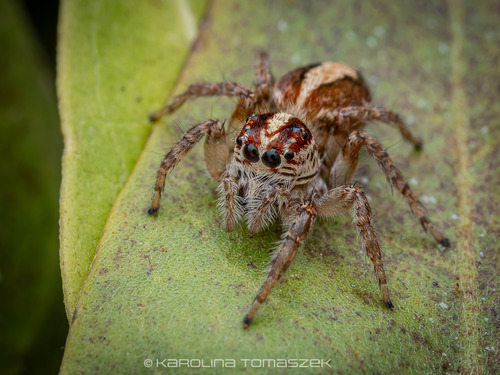
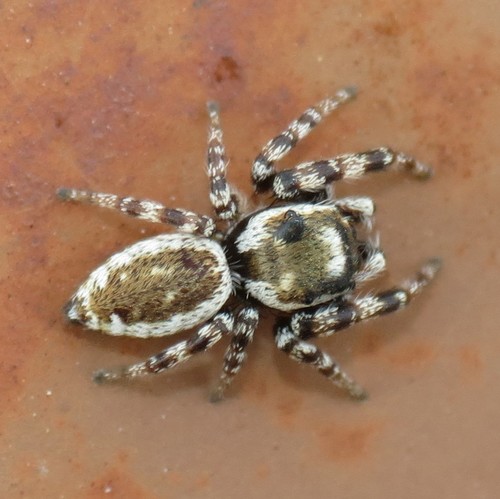
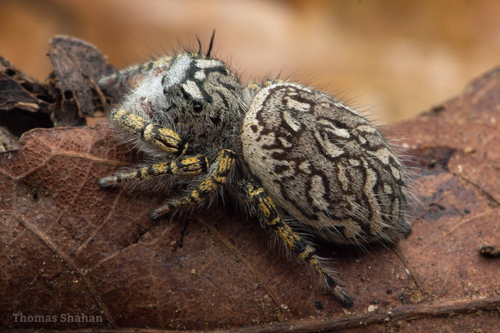
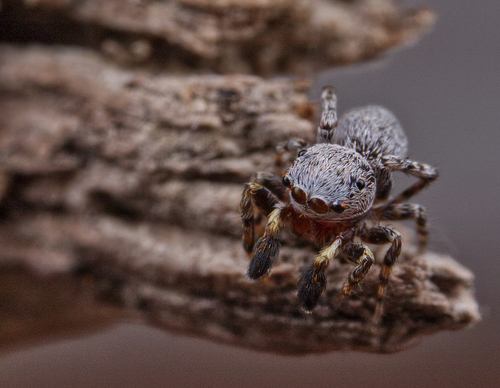
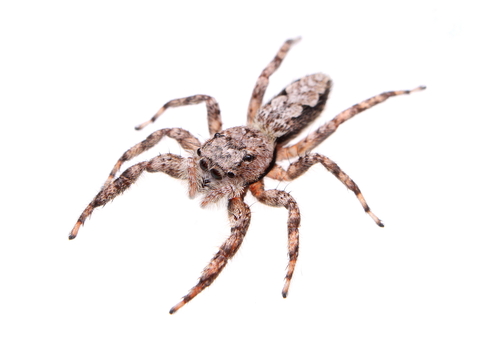
Platycryptus undatus, commonly called tan jumping spiders, can be identified by their mottled tan coloration, thin bodies, and chevron patterning on their abdomens. Their thin body structure lets them hide under loosened tree bark and in other tight spaces. The prominent chevron-like pattern on their abdomens breaks up their visual outline, making them harder to spot on mottled surfaces. Females of this species have a body length between 10 and 13 mm, while males range from 8.5 to 9.5 mm. Like many jumping spider species, tan jumping spiders prefer to hunt on vertical surfaces, and are frequently found on tree trunks or the walls of buildings. These spiders are not inclined to bite, but they can deliver a defensive bite if they are pinched or squeezed. Their eggs are laid and hatch during the summer, and adults and other life stages overwinter in individual silken shelters. Although each shelter is built separately and keeps spiders out of direct contact with each other, Kaston reports that up to fifty spiders may crowd their hibernation shelters together so tightly that they form a continuous blanket under the loose bark of a standing tree. This species is distributed across North and Central America. Its range extends from the eastern United States and adjacent Canada, south to Texas and north to Wisconsin, and it is also found in northern Mexico.