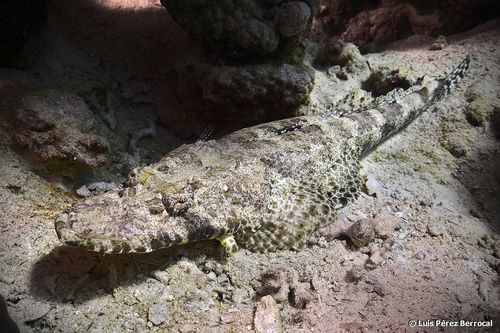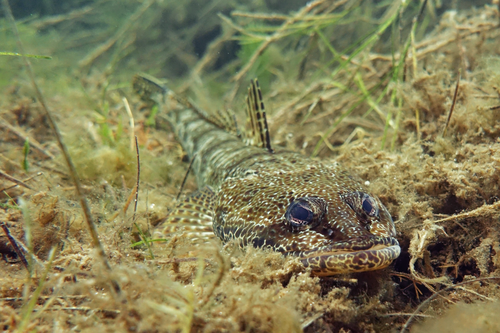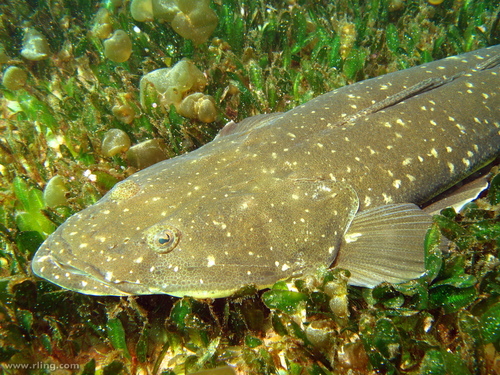
About Platycephalus fuscus Cuvier, 1829
Common Name and Body Shape Adaptation
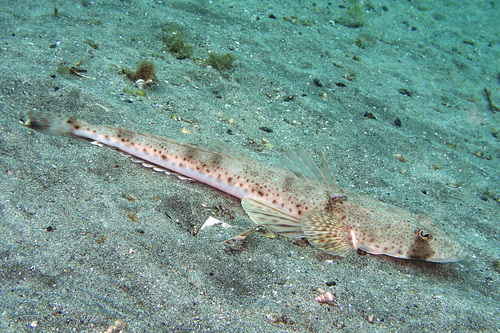
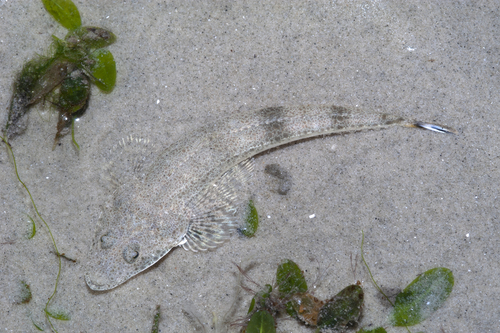
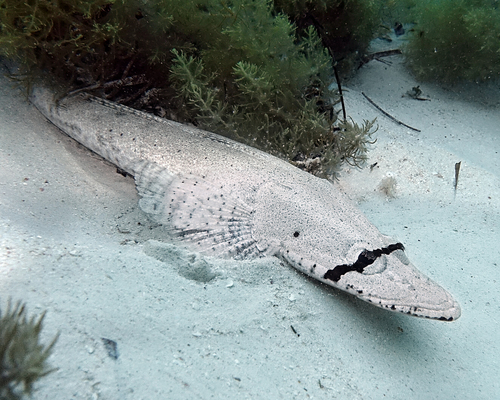
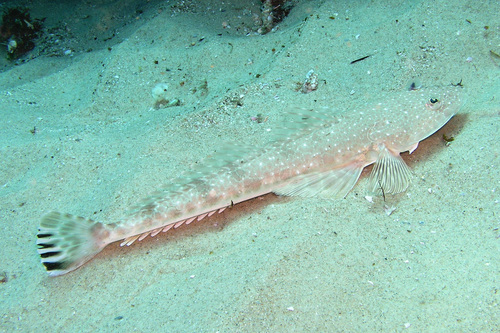
Platycephalus fuscus Cuvier, 1829, commonly known as dusky flathead, has an unusual body shape adapted to support its specific hunting strategy. This species is dorsally compressed, meaning its body is wide, flattened, and very short in height.
Head and Vision Features
Both of its eyes sit on top of the flattened head, providing excellent binocular vision that lets it attack prey swimming overhead. This overall body form is somewhat similar to that of flounder, but differs in several key traits: dusky flathead are much more elongated, their tail remains held vertically, and their mouth is large, wide, and symmetrical.
Camouflage Traits
Dusky flathead use their specialized body structure to hide buried in sand, and can change their body color to match their surrounding background, leaving only their eyes visible.
Hunting Behavior
When small fish or prawns drift over the hidden fish, it explodes upwards and outwards to engulf its prey.
Body Coloration
The body color of dusky flathead varies across individuals, ranging from a sandy base with brown spots and blotches to dark brown or black with white spots. They have a distinctive black spot on their caudal fins, and dark bars are often visible across the rear portion of their body.
Preopercular Spine Characteristics
The preopercular spines on each side of the head are very sharp and slightly venomous, so they should be avoided when handling the fish.
Australian Distribution Status
In terms of ecology, dusky flathead are the largest and most commonly caught of the many flathead species found in Australia.
Size and Weight
While very rare individuals have been caught weighing up to 12–15 kg and measuring up to 1.3 metres in length, the average adult size is 0.5–1.5 kg and 40–50 cm in total length.
Habitat Range
Dusky flathead are typically found in estuaries and estuarine lakes, and are rarely encountered in other habitats.
Diet Composition
Their diet is typically made up of smaller fish and prawns, matching their hunting strategy for drifting prey.
Growth Rate
According to research from NSW DPI Fisheries, dusky flathead grow relatively quickly: they can reach a total length of 40 cm after just three years.
Sexual Maturity Sizes
Female dusky flathead reach sexual maturity at a total length of around 55 cm, while males mature much earlier at a total length of about 22 cm. Only female dusky flathead grow to reach the species' largest recorded sizes.
Breeding Period and Location
Breeding occurs in mid to late summer, around the mouths of estuaries.
Sex Determination Traits
A 2014 study by Pollock found that the sex of dusky flathead is determined at the juvenile stage, and this species does not experience sex inversion from male to female.