About Platismatia tuckermanii (Oakes) W.L.Culb. & C.F.Culb.
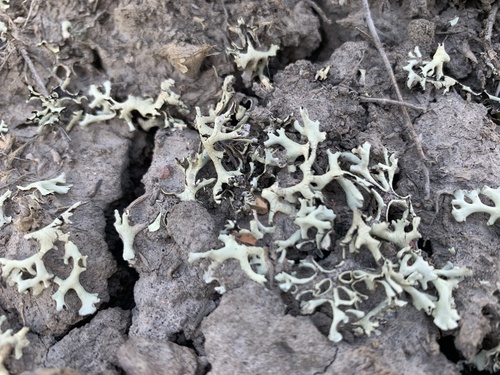
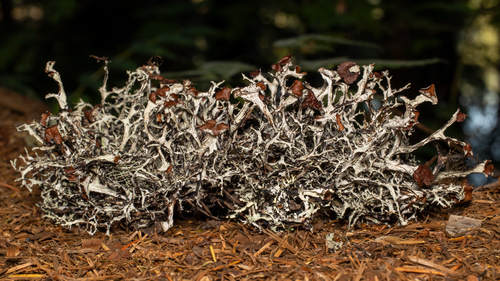
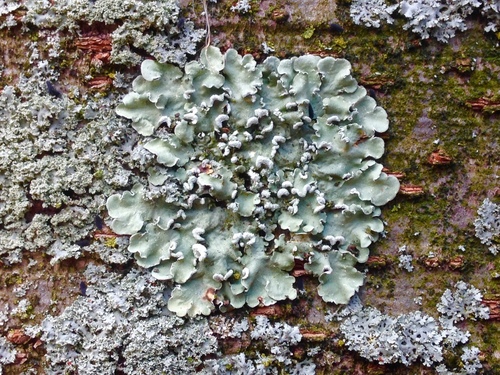
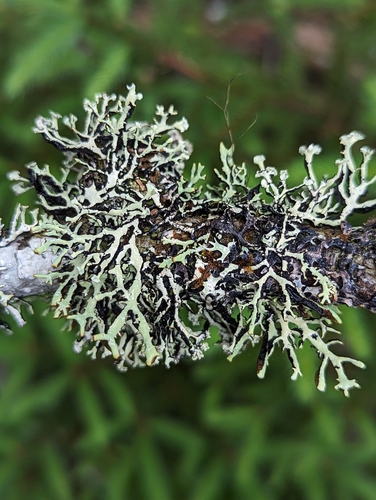
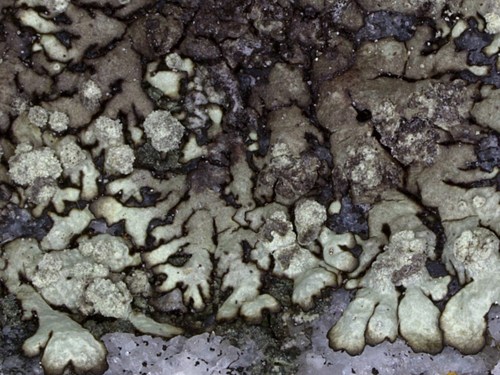
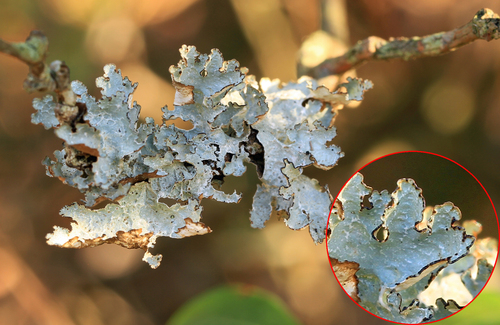
Platismatia tuckermanii, formally named Platismatia tuckermanii (Oakes) W.L.Culb. & C.F.Culb., can be identified by its physical characteristics. The upper surface of its thallus ranges from ashy-white to gray, sometimes with a greenish tint, and often turns brown along the edges. It has broad, loosely attached, narrowly branched lobes with rounded tips, and its surface is irregularly or reticulately pitted. The lower thallus surface ranges from white to slightly tan, with distinct patches that turn black to dark brown. This lower surface is minutely and reticulately pitted, and sometimes has a mottled appearance, but is not punctate. Occasional pseudocyphellae may grow on the upper thallus surface. This species has few rhizines: these rhizines are black at the center, and pale or white-tipped at the margin. It reproduces primarily by sexual reproduction. Its apothecia, the species' fruiting bodies, are shiny red-brown, located at or just below the thallus margin, broad, and usually perforate. Chemical analysis shows this lichen produces caperatic acid and atranorin as lichen products. Platismatia tuckermanii is endemic to Eastern North America, where it occurs in Canada and the Southeastern United States. It most often grows on conifer bark, and can also be found growing on old wooden fenceposts.