About Platismatia stenophylla (Tuck.) W.L.Culb. & C.F.Culb.
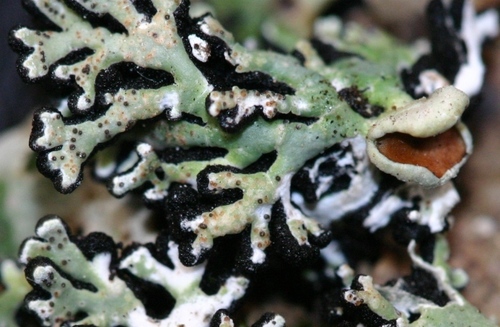
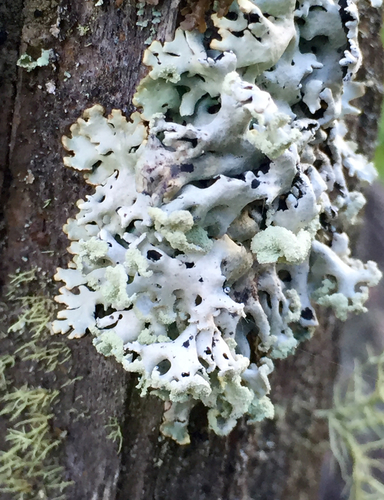
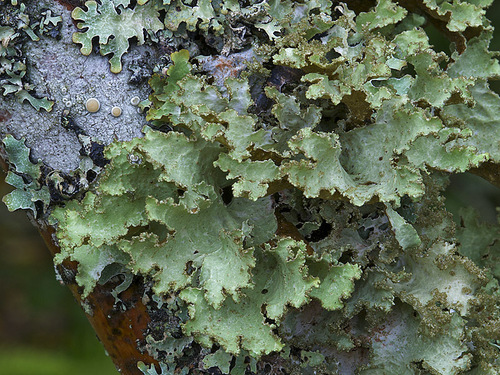
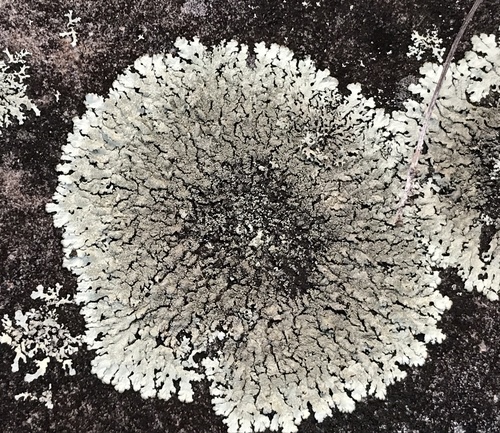
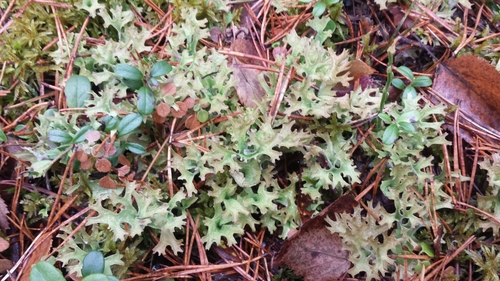
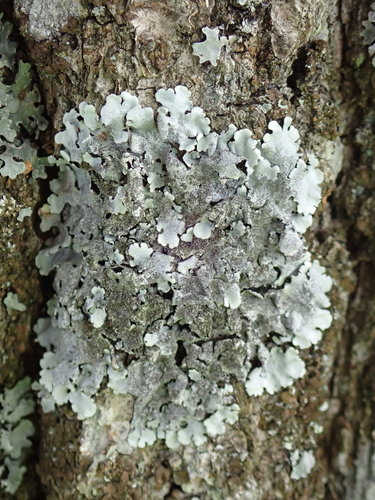
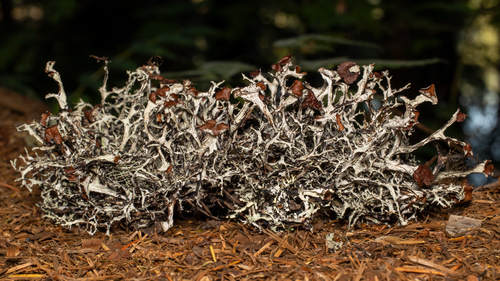
The scientific name of this species is Platismatia stenophylla (Tuck.) W.L.Culb. & C.F.Culb. The upper thallus of Platismatia stenophylla is whitish, tan, or pale brown, and occasionally darkens somewhat. It has narrow, linear lobes with strongly incurved margins and a smooth upper surface. The lower surface is whitish, tan, or brown, with a minutely reticulate rugose texture, and is sometimes veined at ridge crests. It darkens but is not punctate. It has few black rhizines, which are only present at sites of attachment. Platismatia stenophylla reproduces primarily through sexual reproduction. Its apothecia, the species' reproductive structures, are red-brown and shiny, are broad, and may be either perforate or non-perforate. Algae often underlie the species' subhymenium. Chemical analysis has confirmed that Platismatia stenophylla contains caperatic acid and atranorin as lichen products. Platismatia stenophylla occurs in western North America, ranging from Vancouver Island south to central California, and it usually grows close to shore. On the West Coast of North America, its range is largely sympatric with that of Platismatia herrei, though the distribution of Platismatia stenophylla is slightly smaller. Additional research with more extensive sampling and additional genetic loci is needed to fully resolve the relationship between Platismatia stenophylla and P. herrei, and to better understand the distribution patterns of both species.