About Platismatia herrei (Imsh.) W.L.Culb. & C.F.Culb.
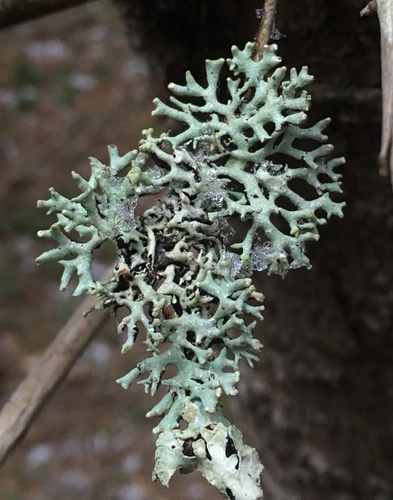
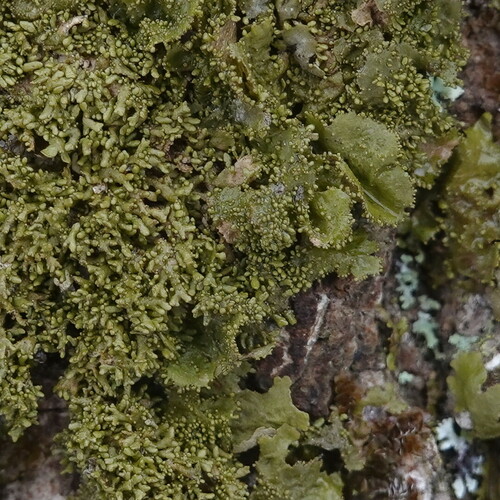
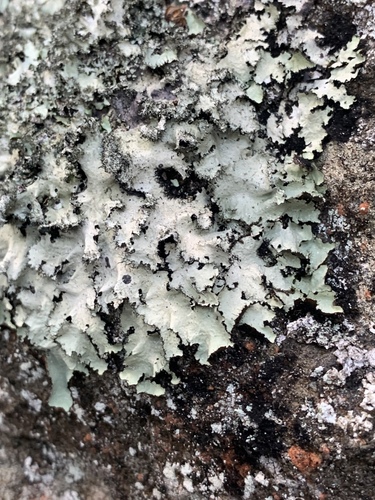
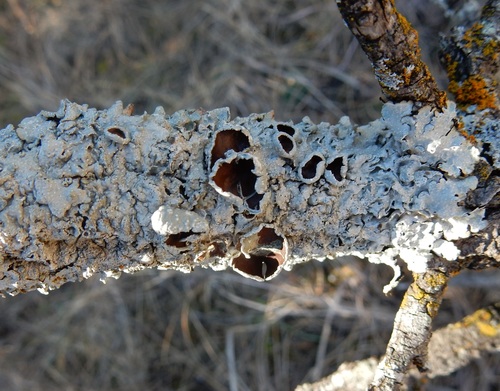
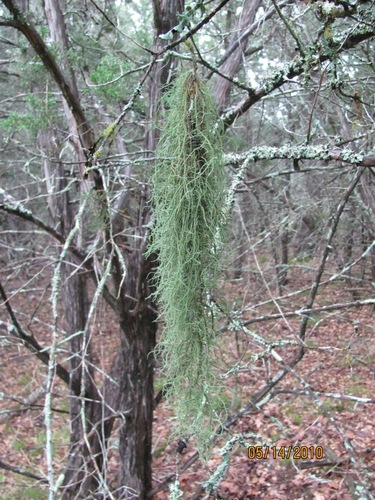
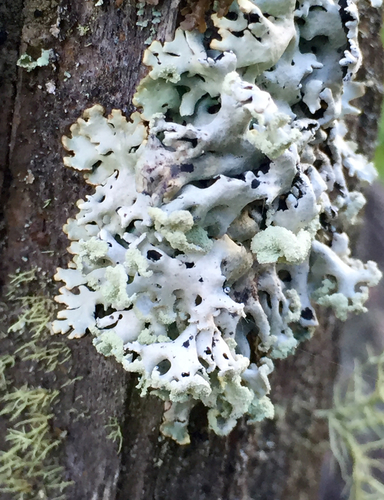
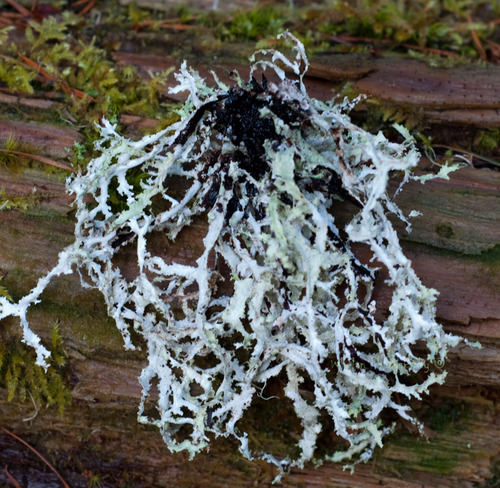
Platismatia herrei is a corticolous (bark-dwelling), foliose lichen species belonging to the family Parmeliaceae. Lichenologist Henry Imshaug first formally described this species under the genus Cetraria in 1968. Later the same year, William and Chicita Culberson transferred it to the genus Platismatia. This lichen occurs in western North America, with a distribution extending from southern Alaska to central California. It can be distinguished from other members of the genus Platismatia by the isidia that fringe the edges of its linear lobes. The Culbersons described it as "one of the most beautiful and intricately formed species in the genus". Platismatia herrei reproduces primarily asexually via isidia production. Its thallus is whitish or pale, often marked with black splotches. It has narrow, linear lobes that range from flat to curled inward. The upper surface of the thallus is smooth to very finely pitted or wrinkled. The lower surface is white or pale, with distinct, clearly bounded black zones. It has only a small number of black rhizines, which are present solely at its attachment points. Chemical analysis confirms that P. herrei contains atranorin and caperatic acid. P. herrei and its close relative P. stenophylla mostly have overlapping ranges along the West Coast of North America, though P. herrei has a slightly wider overall distribution. Recent molecular phylogenetic studies indicate that P. herrei and P. stenophylla may be either recently diverged distinct species or just morphological variants of the same single species. Genetic analyses did not recover the two taxa as reciprocally monophyletic, and the genetic distance between them was smaller than the genetic distance recorded between other pairs of recognized Platismatia species. Ancestral state reconstruction suggests that P. herrei, which is an asexual species, most likely evolved from a sexually reproducing ancestor. More research with larger sampling and analysis of additional genetic loci is required to fully clarify the evolutionary relationship between P. herrei and P. stenophylla.