About Plathemis lydia (Drury, 1773)
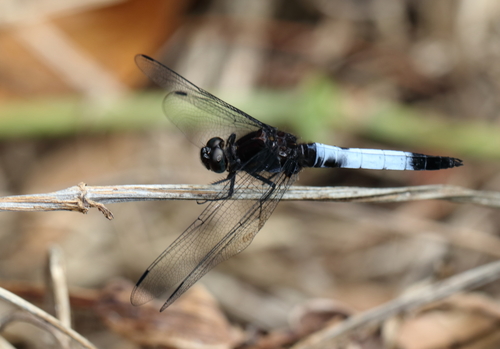
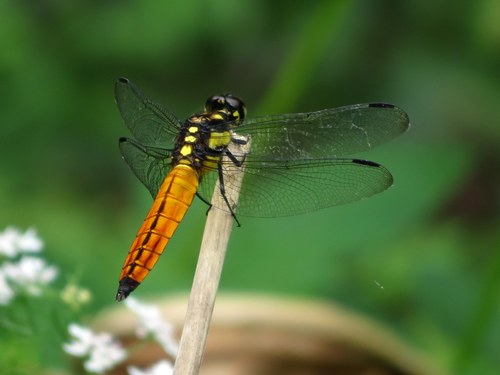
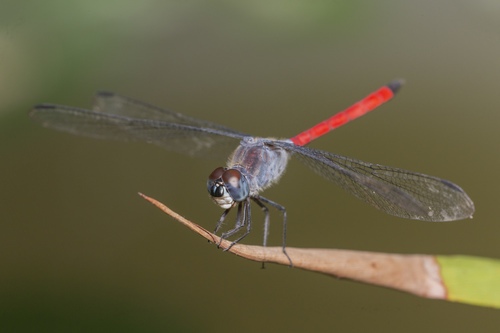
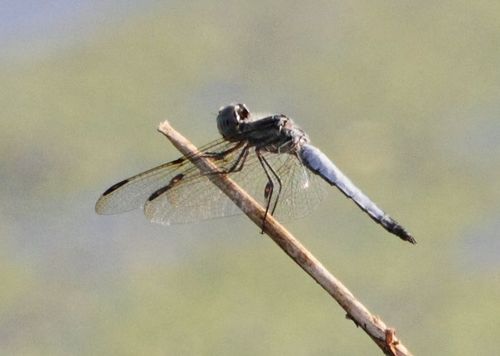
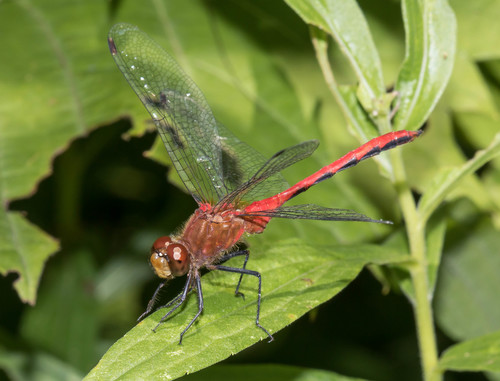
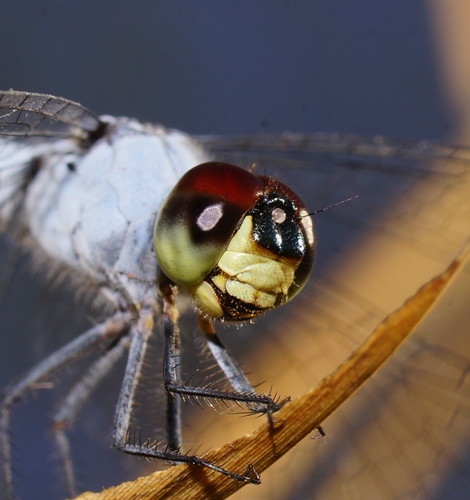
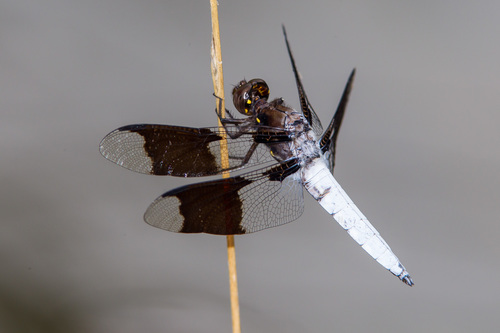
The common whitetail, also called the long-tailed skimmer, with the scientific name Plathemis lydia, is a common dragonfly widespread across much of North America, and has a distinct striking appearance. Mature males have a chunky white body that measures roughly 5 cm or 2 inches long, and their otherwise translucent wings have brownish-black bands, giving the dragonfly a checkered look. Females have brown bodies and a different wing spot pattern, which is very similar to the pattern of female twelve-spotted skimmers (Libellula pulchella). Female common whitetails can be told apart from female L. pulchella by their smaller size, shorter bodies, and white zigzag stripes on their abdomen; L. pulchella have straight, yellow abdominal stripes. Common whitetails can be observed hunting mosquitoes and other small flying insects over ponds, marshes, and slow-moving rivers in most regions, excluding higher mountain areas. Their adult activity periods differ by region: for example, adults are active from April to September in California. Like all perchers, common whitetails frequently rest on objects near water, and will sometimes rest on the ground. Males are territorial, they claim and defend a 10-to-30-metre (33 to 98 ft) stretch along the water’s edge, and patrol this area to drive off other males. The white pruinescence on the abdomen, which only develops on mature males, is displayed to other males as a territorial threat. Nymphs of this species are dark green or brown, and are typically covered in algae. They feed on aquatic invertebrates such as mayfly larvae and small crayfish, and also eat small aquatic vertebrates including tadpoles and minnows. Due to how abundant common whitetail naiads are, they are an important food source for many types of fish, frogs, birds, and other aquatic insects. Some taxonomic authorities place the common whitetail and other whitetails in the genus Libellula instead of Plathemis. This classification debate has gone on since at least the end of the nineteenth century. Recent molecular systematic evidence suggests that separating whitetails from the rest of Libellula is appropriate. Like other dragonflies, Plathemis lydia spends most of its life cycle as an aquatic larva (also called a nymph), and the mortality rate during this stage reaches up to 99.9%. The two most common causes of death during the aquatic life stage are predation and desiccation. After the larval stage, P. lydia becomes an adult, and the adult stage only lasts a few weeks. During the adult stage, P. lydia mates and selects appropriate sites to lay their eggs.