About Platanthera leucophaea (Nutt.) Lindl.
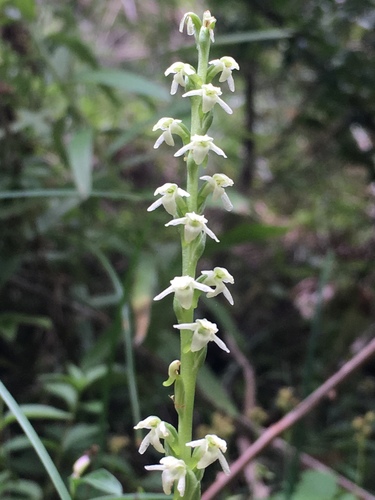
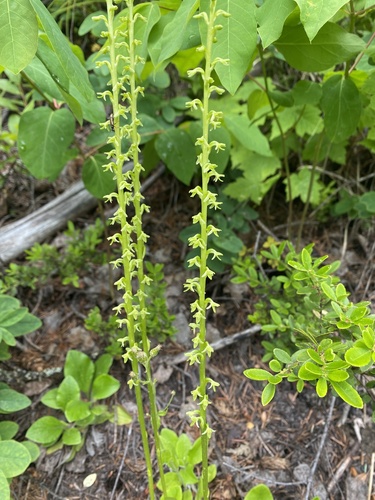
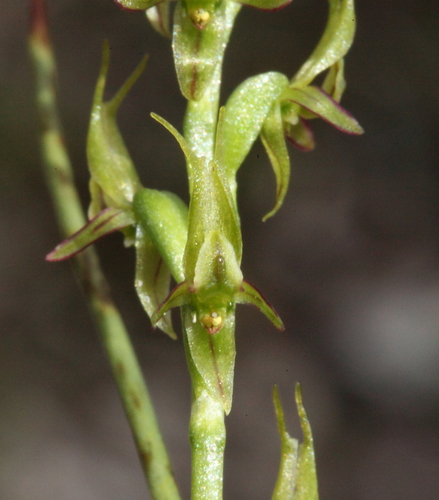
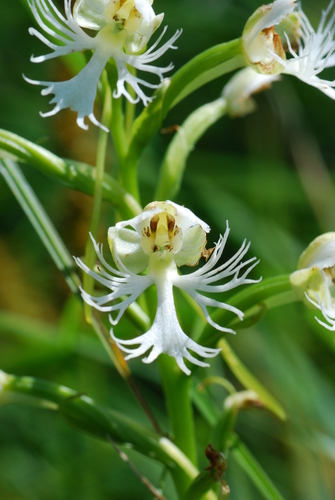
Platanthera leucophaea, commonly called eastern prairie fringed orchid, grows from a fleshy tuber and can reach up to 91 cm (three feet) in height. Its leaves are long and thin. It produces a large, showy inflorescence that can hold up to 40 white flowers. This species is a long-lived perennial herb. Its tuberous rootstalk allows it to survive grass fires, and both fire and rain stimulate its growth and flowering. The plant emerges annually in May, and flowering starts by late June. Its flowers are night-pollinated by large sphinx moths. Only certain night-flying insects attracted to the orchid’s fragrance can reach its nectar with their long probosces; other insects cannot access the nectar due to the flower’s long, narrow, unusually positioned nectar spur. It can be distinguished from Platanthera praeclara, the western prairie fringed orchid, by its smaller flowers (less than 2.5 cm/one inch long), more oval petals, and shorter nectar spur. Platanthera leucophaea grows in moist to wet tallgrass prairie, sedge meadows, fens, and old fields. It requires little to no nearby woody encroachment for optimal growth. Historically, this orchid occurred mostly in the Great Lakes Region, with isolated populations in Maine, Virginia, Iowa, and Missouri. There is a historic collection record for Choctaw County, Oklahoma, but the species has not been observed in Oklahoma for over 150 years. The main cause of the species’ decline is habitat loss from grazing, fire suppression, and agricultural conversion.