About Platanthera bifolia (L.) Rich.
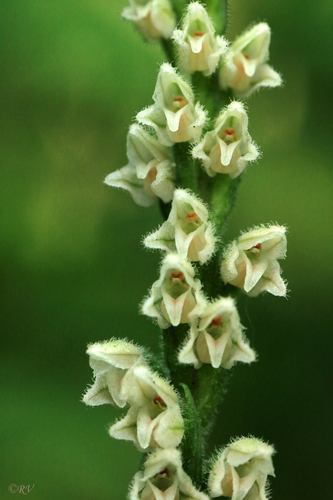
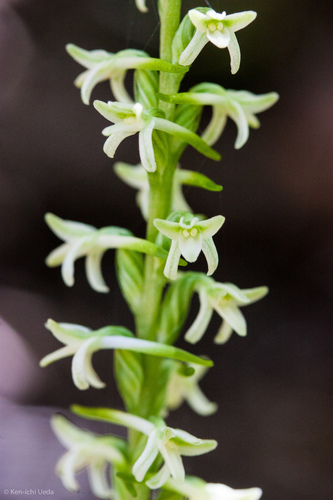
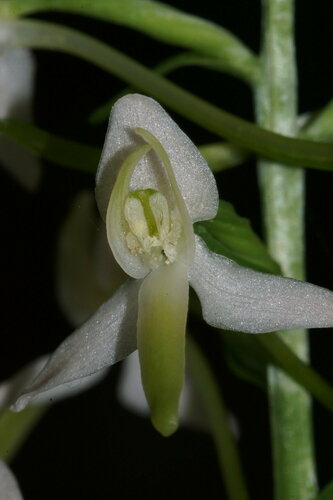
For identification, lesser butterfly-orchids (Platanthera bifolia) should not be confused with greater butterfly-orchids, as the two species are around the same size. Lesser butterfly-orchids can be distinguished by their two shining green basal leaves — these are shorter and broader particularly in the hill form — and by the angle of the pollinia. The upper sepal and petals form a loose triangular hood above the pollinia, which lie parallel and close together, obscuring the opening into the long, almost straight spur. There are usually around 25 white flowers tinged with yellow-green arranged in a slim flower spike. The flowers are night-scented, but the chemical components of their scent differ from those of greater butterfly-orchid, so they attract different pollinators. The lesser butterfly-orchid grows in a wide range of habitats, and is far more tolerant of acid conditions than the greater butterfly-orchid. It can be found in grasslands, woodlands (especially beech woods in southern England), hill pastures up to 400m, heaths and moorland, and tussocky marshy ground. Sphingid moths are attracted by the scent of this orchid. They tend to hover in front of the flowers, resting their forelegs on the lip. As the moth's proboscis enters the spur, it pushes between the pollinia, dislodging sticky discs that adhere to the proboscis. Recorded pollinators include pine hawk-moth, small elephant hawk-moth, and to a lesser extent, elephant hawk-moth.