About Planchonella obovata (R.Br.) Pierre
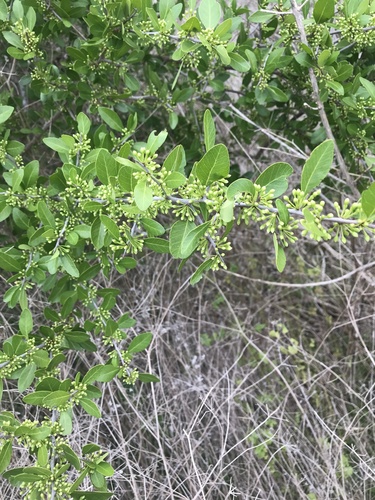
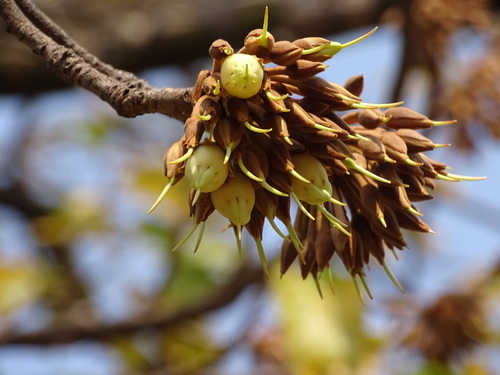
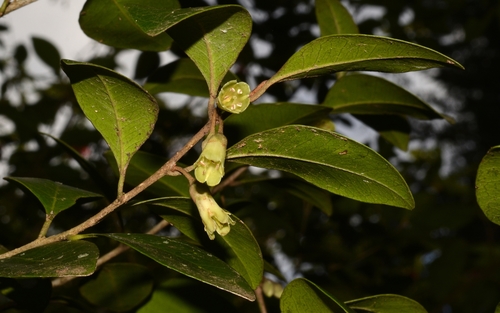
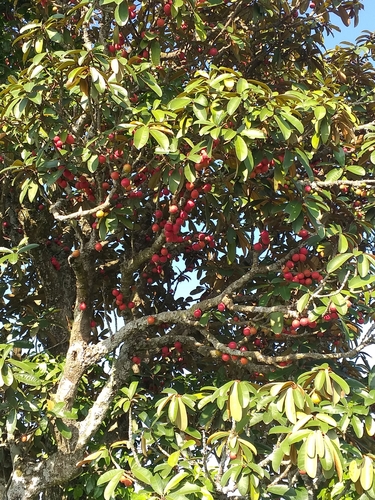
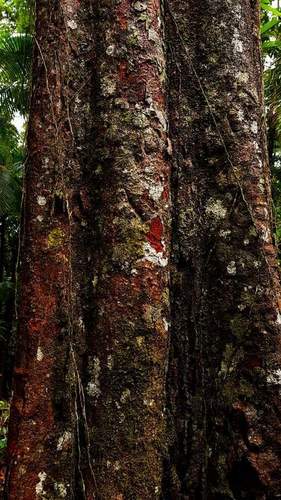
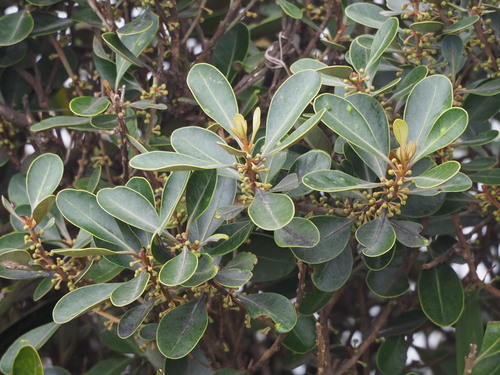
Planchonella obovata (R.Br.) Pierre is a tree species belonging to the Sapotaceae family. In Australia, its common name is northern yellow boxwood. This species grows across much of southeast Asia, Micronesia, and islands of the Indian Ocean, and has additional local common names in these regions. Planchonella obovata develops a bushy crown, and reaches a maximum height between 10 and 20 metres (33 to 66 ft). Young leaves are hairy; mature upper leaf surfaces become smooth and shiny. Leaves are roughly oval to spear-shaped, measuring 6–24 cm (2.5–9.5 in) long and 1.5–15 cm (0.59–5.91 in) wide. Tiny greenish-white clustered flowers appear between August and October. After flowering, the tree produces round red or blue berries that are 1–1.5 cm (0.39–0.59 in) in diameter. Each berry holds 1 to 5 seeds that are yellow when ripe. Robert Brown first described this species as Sersalisia obovata in his 1810 publication Prodromus Florae Novae Hollandiae. It was later moved to its current binomial name by Jean Baptiste Louis Pierre in 1890. It also has an accepted synonym, Pouteria obovata. The specific epithet "obovata" references the reverse ovate shape of the species' leaves. Genetic analysis of collected material found that samples from Papua New Guinea were genetically isolated, forming a sister group to a clade of samples from Australia and Indonesia. Indumentum (hair covering) was present on the leaf surfaces of Australian and Indonesian samples, and absent on the leaf surfaces of Papua New Guinea samples. This tree can be cultivated in well-drained, sunny growing conditions, and can be propagated from seed. Its wood is used for turning and cabinet-making.