About Planchonella costata (Endl.) Pierre
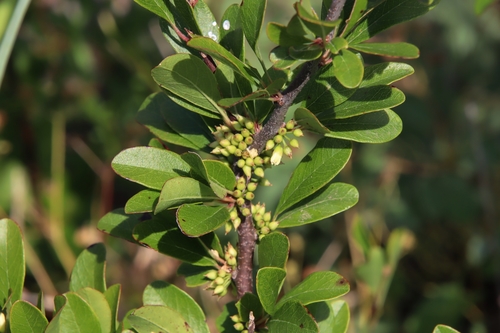
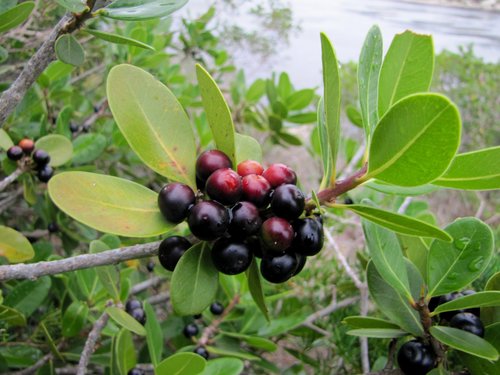
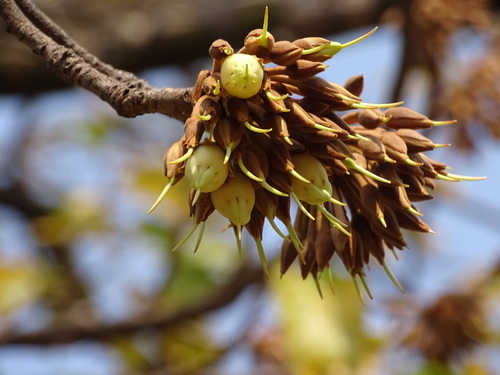
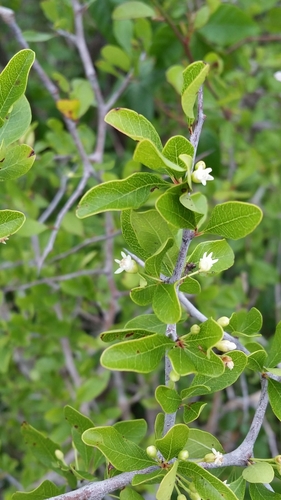
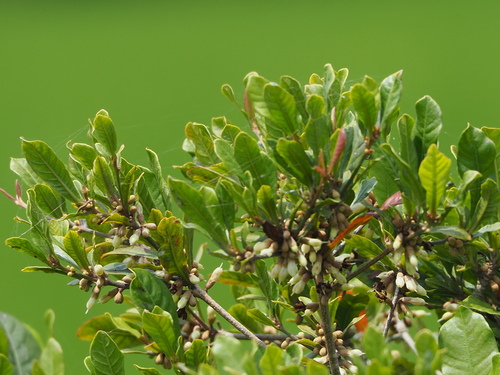
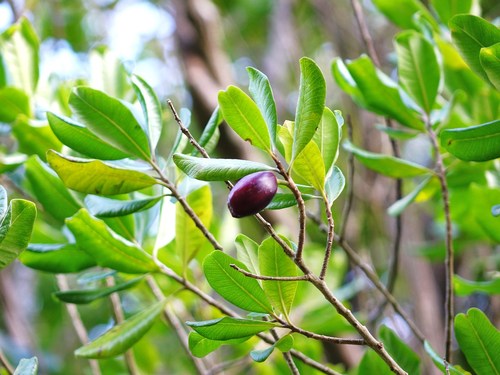
Planchonella costata is a fairly slow-growing, closely branched tree that favors coastal growing conditions. It reaches up to 20 m (66 ft) tall, with a trunk that can grow to 1 m in diameter. Its bark is rough, and ranges in color from grey to brownish-grey. This tree prefers semi-shade and is sensitive to frost. Its leaves are dark green and lustrous, measuring 5 to 10 cm (2.0 to 3.9 in) long (sometimes up to 15 cm / 5.9 in) and 2 to 5 cm (0.79 to 1.97 in) wide. The central main vein is distinct on both the upper and lower surfaces of the leaf, as are the 14 to 20 primary veins that sit on each side of the main vein. Fine flattened hairs cover the branchlets and leaf stems. Its tiny, delicate flowers are only 4–6 mm (0.16–0.24 in) in diameter, and usually grow from leaf axils, though they may also grow directly from branchlets. The tree produces large multi-coloured berries that are 2.5 to 4 cm long. Each berry holds 2 to 4 hard, curved, almost polished seeds that are nearly as long as the berry itself; these seeds were used by Māori to make necklaces. As berries ripen, they change color in successive stages, shifting from green to orange to a very dark red. This ripening process takes 12 to 15 months. Ripe berries are heavy and fall easily from the tree if the tree is disturbed. As noted by Salmon in 1973 (page 278), a tree bearing a heavy crop of berries is a spectacular sight. When wounded, the tree oozes a sticky, white latex. Its wood is white, hard, and durable. The fruit is eaten by kererū (New Zealand pigeon) and kākā parrot; closely related forms of both birds were once present on Norfolk Island, but are now extinct. On Norfolk Island, P. costata is an uncommon tree that grows locally in forested areas and on Mt Pitt, and it is listed as endangered under Australia’s Environment Protection and Biodiversity Conservation Act 1999. In New Zealand, Planchonella costata grows locally on islands including the Three Kings Islands, and on headlands along northern coasts of the North Island. Its range extends from North Cape to Tolaga Bay (38° S) on the east coast, and only as far south as Manukau Harbour (37° S) on the west coast. It grows in association with pohutukawa, karaka, and taraire. It occurs from sea level up to around 450 m elevation, and always grows close to the sea. It is not considered threatened in New Zealand.