About Planchonella australis (R.Br.) Pierre
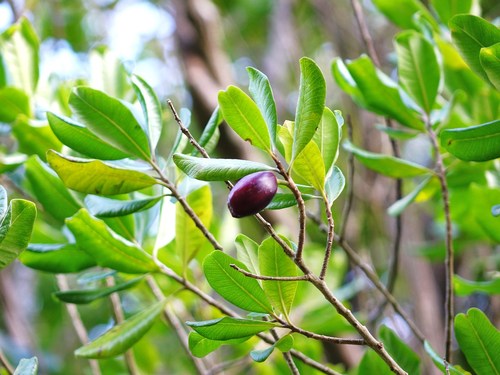
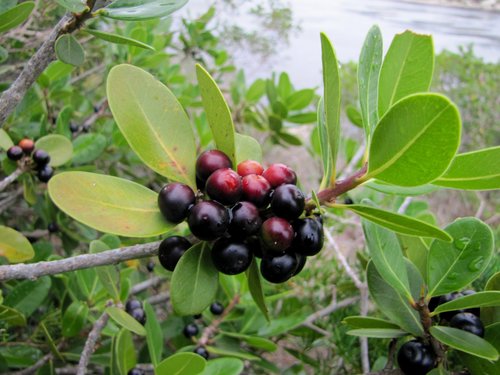
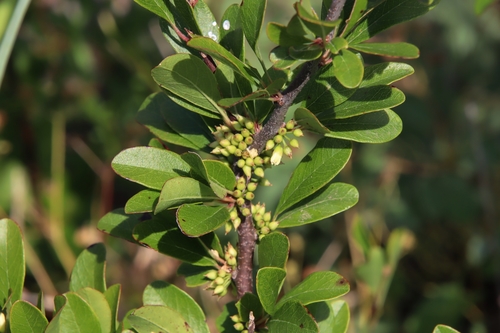
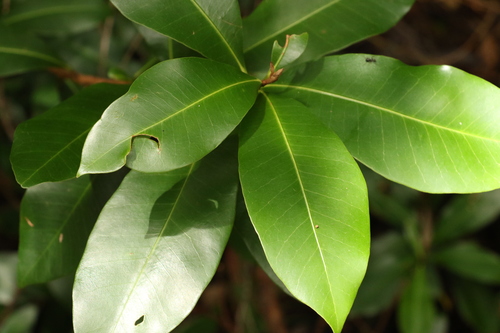
Planchonella australis grows as a tree that reaches a maximum height of 30 metres (98 feet), with a fluted trunk up to 120 cm (47 in) in diameter and rough brown bark. Its leaves are simple, thick, and leathery, measuring 8–16 cm long and 2–5 cm wide. The upper leaf surface is shiny, while the lower surface is a paler green. Leaves taper slightly at both the apex and base, giving them a roughly diamond shape. Its flowers are generally axillary. The edible fruit resembles plums in appearance, is 20–65 mm long, and ranges in color from purplish to black. Each fruit contains 2–5 shiny brown seeds 2 cm long, and fruit ripen from September to November. When cut or broken, the plant bleeds milky latex. Also referred to as Pouteria australis, this species is protogynous – the female parts of the tree mature before the male parts, which promotes outcrossing. This species is distributed along the eastern coastline of Australia, ranging from Bulburin in Queensland to the Illawarra region of New South Wales. It grows in multiple types of rainforest, and specimens growing on the red basalt soil of the MacPherson Range grow to a large size. In its native ecology, the green catbird eats the fruit of this tree, while rodents and insects eat its seeds. Scientist Tim Flannery has proposed that the presence of rainforest trees producing such large fruit indicates that a large fruit-eating bird, similar to a cassowary, once existed across the species' range to act as a seed propagator. Planchonella australis is fast growing and easy to grow, and adapts readily to cultivation. It prefers good drainage, consistent moisture, and extra fertiliser, and is tolerant of moderate frosts. It can be used in revegetation projects, and is propagated by either seed or cuttings. Commonly called black apple, its fruit can be eaten raw, with sweet and fibrous flesh. The taste is reported to be variable, and the fruit is often favoured by maggots, which are frequently found inside. Indigenous Australians in the Gosford region are recorded to have traditionally eaten the seeds. The 1889 book 'The useful native plants of Australia' records this species as 'Black Apple' or 'Brush Apple' (under the former name Achras australis), called 'Jerra-wa-wah' by people in the Illawarra and Brisbane Waters areas of New South Wales. Colonial harvesters originally harvested this tree for its timber: the attractively yellow-patterned wood is hard and suitable for making rulers. In Australia, the fruit has also been used to make gin.