About Plagodis pulveraria (Linnaeus, 1758)
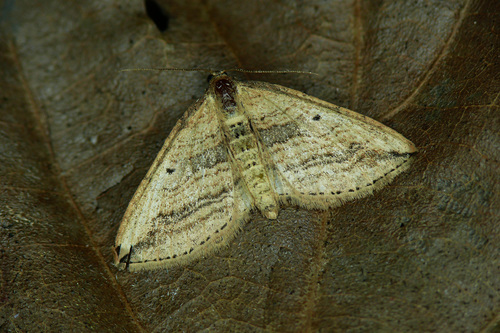
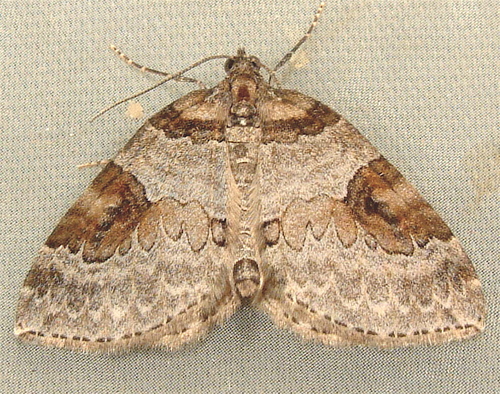
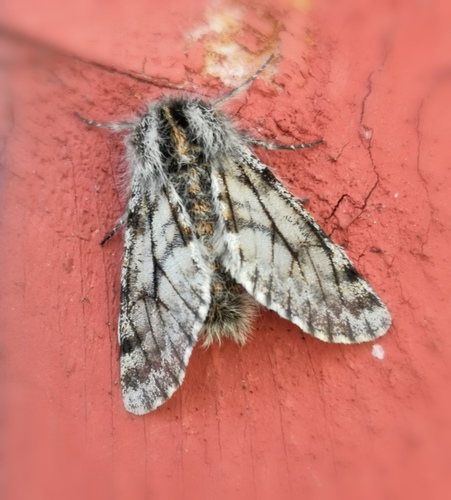
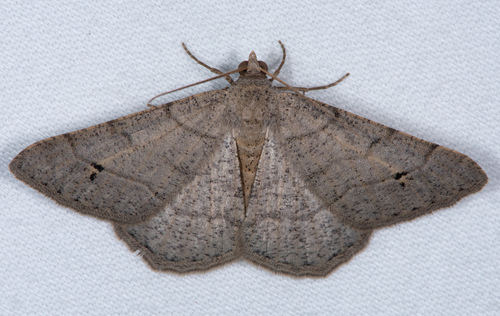
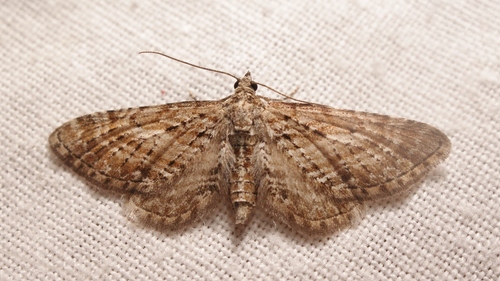
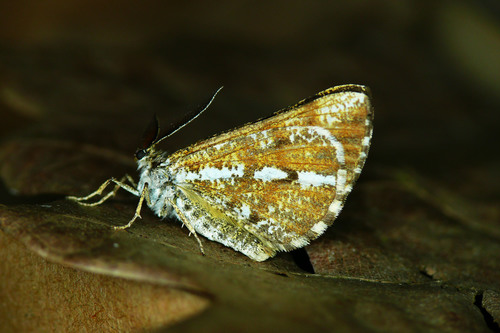
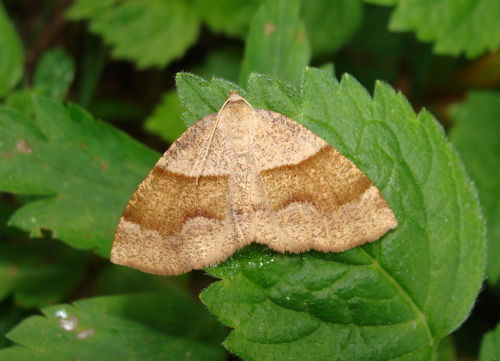
Plagodis pulveraria, commonly known as the barred umber, is a moth species in the Geometridae family. It was first described by Carl Linnaeus in the 10th edition of his Systema Naturae, published in 1758. This moth is distributed across most of the Palearctic realm, ranging from Ireland east to Japan, and also occurs in the Nearctic realm in Canada. Its wingspan measures 28–33 mm, while the forewing length is 17–19 mm. The species is variable, but almost always shows at least some reddish tone. It has no markings other than the rather straight antemedian forewing line, and the postmedian forewing line which is strongly incurved posteriorly. In the standard name-typical form, the median area of the wing is darkened. Aberration passetii Th.-Mieg is violaceous grey instead of reddish brown, with a sharply expressed median band. Aberration marginepurpuraria Bastelb. is a deeper red; the median area of the forewing and the basal half of the hindwing are more orange-toned, while the rest of the wings carry a stronger purple tinge. Its lines are thick, the antemedian line is rather curved, and the postmedian line is less broad anteriorly than in the type form. Individuals of this aberration are rather small and have rounded wings. Aberration unicolor Hirschke from Rheingau has uniform dark-dusted brown wings with no lines or band. The form gadmensis Ratzer, from Gadmenthal, Switzerland, is a rather small, brighter yellower brown form. Its median area is almost or fully concolorous with the rest of the wing, while the lines remain distinct. The form violacearia Graeser, from Amurland, is a very small form that matches marginepurpuraria closely in color; marginepurpuraria may need to be reclassified as a synonym of violacearia. Its thick lines are described as dark violet, and there is no recorded difference in the shape of its lines compared to the normal form. The form japonica Btlr., found in Japan and Korea, is a small race, or possibly a separate species. It is bright deep red-brown; its median area is equally broad posteriorly and anteriorly, and not differentiated in color from the rest of the wing. The lines that bound the median area are deeper red-brown, and the postmedian line only projects a little in the middle. The line on the hindwing continues nearly to the costal margin and is straighter than in marginepurpuraria, which also shares this structural trait. This moth produces two generations per year, flying from mid-March to August. The larvae feed on a variety of deciduous tree species, including oak, birch and sallow.