About Plagiodera versicolora (Laicharting, 1781)
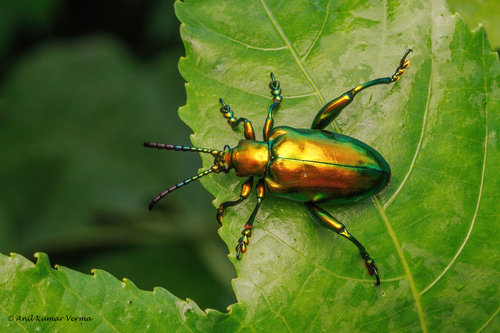
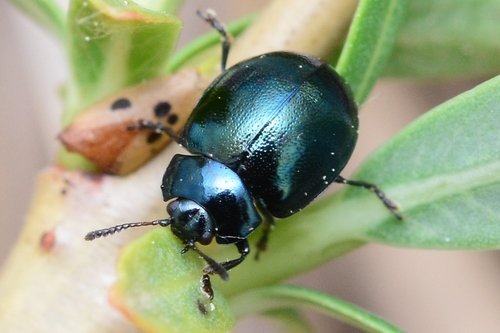
Plagiodera versicolora (Laicharting, 1781) reaches a body length of 2.5 to 4.8 mm. Its body is metallic blue or green, and occasionally ranges from purplish to black in color. This species occupies a variety of habitats, and is typically found near water. Adult Plagiodera versicolora feed on the leaves and pollen of willow and poplar trees, especially Salix fragilis, commonly called crack willow. Known predators of Plagiodera versicolora include the shieldbug Zicrona caerulea, multiple ladybird species, and the larva of the hoverfly Parasyrphus sp. In the United Kingdom, this species is fairly common in central and southern England, has scattered recorded sightings in Wales and Ireland, and has no recorded sightings in Scotland. It has also been introduced to North America. For its life cycle, adult Plagiodera versicolora overwinter under logs, loose bark, and within vegetable litter near their host plants, and become active in April. Fully developed larvae can be found starting in June, and pupation takes place under the leaves of the host plant. Newly emerged adults appear from mid-July onward; they fly in hot weather, and may occasionally be found far from their host plants, most often along river margins.