About Placosternus erythropus (Chevrolat, 1835)
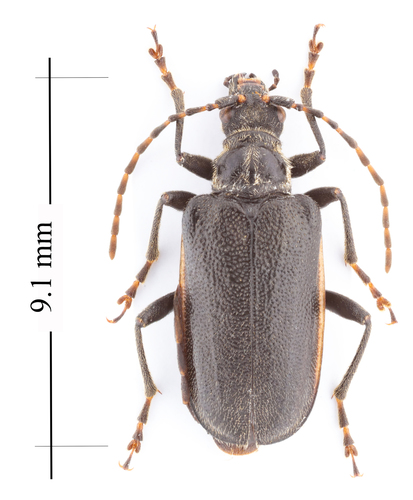
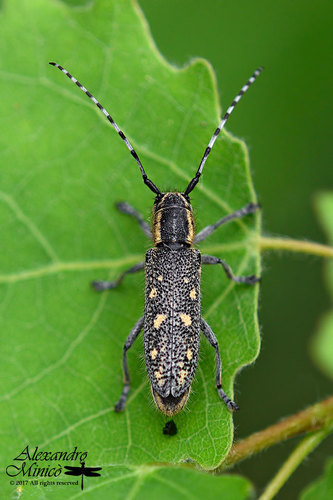
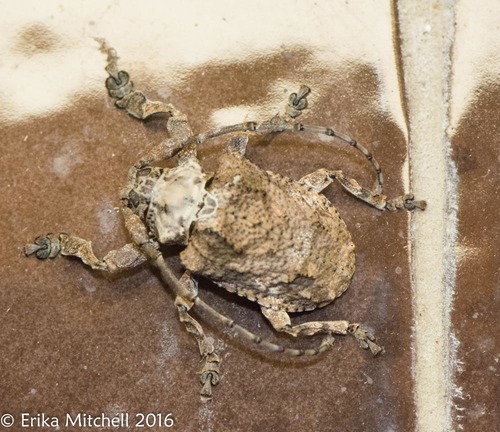
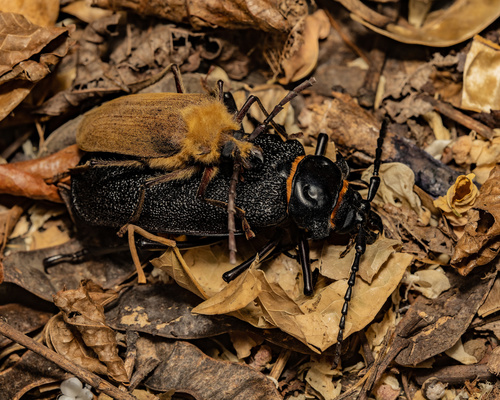
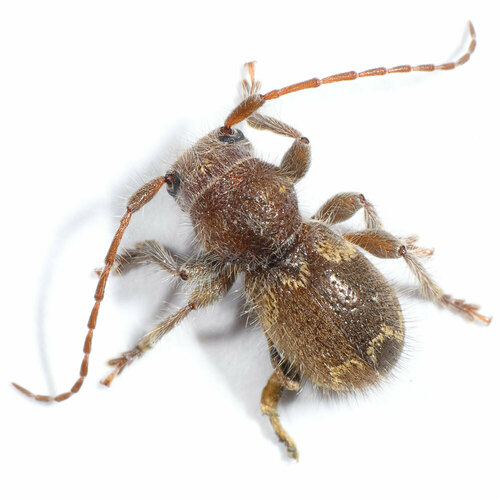
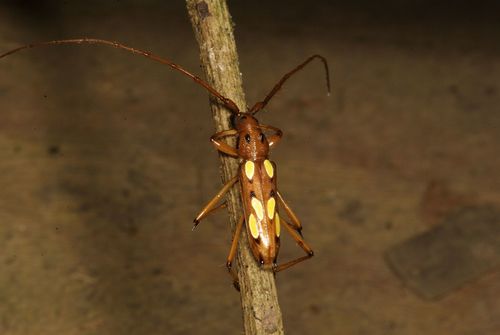
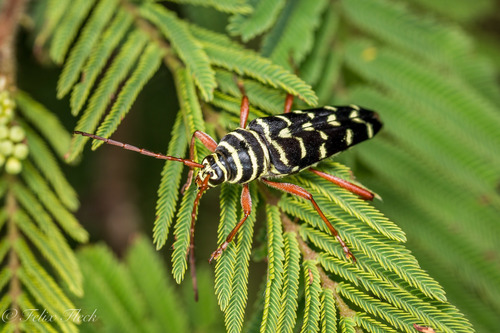
Placosternus erythropus is a moderately slender beetle with exceptionally long antennae. In the United States, it is referred to as a "longhorned beetle", a common name shared by many other species in its beetle family. The body of this species can grow up to 20 millimeters (25/32 of an inch) in length. All four species that make up the genus Placosternus, as shown on their iNaturalist genus page, are quite similar to one another. Every Placosternus species is black with white or yellowish stripes and spots, and has red or reddish appendages. Identification is made even more difficult by the fact that species in the closely related genus Megacyllene are similar to Placosternus in shape, pattern and color, which can be seen on the iNaturalist page comparing 35 different Megacyllene species. The key physical difference between the two genera is that Megacyllene species have a spine on their basal antennomere, while Placosternus species lack this spine. An antennomere is any individual segment of an antenna, so a basal antennomere is the antennomere located at the base of the antenna. Placosternus erythropus can be found in western and southern Texas in the United States, ranging south through Mexico and Central America into Costa Rica. For their life cycle, females lay their eggs in the inner bark (phloem) of woody plants. When the eggs hatch, each larva chews out its own individual chamber. Larvae first feed on phloem connected to the cambium, then later burrow into the wood (xylem). When larvae are ready to pupate, they widen their tunnel and line it with wood shavings or fibers, then pupate inside this lined space. Newly emerged adults chew an oval tunnel that leads to the outside of the wood, then fly away. In Mexico, Placosternus erythropus is called Escarabajo Barrenador del Mezquite, which translates to the "Mesquite Borer Beetle". Despite this common name, both adults and larvae use a wide variety of trees besides mesquite. These additional host plants include acacias, apple, cherry, plum, peach, pear, hawthorn, eucalyptus, ash, and elm, as well as shrubby species in the Aster Family: Montanoa tomentosa and Gymnosperma glutinosum. The species has also been observed attacking sycamores and citrus trees. Adults have even been recorded feeding on sliced red bell peppers that were set out to dry in sunlight.