About Pittosporum angustifolium G.Lodd.
Growth Form and Size
Pittosporum angustifolium G.Lodd. is a weeping shrub or tree that grows up to around 10 m (33 ft) tall.
Bark Characteristics
It has thick, fissured bark that is fibrous or flaky in texture.
Leaf Arrangement and Shape
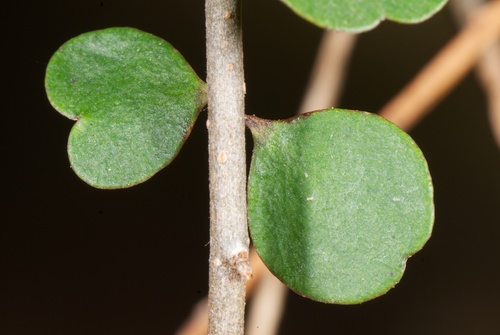
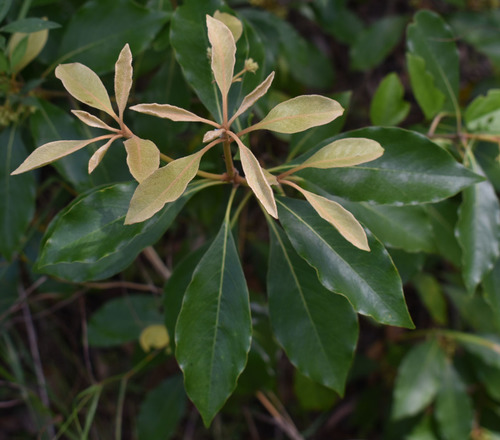
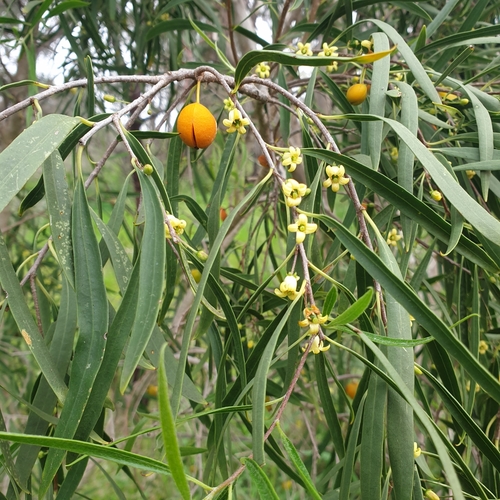
Its leaves are arranged alternately along stems, and shaped oblong, linear, or narrowly elliptic.
Leaf Dimensions
The leaves are curved, measure 50–90 mm (2.0–3.5 in) long and 6–11 mm (0.24–0.43 in) wide, and grow from a petiole 5–14 mm (0.20–0.55 in) long.
Flower Arrangement
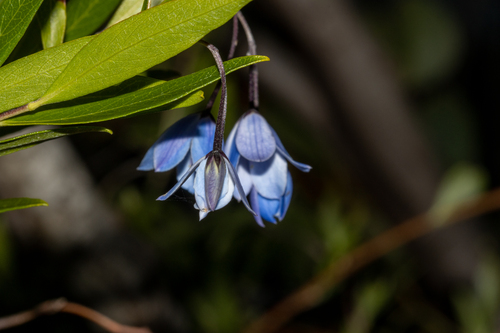
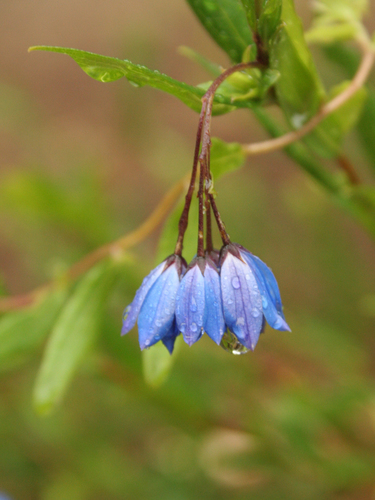
Flowers of this species are dioecious, arranged singly, in small groups in leaf axils, or in clusters at the ends of branches.
Pedicel Length
Each flower sits on a pedicel 5–12 mm (0.20–0.47 in) long.
Male Flower Features
Male flowers grow in groups of four, have a small pistil, and stamens that are 5.5–6.0 mm (0.22–0.24 in) long.
Female Flower Features
Female flowers have an ovary roughly 5 mm (0.20 in) long, with a short style.
Flowering Period
Flowering occurs mostly from winter through spring.
Fruit and Seed Characteristics
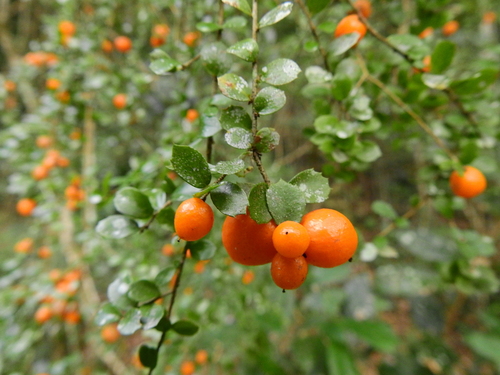
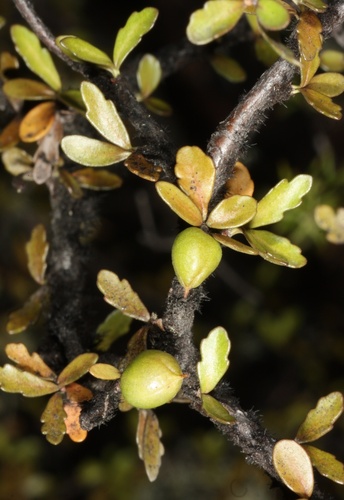
The fruit is an oval to spherical yellowish capsule 8–14 mm (0.31–0.55 in) in diameter, containing sticky, reddish-brown seeds that are 4–5 mm (0.16–0.20 in) long.
Distribution Range
This species is widespread across Australia, occurring in every state except Tasmania, as well as the Northern Territory, and is found mostly in inland parts of the country.
Habitat and Soil Preferences
It grows in mallee communities, on alluvial flats and ridges, in dry woodland, and in loamy, clay, or sandy soils, but it is never a common species.
Environmental Tolerance
It is resistant to drought and frost, and can survive in areas with as little as 150 mm (5.9 in) of annual rainfall.
Lifespan
As a resilient desert species, individual plants may live for over 100 years.
Ornamental Use
Pittosporum angustifolium is used as an ornamental garden plant, valued for its weeping growth habit and orange fruit.
Indigenous Traditional Use Overview
Indigenous Australians have used parts of this plant for various purposes, including medicine, with uses varying between regions and communities.
Traditional Food Uses
Some groups ate or chewed the gum that oozes from the plant's branches, while others ground its seeds into flour to use as food.
Traditional Medicinal Preparations
Most commonly, leaves, seed, or wood were steeped in hot water to make a poultice or tea for medicinal use, to relieve digestive issues, internal pain and cramping, reduce chronic fatigue, induce lactation, treat colds, muscle sprains, eczema, and other causes of itching.
Fruit Edibility Note
Despite being commonly called "native apricot", the bitter fruit is very rarely used as a food source.
Identified Bioactive Compounds
Ongoing international scientific research has begun to identify medically relevant biochemistry in P. angustifolium, including antimicrobial, antibacterial, antioxidant, antifungal, anti-inflammatory, and galactogogue compounds.
Toxicity Profile
Study findings indicate that biochemical compounds from this plant have low toxicity when consumed by humans.
Potential Therapeutic Effects
These compounds may be able to inhibit microbial and fungal growth, induce lactation, trigger apoptosis in cancer cells, protect cells against free radicals and oxidisation, and increase the efficacy of commonly prescribed antibiotics.
Alignment with Traditional Knowledge
These findings align with the plant's traditional uses and Indigenous knowledge.
Central Queensland University Study
Central Queensland University ran a long-term project to investigate the potential medicinal uses of native Australian plants, in consultation with Ghungalu elder Uncle Steve Kemp, who provided plant material including P. angustifolium for the project.
Confirmed Therapeutic Compounds
Cytotoxic, antioxidant, and phenolic compounds have been identified in the species, strongly supporting the therapeutic benefits and potential anti-cancer properties of the plant.
Additional Cytotoxicity Research
Other studies have also identified cytotoxic properties in this species.