About Pistacia vera L.
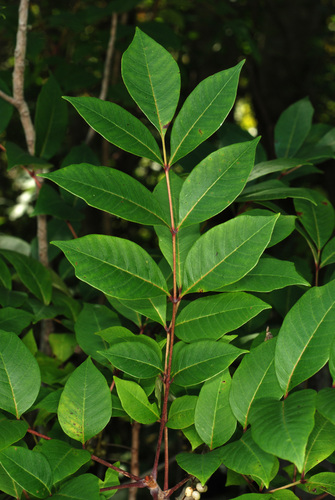
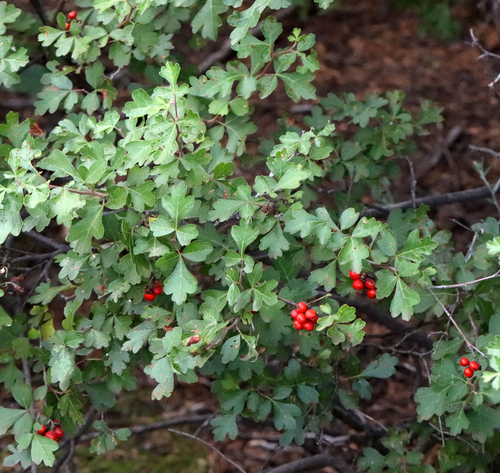
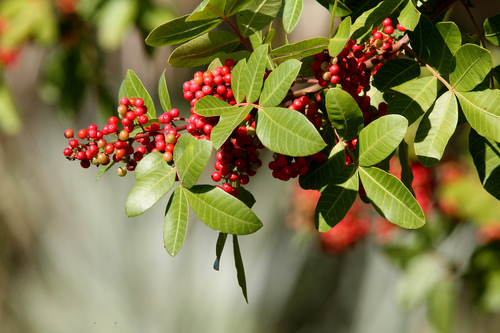
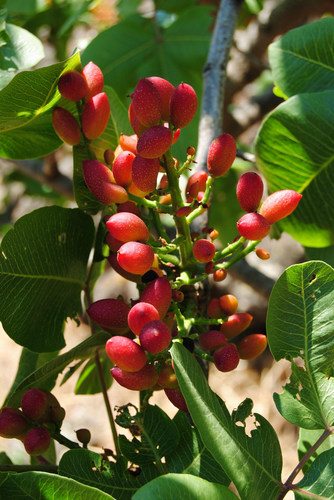
Pistacia vera L. is a tree that can grow up to 10 metres (33 feet) tall. It produces deciduous, pinnate leaves that measure 10–20 centimetres (4–8 inches) in length. This species is dioecious, meaning male and female flowers grow on separate individual trees. Its flowers are unisexual, lack petals, and are borne in panicles. The fruit it produces is a drupe that contains an elongated seed; this seed is the edible portion of the plant. While the seed is commonly referred to as a nut, it is a culinary nut rather than a botanical nut. The fruit has a hard, cream-colored outer shell. The seed itself has a mauve-colored outer skin and light green inner flesh, with a distinctive flavor. As the fruit ripens, its shell changes from green to an autumnal yellow or red blend, then abruptly splits partly open. This splitting process is called dehiscence, and it occurs with an audible pop. The splitting trait was intentionally selected for by humans, and commercial cultivars of Pistacia vera L. vary in how consistently they produce split shells. On average, each mature tree produces around 50 kilograms (110 pounds) of seeds, equal to around 50,000 seeds, every two years.
Pistacia vera L. is a desert plant that is highly tolerant of saline soil. It has been recorded growing well when irrigated with water that contains 3,000–4,000 ppm of soluble salts. In suitable conditions, these trees are fairly hardy, and can survive winter temperatures as low as −10 °C (14 °F) and summer temperatures as high as 48 °C (118 °F). They require a sunny growing position and well-drained soil. They grow poorly in high humidity, and are susceptible to root rot in winter if they receive too much water and are planted in soil that does not drain well enough. Long, hot summers are required for the fruit to ripen properly.
Pistacia vera L. trees are vulnerable to many diseases and insect infestations, including infestation by Leptoglossus clypealis in North America. One common harmful infection is caused by the fungus Botryosphaeria, which leads to panicle and shoot blight. Symptoms of this infection include death of flowers and young shoots, and it can damage entire pistachio orchards. In 2004, the rapidly growing pistachio industry in California was threatened by this blight, which was first discovered in the region in 1984. In 2011, an anthracnose fungus caused a sudden 50% loss of the Australian pistachio harvest. Severe drought across several years in Iran from approximately 2008 to 2015 caused significant declines in pistachio production.
Like other tree seeds, pistachios can be contaminated with aflatoxin if they are poorly harvested or processed. Aflatoxins are potent carcinogenic chemicals produced by molds such as Aspergillus flavus and A. parasiticus. Mold contamination can come from soil, poor storage conditions, or be spread by pests. High levels of mold growth typically appear as gray to black filament-like growth, and eating pistachios infected with mold and contaminated with aflatoxin is unsafe. Aflatoxin contamination is a common risk, especially in warmer, more humid environments. Food contaminated with aflatoxins has caused frequent outbreaks of acute illness in parts of the world, and outbreaks in places such as Kenya have led to multiple deaths.
Before harvest, pistachio shells typically split naturally, and an outer hull covers the intact seed. This hull protects the inner kernel from invasion by molds and insects, but hull protection can be damaged in the orchard by poor orchard management, by birds, or after harvest, which makes aflatoxin contamination far more likely. Some pistachios develop an "early split", where both the hull and shell split early. Damage or early splits can lead to aflatoxin contamination. In some cases, harvested pistachios may be treated to keep aflatoxin contamination below strict food safety thresholds; in other cases, an entire batch must be destroyed due to contamination.
Like other members of the family Anacardiaceae, which includes poison ivy, sumac, mango, and cashew, pistachios contain urushiol, an irritant that can trigger allergic reactions. Due to their high oil content and naturally occurring lipases, large quantities of pistachios self-heat when exposed to moisture, and can spontaneously combust if stored with combustible fabric such as jute.
Pistacia vera L. trees can live up to 300 years. They are planted in commercial orchards, and take approximately 7 to 10 years to reach significant production levels. Production follows an alternate or biennial bearing cycle, meaning harvests are heavier every other year. Peak production is reached when trees are around 20 years old. Trees are usually pruned to a manageable size to make harvest easier. One male tree produces enough pollen to fertilize 8 to 12 seed-bearing female trees. In the United States and Greece, harvest is often done with specialized equipment that shakes the drupes off the tree. After hulling and drying, pistachios are sorted by whether their shells are open or closed, then roasted or processed by special machines to produce separated pistachio kernels.
The edible pistachio kernels are often eaten whole, either fresh or roasted and salted. They are also used in pistachio ice cream, traditional Persian ice cream, kulfi, spumoni, pistachio butter, pistachio paste, and confections including baklava, pistachio chocolate, pistachio halva, pistachio lokum, and biscotti. They are also added to cold cuts such as mortadella. Americans make pistachio salad, which combines fresh pistachios or pistachio pudding with whipped cream and canned fruit. Indian cooking uses pounded pistachios with grilled meats, and in pulao rice dishes. The pistachio shell is naturally beige in color, but commercial pistachios may have shells dyed red or green. Originally, dye was used to cover stains on shells that occurred when pistachios were picked by hand. In the 21st century, most pistachios are harvested by machine, so their shells do not have these stains and remain undyed.