About Pistacia chinensis Bunge
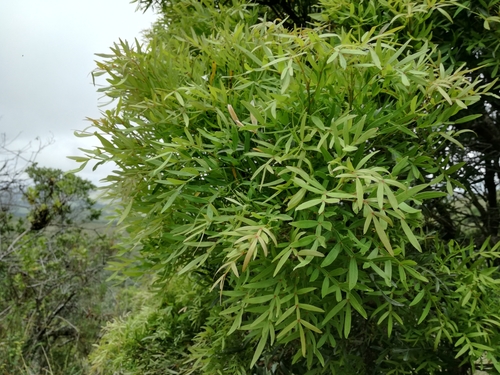
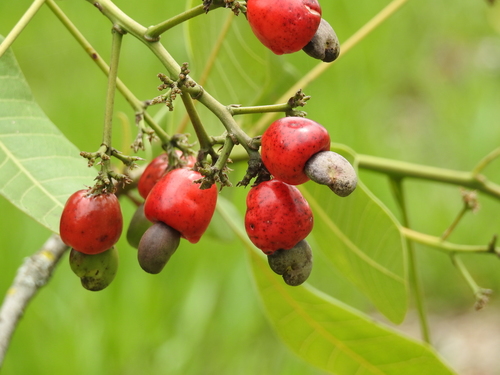
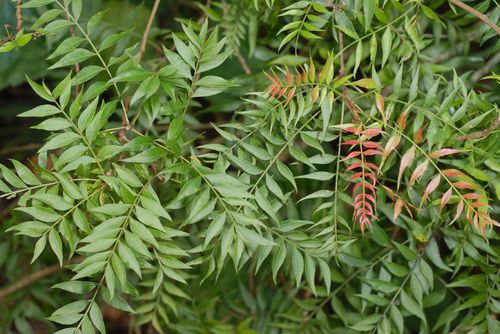
Pistacia chinensis Bunge is a hardy species that can tolerate harsh growing conditions and low-quality soils, and grows up to 20 m (66 ft) tall. It produces deciduous, alternate pinnate leaves that are 20–25 cm long, with 10 or 12 leaflets, and the terminal leaflet is usually absent. Its flowers grow in panicles 15–20 cm (5.9–7.9 in) long at branch ends; this species is dioecious, meaning individual plants are either male or female. The fruit is a small red drupe that turns blue when ripe, and holds a single seed.
Its native habitat consists of hill and mountain forests growing on rocky soils, at elevations between 100–3,600 m (330–11,810 ft) above sea level. It is native to Mainland China (found everywhere except the far north and far west) and Taiwan.
Chinese pistache grows best in full sun and is intolerant of shade. It is the most frost-tolerant species in the Pistacia genus, withstanding temperatures down to around -25 °C, but it is most highly valued for cultivation in warm climates. It is planted for its striking fall foliage, which develops even as far south as Orlando, Florida.
It is a popular choice for street trees in urban settings because it is very drought tolerant and can survive harsh environments. It is also used as grafting understock for Pistacia vera. In China, oil extracted from its seeds is used for biodiesel production. Its wood is used to make furniture, and it can be processed to yield a yellow dye. It is also used in classical Chinese garden design.