About Piptochaetium avenaceum (L.) Parodi
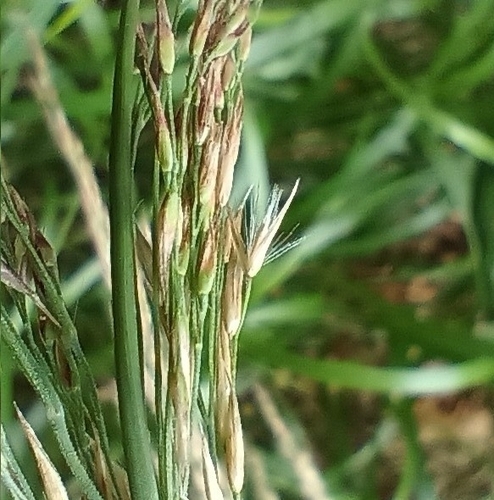
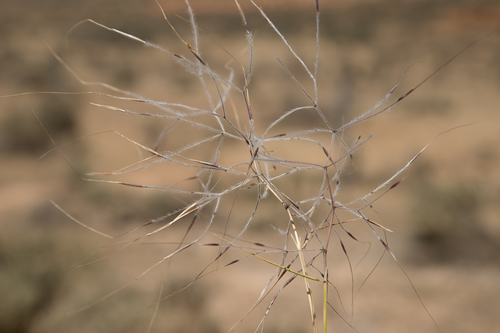
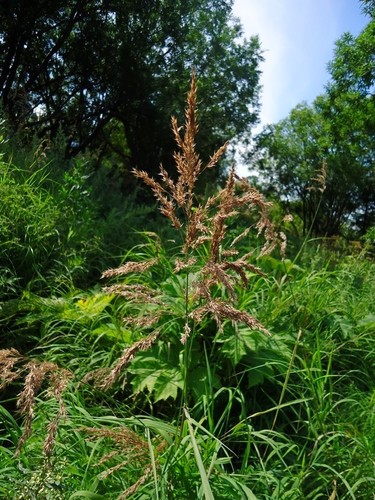
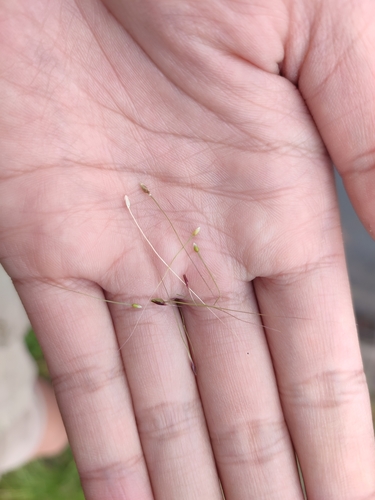
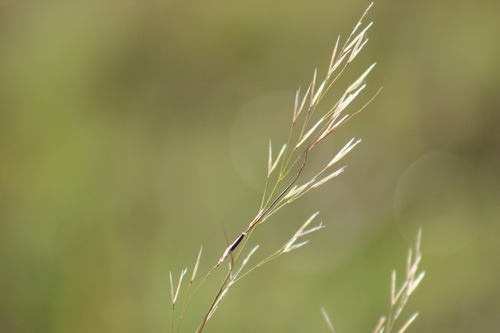
Piptochaetium avenaceum, commonly called Black oat grass, has fine, bristle-like leaf texture. Its leaves are long and elongate, and the whole plant can reach up to 3 feet (0.91 m) in height. It is easily recognizable when flowering or fruiting. It can be identified by its open inflorescences, which are thin and usually cannot be seen from a distance. The branches within these inflorescences are very thin, creating an effect where the spikelets appear to be floating in mid air. This plant also has awns, which are hairlike multicellular projections that obtain nutrients through photosynthesis. The awns twist and untwist in response to changes in surrounding humidity and temperature, a process that helps this species thrive in soil. Awns protrude from individual flowers in the plant’s flowering clusters, which typically develop between late spring and early summer, normally April to June. This species also produces panicles that rise above the plant’s rolled, thread-like leaves. Panicles hold slender open branches, a few narrow scales, and spikelets that each contain one flower. Ripened flowering heads within the spikelets usually stay on the grass until autumn, when the awns bend and twist and spread widely away from the scales. The seeds are shaped like sharp needles. The palea, a bract-like organ found in grass species, is long and blackish, and its upper part holds bent and twisted awns. Piptochaetium avenaceum is most commonly found in the eastern United States, across a variety of habitat types including grasslands, deciduous hardwood hammocks, thickets, dry woods, upland woodlands and forests such as dry oak woodlands, savannas, clearings, rocky slopes and outcrops. It also occurs in the Great Lakes region of the U.S. Midwest, in Ontario, Canada, and in the shortgrass prairies of the south-central United States. Documented locations for the species include Alabama, Pennsylvania, Rhode Island, New York, Florida, North Carolina, South Carolina, Georgia, Michigan, Illinois, Oklahoma, and other states adjacent to these areas.