About Piptatherum holciforme (M.Bieb.) Roem. & Schult.
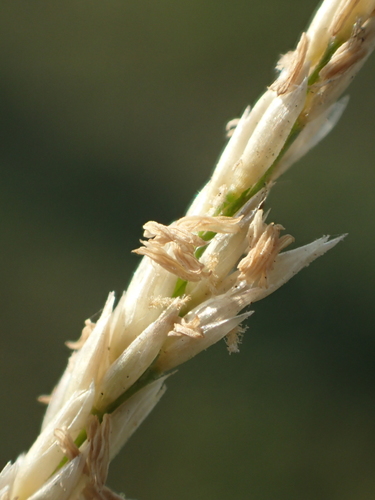
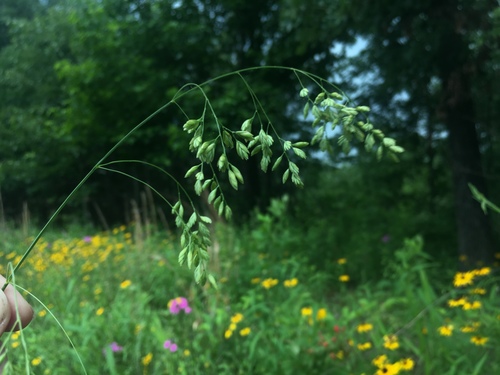
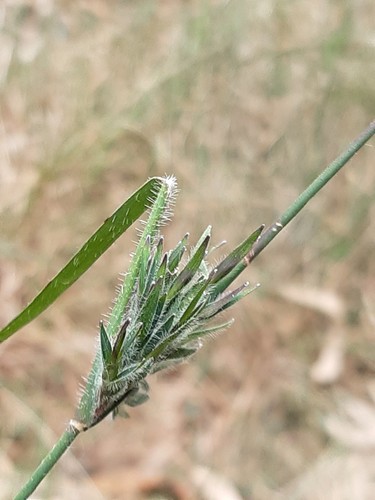
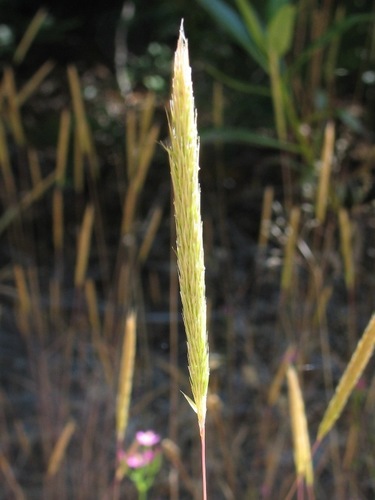
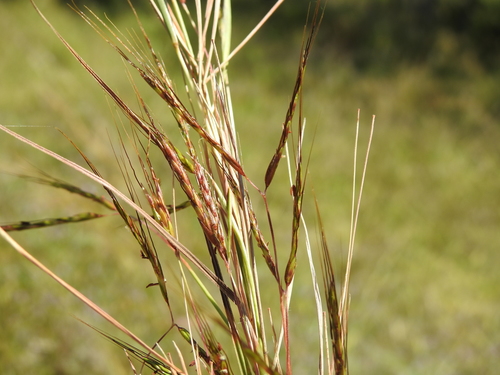
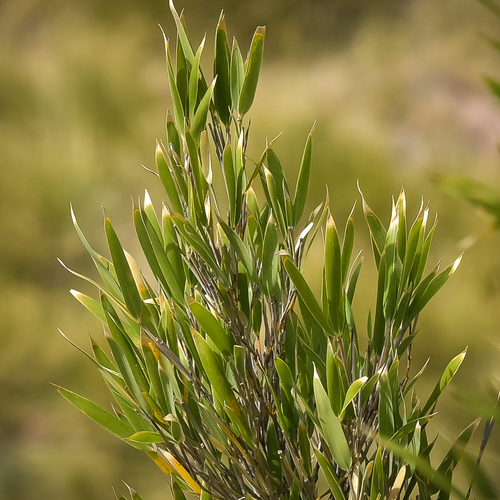
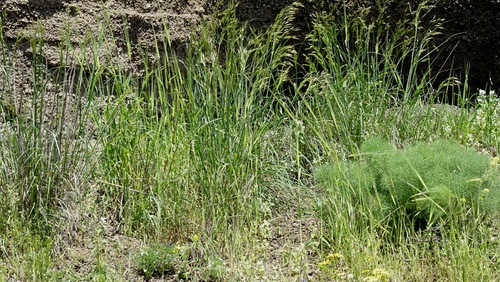
Piptatherum holciforme is an erect perennial grass that reaches 50–80 centimetres (20–31 inches) in height. Dissected leaves branch from its base, and it grows in clusters of several propagation runners. Its stems are sessile, and they typically tilt slightly forward under the weight of the inflorescence; each stem consists of 3–4 internodes. Grains are produced on a panicle, which holds spikelets each with a short caducous awn. Individual grains are ovoid, pointed at one end, and have a shiny black appearance. Each seedling has micro-hairs. Without the awn, the combined length of the seed and the lower chaff surrounding it is 1–1.5 cm. This makes the seed-bearing spikelets of Piptatherum holciforme the largest and longest of all Piptatherum species that grow in Israel. Piptatherum holciforme grows in disturbed waste habitats, along waysides, and adapts well to moist, stony chalkstone soils in Mediterranean scrubland. Globally, it is distributed across Europe, North Africa, and the Middle East. It is unclear to what degree this cereal grass was cultivated in the past by indigenous peoples, due to confusion between multiple varieties of millet and panic. Grains of Piptatherum holciforme, alongside other grains, were found stored in a facility at Ohalo, a Paleolithic hunter-gatherer archaeological site located on the shore of the Sea of Galilee in Galilee. In Israel, seedlings of this grass, sometimes called hairy millet grass, are occasionally used to reseed marginal land for pasture. Its millet can be ground into meal and prepared as porridge.