About Pinus taeda L.
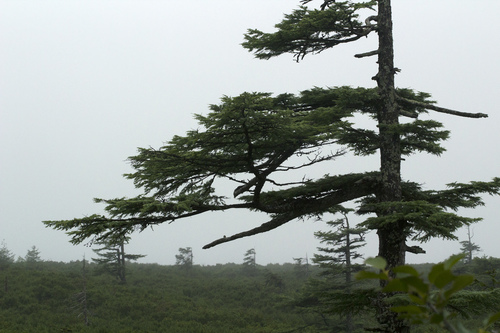
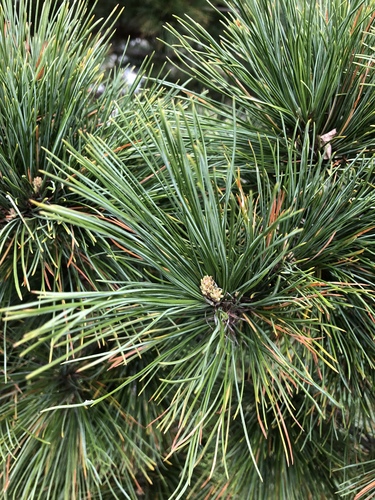
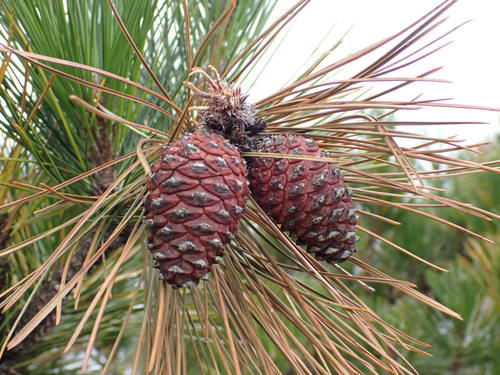
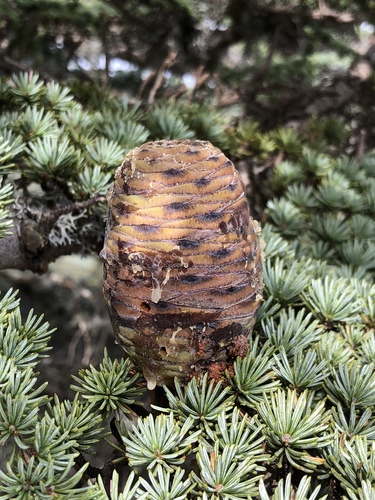
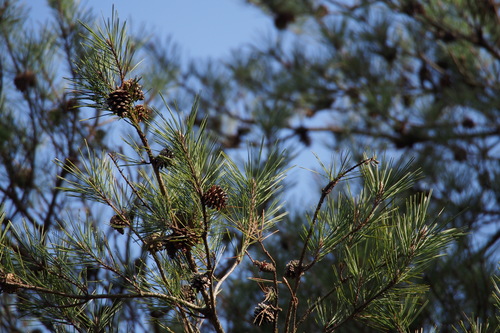
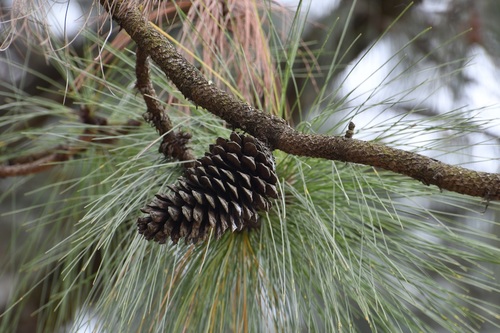
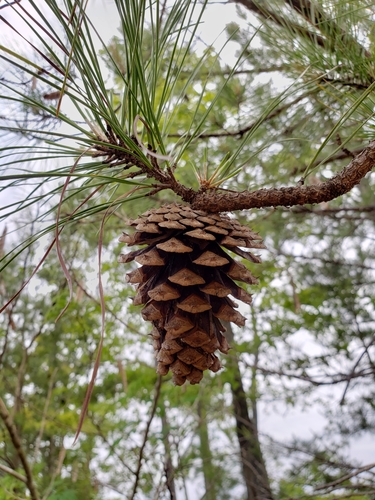
Pinus taeda L., commonly known as loblolly pine, typically reaches 30–35 meters (98–115 feet) in height and 0.4–1.5 meters (1.3–4.9 feet) in diameter. Exceptional specimens can grow up to 50 m (160 ft) tall, making it the largest of the southern pines. Its needles grow in bundles called fascicles of three, and are sometimes twisted. They measure 12–22 centimeters (4 3⁄4–8 3⁄4 inches) long, an intermediate length for southern pines: shorter than the needles of longleaf pine or slash pine, but longer than those of shortleaf pine and spruce pine. Needles range in color from yellowish-green to grayish-green, and usually persist for up to two years before falling, which gives the species its evergreen trait. While some needles drop throughout the year due to severe weather, insect damage, or drought, most needles fall during the autumn and winter of their second year. The species' seed cones start green and ripen to pale buff-brown. They are 7–13 cm (2 3⁄4–5 in) long and 2–3 cm (3⁄4–1 1⁄4 in) wide when closed, opening to 4–6 cm (1 1⁄2–2 1⁄4 in) wide. Each cone scale bears a sharp spine 3 to 6 millimeters (1⁄8 to 1⁄4 in) long. On older trees, the bark is reddish brown, deeply fissured, and broken into irregular, broad, scaly plates. Branches are reddish-brown to dark yellowish brown. Loblolly pine is one of the fastest growing pine species, with an average growth rate of 2 feet per year. This fast growth makes it a valuable species for the lumber industry. Its lumber is sold as yellow pine lumber, and used for similar purposes as other southern pines such as stronger longleaf and shortleaf pines. It is also used as pulpwood. The tallest currently known loblolly pine, which stands 51.4 m (169 ft) tall, and the largest known by volume, which measures 42 cubic meters (1,500 cubic feet), are both located in Congaree National Park. In terms of ecology, since widespread wildfire suppression began, loblolly pine has become common in parts of the Deep South that were once dominated by longleaf pine, and in northern Florida specifically, once dominated by slash pine. It grows rapidly even among the generally fast-growing southern pines. Several insect species including certain moths and beetles feed on loblolly pine's young shoots. One of the most notable of these insects is the Nantucket Pine Tip moth, which bores into young shoots and consumes the inner shoot tissue. The yellowish, resinous wood of this tree is prized for lumber and is also used for wood pulp. Loblolly pine is commercially grown in large extensive plantations. It is the dominant pine species of the Lost Pines Forest around Bastrop, Texas, and in McKinney Roughs Nature Park along the Texas Colorado River. These are isolated populations growing on areas of acidic sandy soil, surrounded by alkaline clays that are unsuitable for pine growth. One study using loblolly pines found that higher atmospheric carbon dioxide levels may help the trees better endure ice storms.