About Pinus sibirica Du Tour
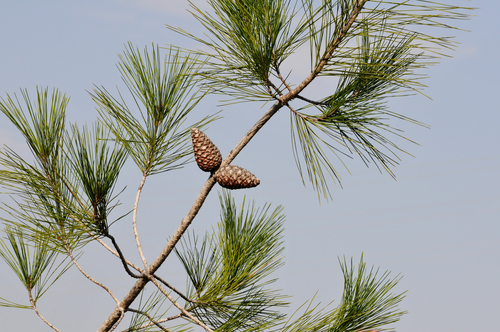
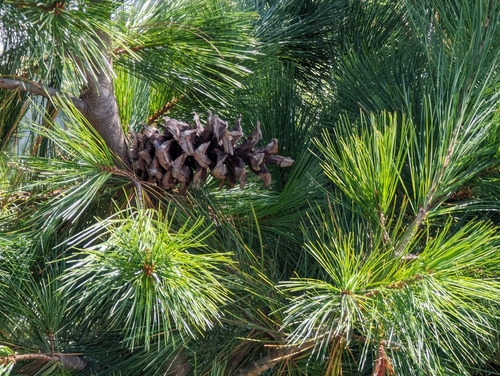
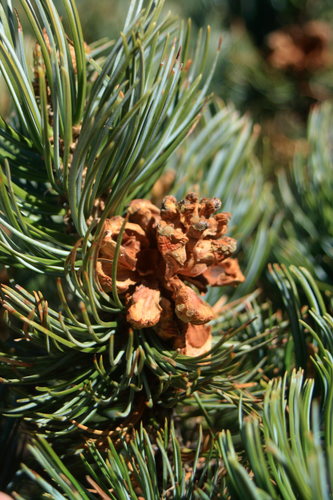
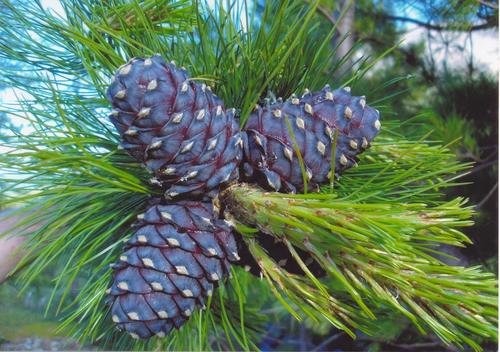
Pinus sibirica (common name Siberian pine) belongs to the white pine group, Pinus subgenus Strobus. Like all members of this group, its leaves (called 'needles') grow in fascicles (bundles) of five, with a deciduous sheath, and measure 5–10 cm long. Siberian pine cones are 5–9 cm long. Its 9–12 mm long seeds have only a vestigial wing and are dispersed by spotted nutcrackers. Some botanists classify Siberian pine as a variety or subspecies of the very closely related Swiss pine (Pinus cembra). It can be distinguished from Swiss pine by its slightly larger cones, and needles that have three resin canals instead of two. Like other white pines native to Europe and Asia, Siberian pine is highly resistant to white pine blister rust, a fungal disease caused by Cronartium ribicola. This disease was accidentally introduced from Europe into North America, where it has caused severe death of native North American white pines in many regions, especially the closely related whitebark pine. Siberian pine is very valuable for research into hybridisation and genetic modification to develop rust resistance in these North American species. Across the northern part of its range, Siberian pine grows at low altitudes, typically 100–200 m. Further south, it is a mountain tree that grows at altitudes between 1,000 and 2,400 m, and often grows all the way to the alpine tree line in these southern areas. Mature Siberian pines can grow up to 30–40 m in height, with a trunk diameter of up to 1.5 m, and can live for a maximum of 800–850 years. Siberian pine is a popular ornamental tree grown in parks and large gardens in cold climate locations such as central Canada. It grows steadily (though not quickly) on a wide range of site types. It is very tolerant of severe winter cold, surviving temperatures down to at least –60 °C, and is also tolerant of exposure to wind. Its seeds are harvested and sold as pine nuts, which are marketed as Cedar nuts (Russian: Кедровые орехи) in Russia.