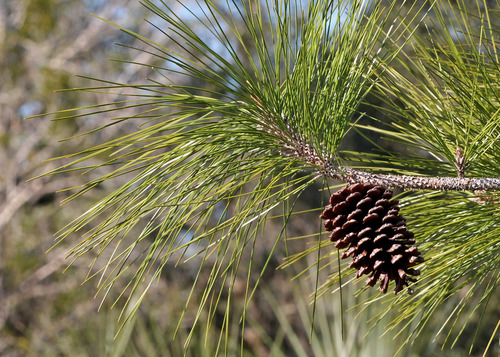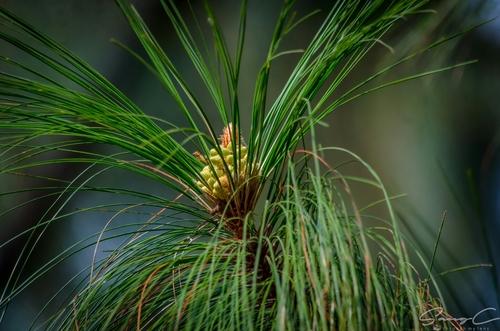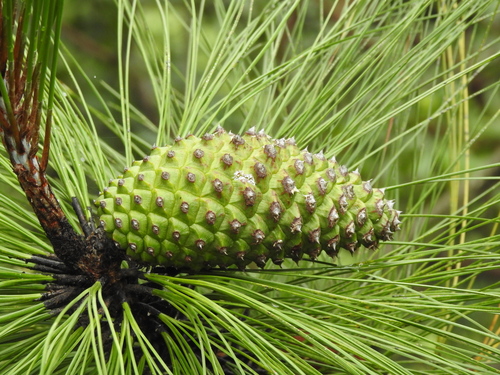
About Pinus pseudostrobus Lindl.
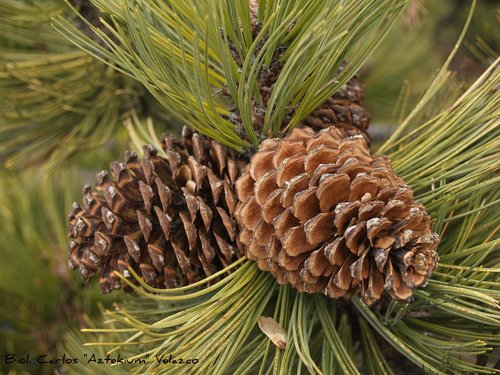
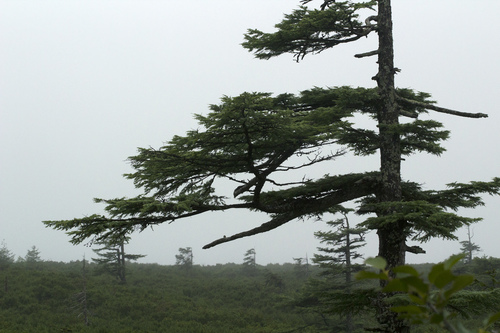
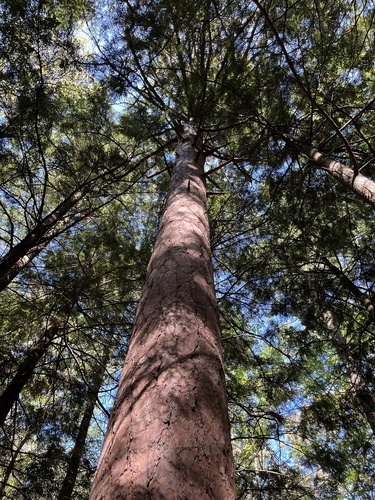
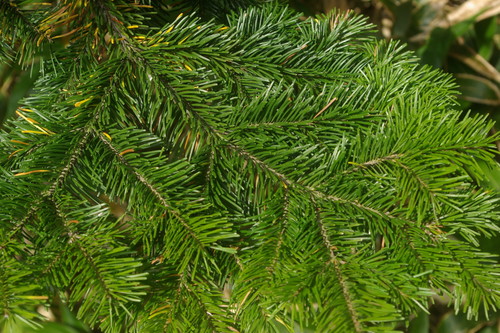
Pinus pseudostrobus is called the smooth-bark Mexican pine in English, and chamite or pacingo in Spanish. It is a tree native to forests of Mexico and Central America. It grows to between 8 and 25 metres tall, with a dense, rounded crown. Young bark is smooth, while mature bark is brown and fissured. Its native range extends from 26° to 15° north latitude, from Sinaloa, Mexico south to Nicaragua and Honduras, and it grows at altitudes between 850 and 3250 metres above sea level. It grows in regions where most rainfall occurs in summer, and in some forested areas such as southern Nuevo León, it is the tree with the largest volume per hectare. This species is threatened by logging and wood harvesting, and is currently the subject of ex situ conservation. It was formally described by English botanist John Lindley in 1839. Three accepted infraspecific taxa are recognised: Pinus pseudostrobus var. apulcensis (Lindl.) Shaw, also known as the Apulco pine, Pinus pseudostrobus f. protuberans Martínez, and Pinus pseudostrobus var. pseudostrobus. It has been introduced to near-sea-level sites in New Zealand, where it has grown well.