About Pinus nigra J.F.Arnold
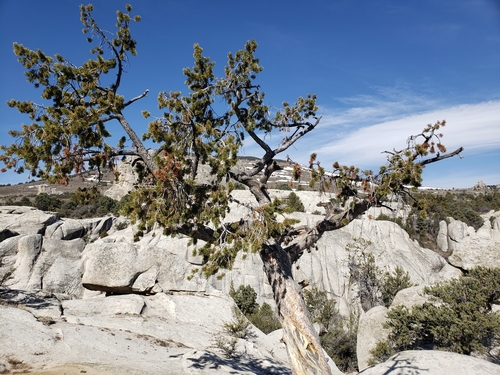
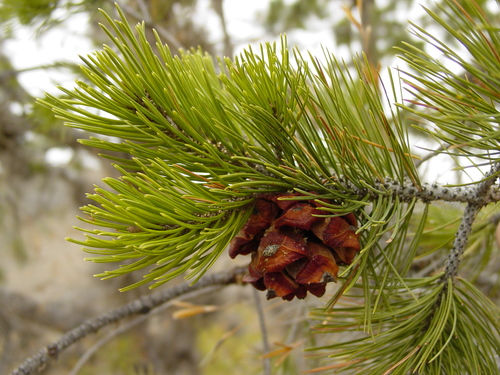
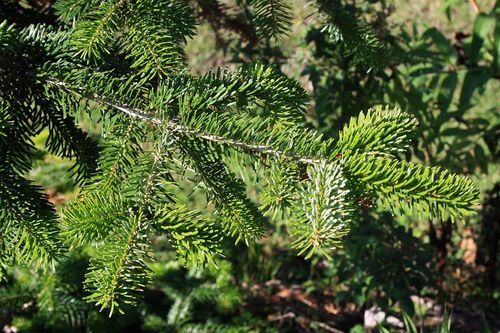
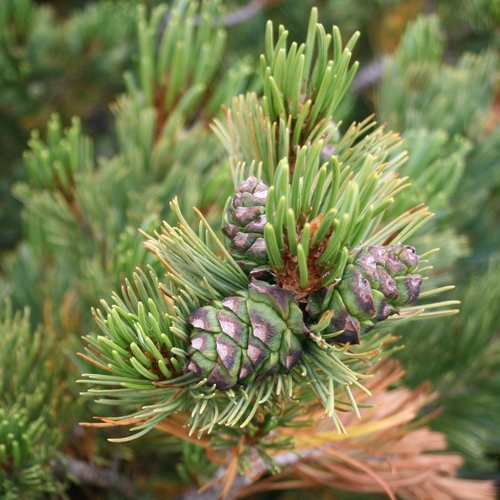
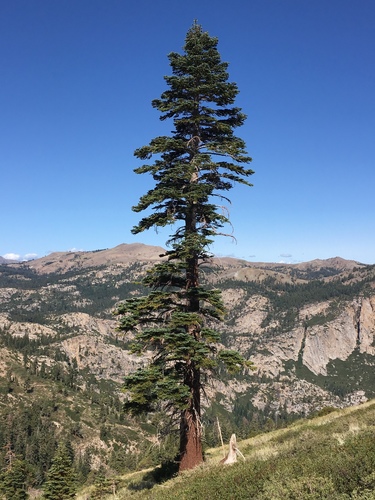
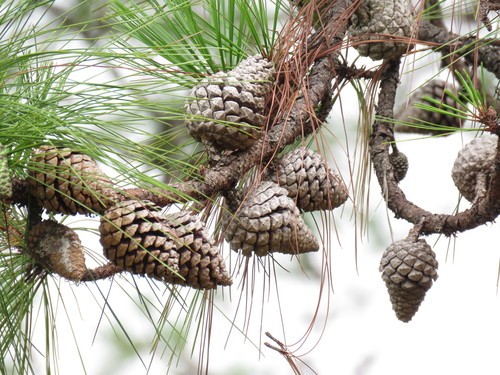
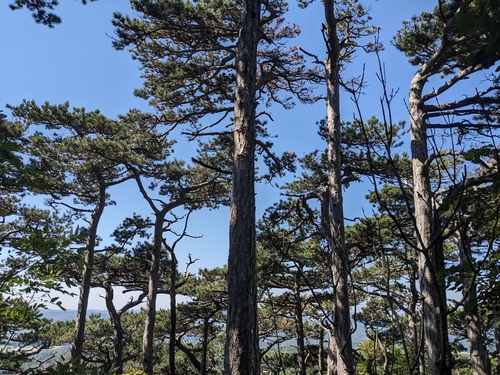
Pinus nigra J.F.Arnold is a large coniferous evergreen tree. At maturity, it reaches 20–55 m (66–180 ft) in height and spreads 6 to 12 m (20 to 39 ft) wide. Its bark is gray to yellow-brown, divided into scaly plates by wide flaking fissures that become more pronounced as the tree ages. Its needle-shaped leaves are thinner and more flexible in western populations of the species. Ovulate cones and pollen cones are produced from May to June. Mature seed cones measure 5–10 cm (2–4 in) long, rarely reaching 11 cm (4 in), and have rounded scales. The cones ripen from green to pale gray-buff or yellow-buff between September and November, approximately 18 months after pollination. The dark gray seeds are 6–8 mm (1⁄4–5⁄16 in) long, with a yellow-buff wing 20–25 mm (3⁄4–1 in) long; seeds are dispersed by wind when cones open between December and April. Seed production maturity is reached between 15 and 40 years of age, and large seed crops are produced every 2 to 5 years. Pinus nigra has a moderate growth rate, adding about 30–70 cm (12–28 in) of new growth per year. It typically has a rounded conic growth form that becomes irregular as it ages. Some individuals can live over 500 years, making the species long-lived. Multiple pests, including T. piniperda, can damage P. nigra. Pinus nigra occurs naturally in the Mediterranean forests, woodlands, and scrub biome. Most of its native range is located in Turkey. It grows at higher elevations in the South Apennine mixed montane forests ecoregion of southern Italy, and in the Tyrrhenian-Adriatic sclerophyllous and mixed forests ecoregion of Sicily. Remnant native populations exist in the Mediterranean conifer and mixed forests ecoregion of northwestern Africa, specifically in the Rif Mountains of Morocco and the Hodna Mountains of Algeria. It grows at elevations from sea level to 2,000 m (6,600 ft), and is most commonly found between 250–1,600 m (820–5,250 ft). Several varieties of the species have distinct common English names. Pinus nigra requires full sun to grow well, cannot tolerate shade, and is resistant to damage from snow and ice. It has become naturalized in parts of the midwestern United States, typically in areas south of the native ranges of the country's native pine species. In Mediterranean Europe and the Anatolian Peninsula (also called Asia Minor), tree species commonly associated with Pinus nigra include Scots pine (Pinus sylvestris), Serbian spruce (Picea omorika), Bosnian pine (Pinus heldreichii), Norway spruce (Picea abies), Taurus cedar (Cedrus libani), European silver fir (Abies alba), related fir species, multiple juniper species (Juniperus spp.), and various broadleaf trees. In Turkey, the subspecies pallasiana of this pine is used in a variety of ways, both topically and internally. It is also used for construction and by livestock. Documented uses include treating acne, the common cold, osteomyelitis, and viral infections; acting as an oral antiseptic; healing cracked hands and feet in winter; and sealing wooden roofs.