About Pinus leiophylla Schiede ex Schltdl. & Cham.
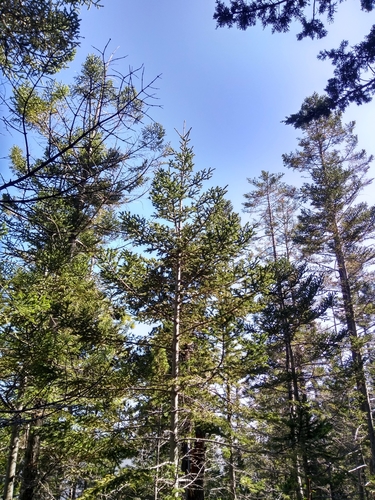
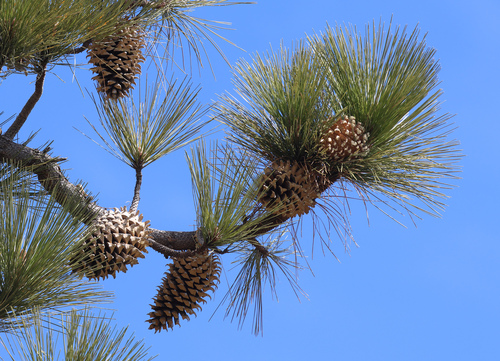
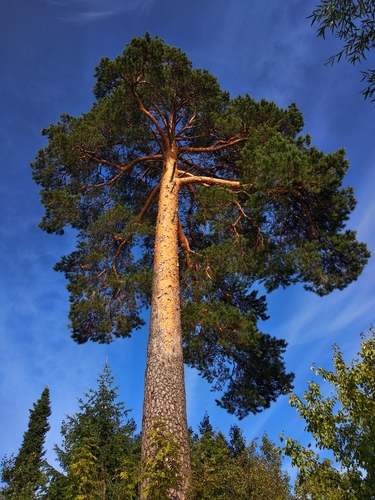
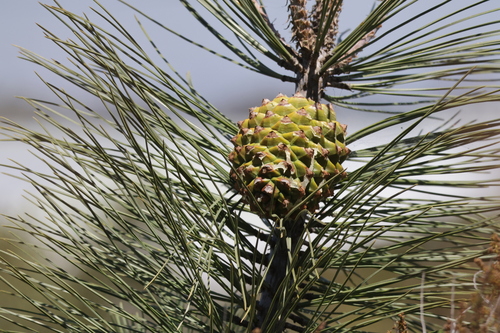
Pinus leiophylla Schiede ex Schltdl. & Cham. is a member of the Pinaceae family. It grows 20–30 m (66–98 ft) tall, with a trunk diameter of 35–80 cm (14–31 in). Its needles grow in bundles of three to five, and are 5–10 cm (2–4 in) long, rarely reaching 15 cm (6 in). Needle color ranges from bright glossy green to yellowish-green. The species produces ovoid cones that are 4–7 cm (1+1⁄2–2+3⁄4 in) long, rarely reaching 8 cm (3+1⁄4 in). Cones grow on 1–2 cm (1⁄2–3⁄4 in) long stalks, and are unusual because they take roughly 30–32 months to mature, which is one year longer than most other pine species. The bark of Pinus leiophylla is gray-brown and fissured. This species frequently grows in mixed stands alongside other pines and/or junipers; in Arizona, it most often grows with Apache Pine and Alligator Juniper, though it can also grow in pure stands. Its native habitat is prone to wildfire, and the species has uncommon adaptations for wildfire tolerance among pines. If the tree's crown is destroyed by fire, the trunk — protected by thick bark — will produce new shoots to regrow a full crown. Only two other pine species share this adaptation: Pitch Pine (P. rigida) and Canary Island Pine (P. canariensis). None of these three species are particularly closely related to one another, so this adaptation likely evolved independently in each lineage, an example of convergent evolution. The wood of Pinus leiophylla is hard, dense, and strong. It is used for construction, firewood, and railroad ties. Large areas of this tree have been planted in South Africa and Queensland, Australia. It is commercially planted at high altitudes in Kenya, Malawi, Zimbabwe, and Zambia.