About Pinus heldreichii H.Christ
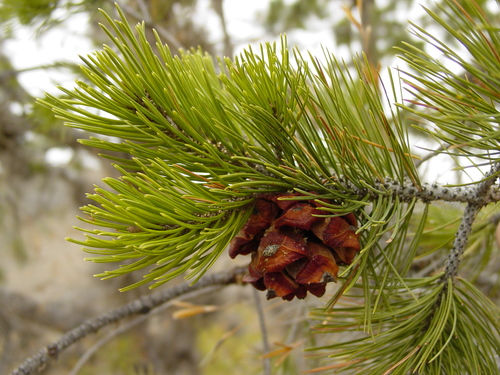
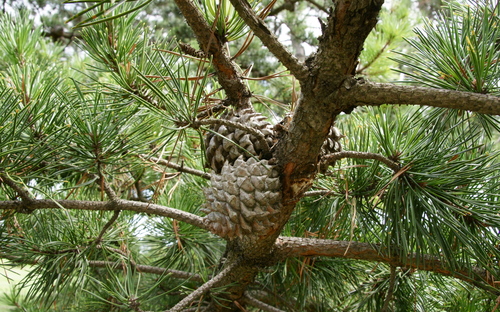
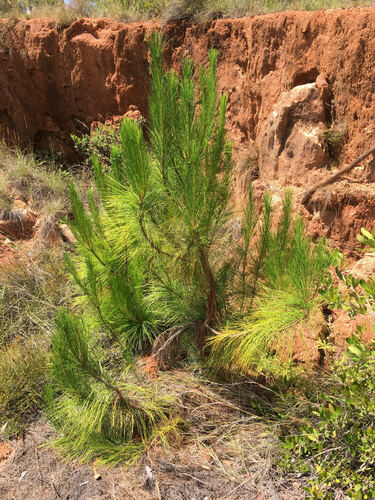
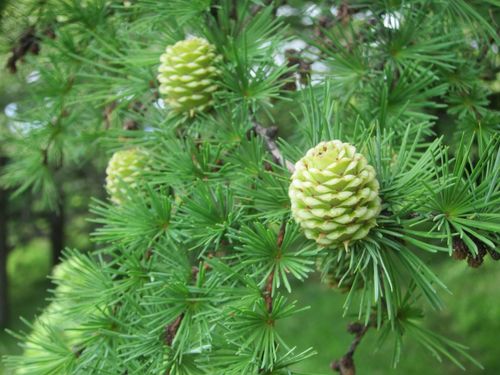
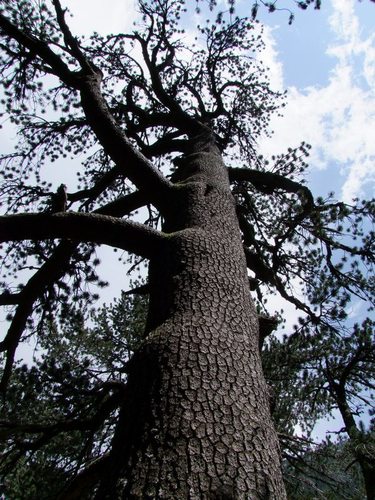
Pinus heldreichii H.Christ is an evergreen tree that grows 25 to 35 metres (82 to 115 feet) tall, with a trunk up to 2 metres (6+1⁄2 feet) in diameter. Young trees have smooth, pale grey bark; as trees age, the bark becomes hard and breaks into a tessellated pattern of small hexagonal to rounded plates, which is somewhat similar to crocodile skin. This species belongs to the hard pine group, Pinus subgenus Pinus. Its leaves, called needles, grow in fascicles (bundles) of two, and have a persistent sheath. The needles are 4.5 to 10 centimetres (1+3⁄4 to 4 inches) long and 1.5 to 2 millimetres (1⁄16 to 3⁄32 inches) thick. The species' cones are 5 to 9 cm (2 to 3+1⁄2 inches) long, with thin, fragile scales. Before they mature, cones are dark blue-purple, and they turn brown when they ripen, around 16 to 18 months after pollination. Its seeds are 6 to 7 mm (1⁄4 to 9⁄32 inches) long, with a 2 to 2.5 cm (3⁄4 to 1 inch) wing, and are dispersed by wind.
Pinus heldreichii is found in mountainous regions of Bosnia and Herzegovina, Montenegro, southwestern Bulgaria, Albania, North Macedonia, Kosovo, and northern Greece, where it grows on Valia Kalda, Smolikas, Vasilitsa, Mount Olympus, and other high mountains. It also grows locally in southern Italy, where it is the symbol of Pollino National Park. This pine grows at altitudes between 900 and 2,500 m (3,000 and 8,200 ft), and reaches the alpine tree line in these areas.
Pinus heldreichii can adapt to extreme environmental conditions, and successfully colonizes dry high-altitude sites. It is resistant to pollution from sulphur dioxide, hydrogen fluoride, nitrogen dioxide and ozone, and can also withstand wind, ice and heavy snow. These traits make it suitable for reforesting large dry and high-altitude areas. In southern Italy, it is planted because it is less susceptible to pests than other pine species. Commonly called Bosnian pine, this species is a popular ornamental tree for parks and large gardens. It grows reliably and steadily, though not quickly, across a wide range of sites, and develops a very neat, conical crown. It is also known for its highly decorative purple cones. The cultivars 'Smidtii' and 'Compact Gem' have received the Royal Horticultural Society's Award of Garden Merit. It is hardy to temperatures of at least −45 °C (−49 °F), and tolerates severe wind exposure. Many cultivated individuals are still grown under the names Pinus leucodermis or Pinus heldreichii var. leucodermis. The wood of this species is aromatic, and contains multiple types of monoterpenes and sesquiterpenes, which are essential oils, most noticeably limonene and cembrene. Because of this, the wood is commonly used in the Balkans to make wine barrels for white wines.