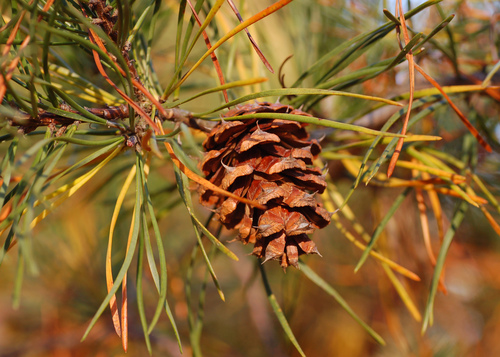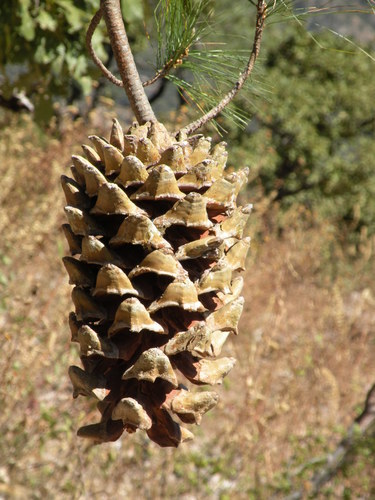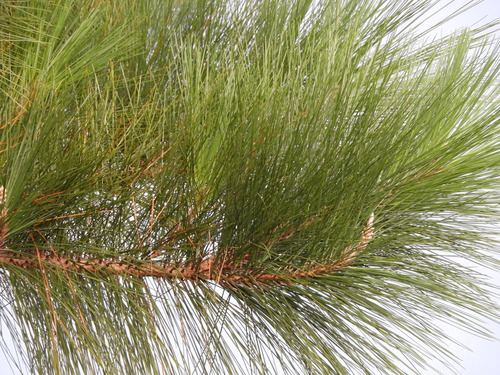
About Pinus caribaea Morelet
Pinus caribaea Morelet, commonly known as Caribbean pine, is a hard pine species native to Central America and the northern West Indies, specifically Cuba, the Bahamas, and the Turks and Caicos Islands. It is classified in subsection Australes of subgenus Pinus. It grows in tropical and subtropical coniferous forests including Bahamian pineyards, and occurs in both lowland savannas and montane forests. Caribbean pine is part of the Australes subsection of pines; it has been proposed that pines from this subsection reached the Caribbean basin from the southeastern United States. For the Bahamas population, researchers have proposed that this species emigrated into the region from Florida four or five thousand years ago, long after the end of the Ice Age, as the regional climate became wetter. Based on fossil species assemblages, it is believed that 18,000 years ago during the glacial maximum, when sea level was 120 metres (390 feet) lower than today, the environment of the Bahamas was a much less forested dry savannah. Analysis of paleoclimatic and genetic data has led to the proposal that P. caribaea ultimately originated in Central America. According to chloroplast genetic data, P. caribaea lineages colonized the Caribbean islands from Central American populations at least twice: one colonization event led to Cuban populations, and a second led to populations on the Bahamas. Fossils of the species are known from the Pleistocene of Florida. Periodic wildfires play a major role in shaping the distribution of this species. Caribbean pine regenerates quickly and aggressively, replacing broadleaf trees after fires. In areas without wildfires, ecological succession proceeds, and pine forest is eventually replaced by tropical broadleaf forest. Young Caribbean pines require bright sunlight to grow, and mature individuals are resistant to fire. Lumber and pulpwood harvested from this tree and shipped to Florida is the main export of the Abaco Islands. The Uverito forest in Venezuela, located between the states of Anzoátegui and Monagas, is the world's largest man-planted artificial forest, holding around 600,000 hectares of Caribbean pine plantations.