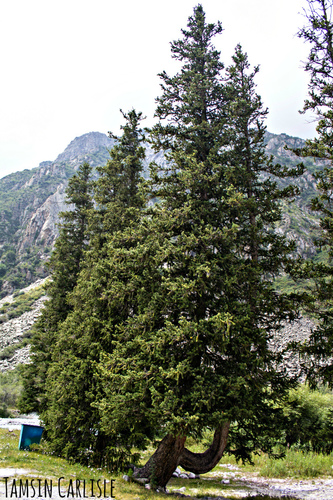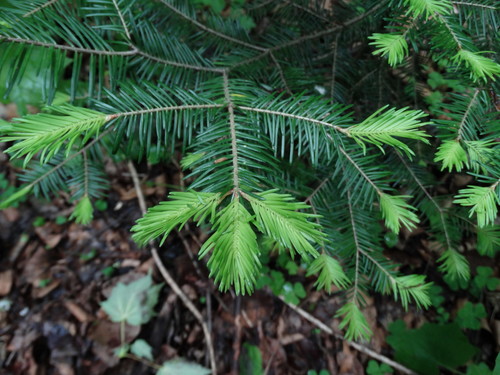
About Pinus armandii Franch.
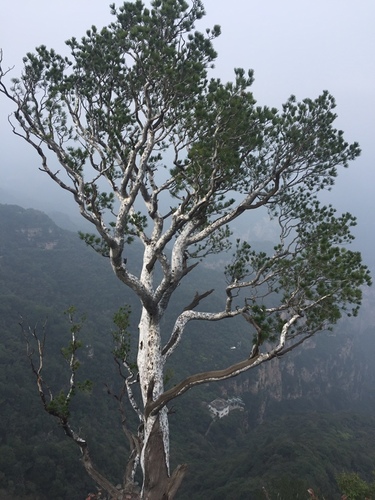
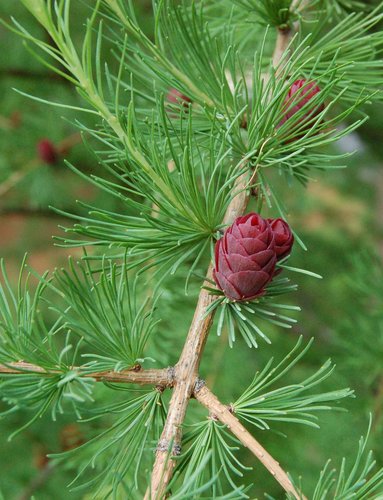
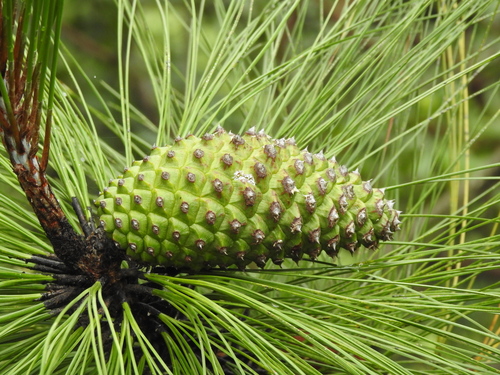
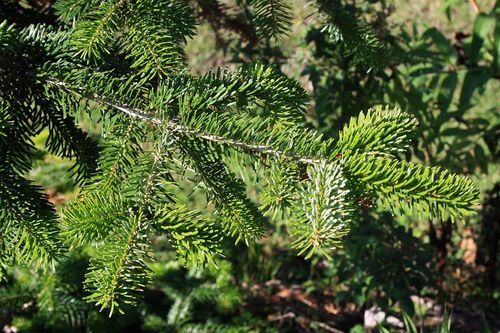
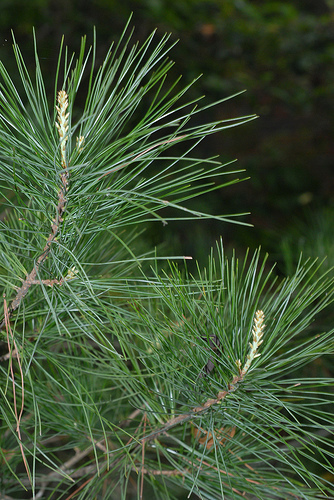
Pinus armandii Franch. belongs to the white pine group, Pinus subgenus Strobus. Like all members of this subgenus, its leaves (called needles) grow in fascicles (bundles) of five, with a deciduous sheath. The needles are 8–20 cm (3+1⁄4–7+3⁄4 in) long. Its cones are 9–22 cm (3+1⁄2–8+3⁄4 in) long and 6–8 cm (2+1⁄4–3+1⁄4 in) broad, and have stout, thick scales. The species produces large seeds that are 10–16 mm (0.39–0.63 in) long, with only a vestigial wing; these seeds are dispersed by southern nutcrackers. Cones mature in their second year, approximately 18 months after pollination. The species is recognized to have two or three varieties. Pinus armandii var. armandii occurs across the entire range of the species, except for the populations covered by the other varieties. Pinus armandii var. mastersiana grows in the mountains of central Taiwan. Pinus armandii var. dabeshanensis is found in the Dabie Mountains on the Anhui-Hubei border of China. This variety may alternatively be treated as a separate species, Pinus dabeshanensis (Dabie Mountains pine). To add further taxonomic confusion, the Flora of China lists this taxon as P. fenzeliana var. dabeshanensis. The IUCN has assessed var. dabeshanensis as the separate species Pinus dabeshanensis and lists it as vulnerable, while it lists var. mastersiana as endangered. In the past, populations of pine from Hainan off the south coast of China, and from two islands off southern Japan, were reported to be Pinus armandii. These pines differ in multiple features, and are now treated as separate species: the Hainan white pine (Pinus fenzeliana) from Hainan, and the Yakushima white pine (Pinus amamiana) from the Japanese islands. The seeds of Pinus armandii are harvested and sold as pine nuts. Research shows that these pine nuts can cause pine mouth syndrome. The wood of Pinus armandii is used for general building purposes, and the species is important for forestry plantations in some parts of China. It is also grown as an ornamental tree in parks and large gardens in Europe and North America. Its scientific name honors the French missionary and naturalist Armand David, who first introduced the species to Europe.