About Pinguicula vulgaris L.
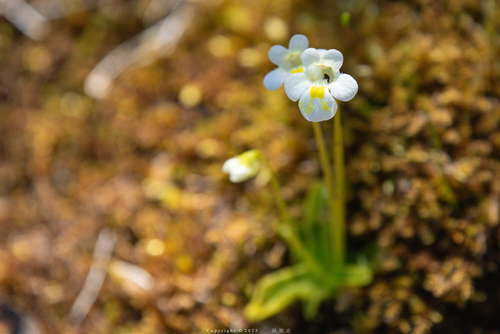
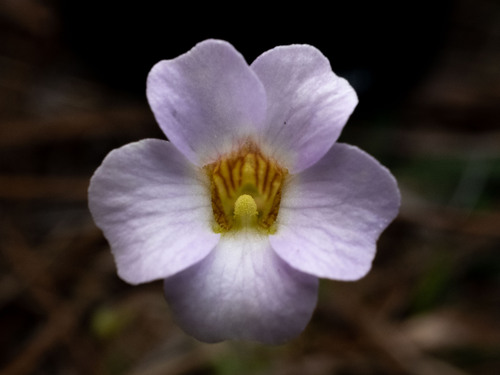
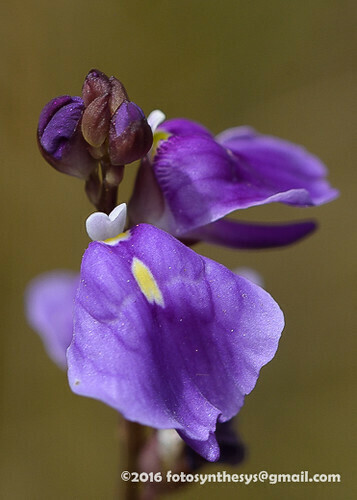
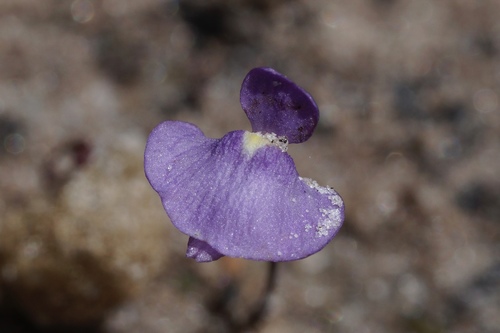
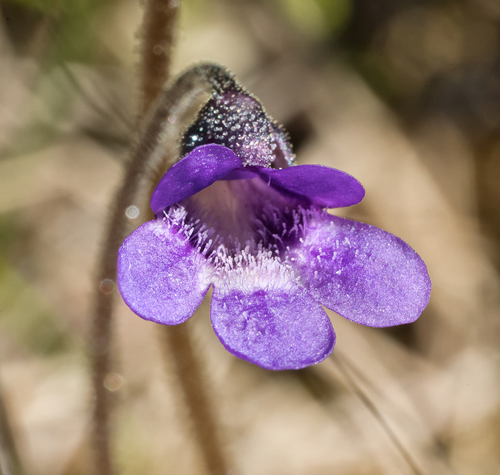
Pinguicula vulgaris L., commonly called common butterwort, is an insectivorous plant. It reaches a height of 3–16 centimetres (1.2–6.3 in), and bears a single funnel-shaped flower at its top. The flower is most often purple, occasionally white, and measures 15 millimetres (0.59 in) or longer. This species grows in damp environments at low to subalpine elevations. It is native to regions with cold winters, so it forms a winter-resting bud called a hibernaculum to survive dormant periods. Three European forms of this species have been described: P. vulgaris f. bicolor has white and purple petals; P. vulgaris f. albida has entirely all-white petals; and P. vulgaris f. alpicola produces larger flowers. The taxonomic status of these three forms is not universally accepted, as noted by sources such as The Plant List. As an insectivorous plant, common butterwort has glands on its leaves that excrete a sticky fluid to trap insects. These glands also produce enzymes that digest trapped insects, allowing the plant to access nitrogen. This species typically grows in acidic, nutrient-poor soil like that found in bogs, so insect capture is an adaptation to low-nutrient conditions, and the plant is highly dependent on captured insects to meet its nitrogen needs. Pinguicula vulgaris L. has a generally circumboreal distribution. It is native to almost every country in Europe, as well as Russia, Canada, and the United States. It can be found growing in bogs, fens, alvars, and other areas with limestone bedrock and alkaline waters.