About Pinguicula alpina L.
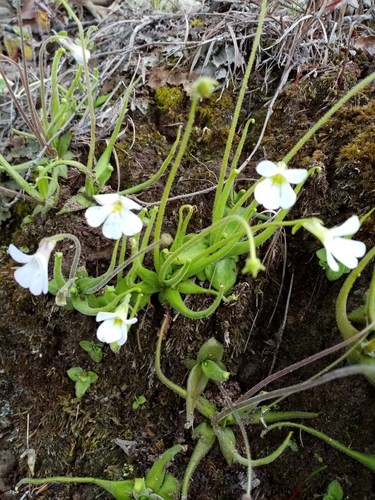
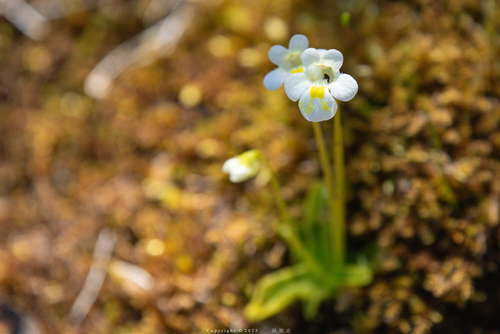
Pinguicula alpina L. is a small perennial herb that reaches 5–15 cm (2–6 in) in height when flowering. It has branching, fleshy, yellow-white roots that grow 1–2 cm (0.4–0.8 in) long. P. alpina is the only temperate Pinguicula that keeps its roots year-round; other temperate species lose their roots during winter dormancy. Unlike other subarctic Pinguicula that are income breeders, investing prey-derived nutrients directly into increasing plant size and flowering, P. alpina can allocate more of these nutrients to long-term storage. Pinguicula alpina occurs across high altitudes and latitudes of Europe and Asia, with the densest populations concentrated in the Alps and northern Scandinavia. During the last ice age, the species ranged across most of Asia, and it still exists today in Siberia, Mongolia, and the Himalayas. It is one of the most widely distributed species in the genus Pinguicula. In 2012, a population of over 1000 P. alpina individuals was discovered in Ringhorndalen, Svalbard. This population was previously unknown to exist on the archipelago, and it is now the northernmost recorded population of the species. This species grows across a wide elevation range, from sea level in northwest Siberia up to 4,100 m (13,500 ft), and occupies open, sunny locations. It prefers wet soils such as seeps with pH ranging from alkali to neutral. Unusually for a temperate butterwort, it has high tolerance for dry soil. It most commonly occurs in subalpine seeps, bogs, or alpine rock meadows. In alpine sites, P. alpina often grows alongside Carex firma, Bistorta officinalis, Dryas octopetala, and Pedicularis rostratocapitata, and is most frequently part of the Caricetum firmae plant association within the Seslerion albicantis alpine bluegrass community. In montane sites, it is associated with the Caricion davallianae and Cratoneurion commutati plant communities, growing alongside Schoenus nigricans, Schoenus ferrugineus, Epipactis palustris, Cochlearia officinalis, and Pinguicula vulgaris. After flowering, healthy P. alpina plants produce 3 mm (0.12 in) bulblets at leaf axils. These bulblets grow into new individual plants the following year, acting as a form of vegetative reproduction. Plants growing in arctic habitats do not produce these bulblets. In European folk medicine, different butterwort species were not distinguished from one another, and all were prescribed to treat sores, swelling, sciatica, liver disease, stomach aches, chest pain, and respiratory problems. Their supposed effectiveness for these conditions is attributed to cinnamic acid contained in the plants.