About Pimelea rosea R.Br.
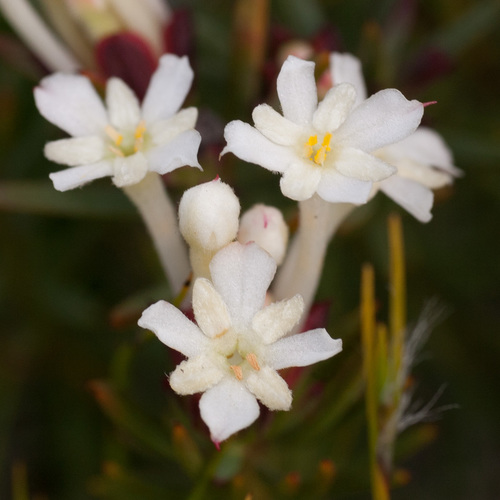
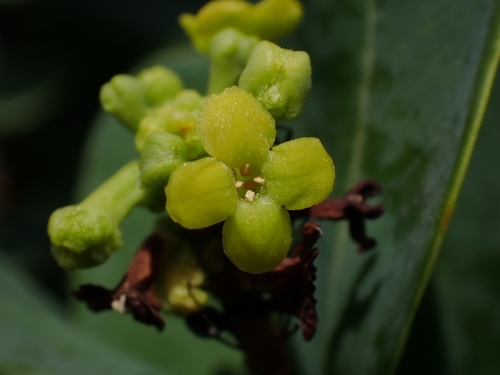
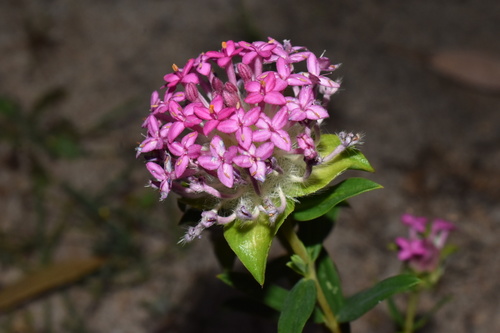
Pimelea rosea R.Br. is an erect shrub that usually grows 0.3 to 1 metre (1 foot 0 inch to 3 feet 3 inches) tall, and has stems that are more or less free of hairs. Its leaves are narrowly elliptic to egg-shaped, between 6 and 30 millimetres (0.24 to 1.18 inches) long and 1.5 to 5 millimetres (0.059 to 0.197 inches) wide, borne on a short petiole. Leaf edges are turned down or rolled under, and the lower leaf surface is paler green than the upper surface. The flowers range in colour from pale pink to reddish-purple, and are arranged in erect clusters. These clusters are surrounded by 4 green, egg-shaped involucral bracts that measure 8 to 19 millimetres (0.31 to 0.75 inches) long and 6 to 10.5 millimetres (0.24 to 0.41 inches) wide. The bracts are green with a yellowish to reddish base. The floral tube is 9.5 to 15 millimetres (0.37 to 0.59 inches) long, and the sepals are 2.5 to 4.0 millimetres (0.098 to 0.157 inches) long, with stamens that are shorter than the sepals. Flowering occurs mainly from September to December. There are two recognised subspecies that differ in distribution and habitat. Subspecies rosea grows on sand dunes, coastal limestone and granite outcrops in tuart woodland, and in winter-wet locations. It occurs in near-coastal areas between Lake Pinjar and Cheyne Beach, in the Esperance Plains, Jarrah Forest, Swan Coastal Plain and Warren bioregions of south-western Western Australia. Subspecies annelsii is distributed further inland, growing in woodland usually containing marri and jarrah trees. It is found between Mount Barker, the junction of the Hay and Mitchell Rivers, and Narrikup, in the Jarrah Forest bioregion of south-western Western Australia.