About Pilea pumila (L.) A.Gray
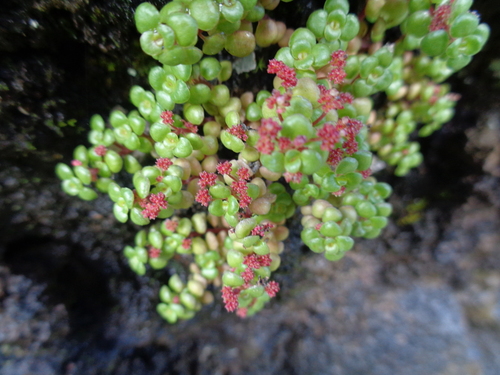
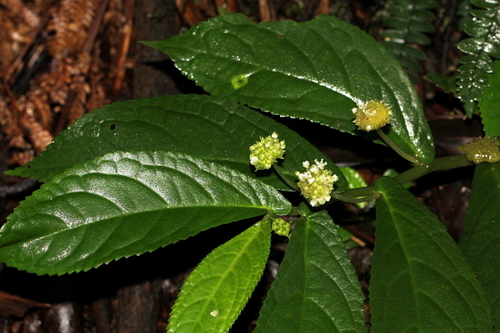
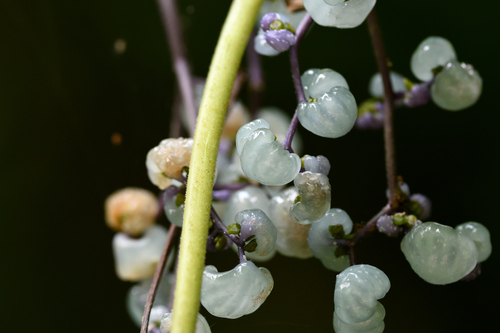
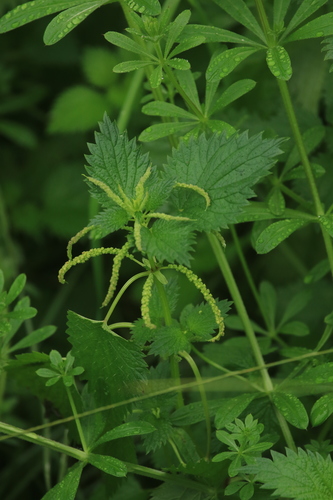
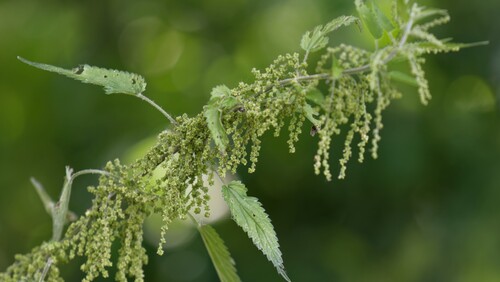
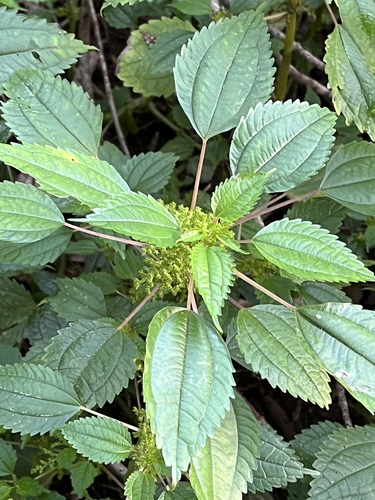
Pilea pumila is an erect annual plant that reaches heights between 0.7 cm and 70 cm. Its foliage grows in opposite, simple arrangements; leaves have toothed dentate margins, a wrinkled texture from depressed veins, an ovate shape, and long petioles. Both leaves and stems are translucent and bright green, turning bright yellow in autumn. Its small flowers are produced in axillary cymes. The flowers are unisexual, with both male and female flowers occurring on the same individual plant, and are greenish yellow in color. This species is wind-pollinated, and blooms from midsummer through early autumn. Its fruits, which are achenes, are green with purple markings. The roots are fibrous, shallow, and can grow adventitiously from the stem when the plant grows in moist areas or when the stem contacts soil. Pilea pumila is often confused for stinging nettle (Urtica dioica), but can be told apart by its lack of stinging hair trichomes, and its less branched inflorescences. Ecologically, Pilea pumila acts as a host plant for a range of insects, including the leaf-mining caterpillar larvae of Cosmopterix pulchrimella, the aphid Pseudasiphonaphis corni, and the leafhopper Empoasca recurvata. Common names for this species include Canadian clearweed. It is edible, but considered unpalatable. Because of its translucent stem, it is often used in classroom demonstrations of plant transpiration when food coloring is added to water. Certain Native American groups reportedly used it medicinally to treat sinus problems, soothe itching, and reduce hunger. In parts of Asia, it is sometimes used as a diuretic.