About Picea omorika (Pancic) Purk.
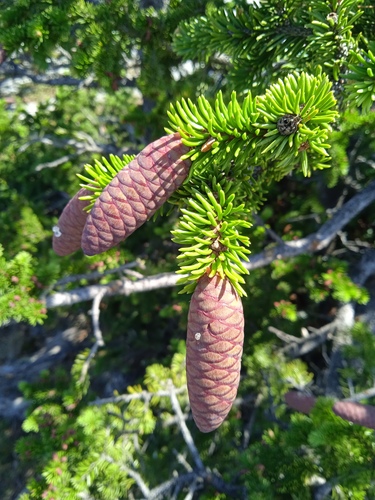
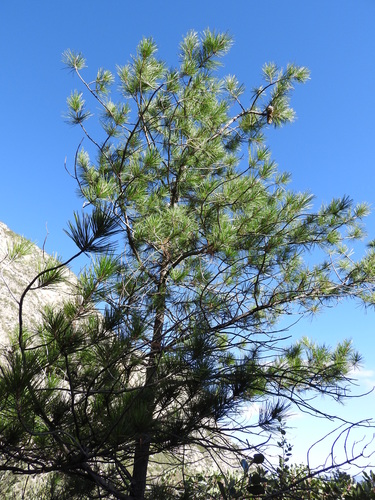
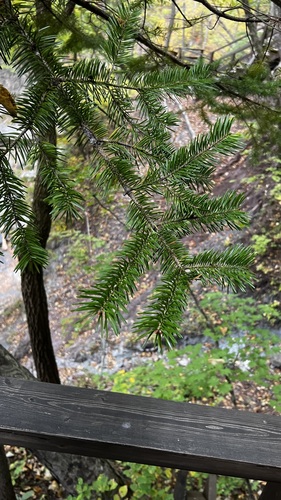
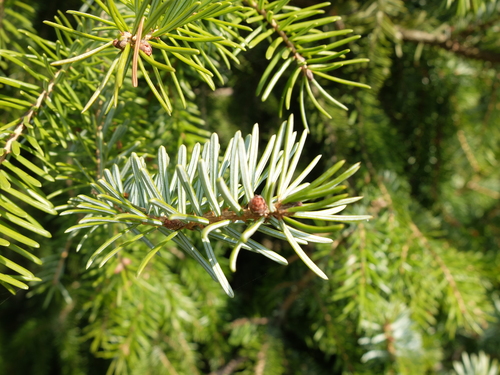
Picea omorika (Pancic) Purk., commonly called Serbian spruce, is a medium-sized evergreen tree. It typically grows to 20 m (66 ft) tall, and may reach an exceptional height of 33 m (110 ft), with a trunk diameter of up to 0.7 m (2 ft). It has a conic crown, which is very narrow on trees growing at high altitude, and broader on trees at lower altitudes. Its shoots are buff-brown and densely covered in fine hairs. Its leaves are needle-like, 10–20 mm long, and flattened in cross-section; they are dark green on the upper surface, and have two glaucous blue-white stripes of stomata on the lower surface. Its cones are 4–7 cm (2–3 in) long, fusiform (spindle-shaped, broadest at the middle), dark purple (nearly black) when young, and mature to dark brown 5–7 months after pollination, with stiff cone scales. The tallest currently confirmed wild specimen is 30.2 m tall; older reports of trees reaching 50 m in height are now unverifiable. Outside of the wild, the tallest known cultivated specimen stands at 33 m tall, growing at Arboretum Mustila in Finland, and a second cultivated specimen at Murthly Castle in Scotland is close behind at 31.5 m tall. Due to its limited natural range, it is not a major source of nutrition for wildlife, but it does provide shelter and cover for birds and small mammals. Before the Pleistocene ice ages, it had a much larger natural range across most of Europe. Outside of its native range, Serbian spruce is highly valued as an ornamental tree for large gardens. It is popular in northern Europe and North America for its very attractive crown form and its ability to grow on a wide range of soils, including alkaline, clay, acidic, and sandy soils, though it prefers moist, well-drained loam. Crown shape in this species is heritable: seeds sourced from high altitude populations retain the narrow crown when grown in cultivation, while seeds from lower altitude populations retain the broader crown. It is also grown on a small scale in forestry for use as Christmas trees, for timber, and for paper production, particularly in northern Europe. However, its slow growth means it is less commercially important than Sitka spruce or Norway spruce. When grown in cultivation, it has produced hybrids with the closely related black spruce (the hybrid is named Picea × mariorika), and it has also hybridized with Sitka spruce.