About Phytelephas aequatorialis Spruce
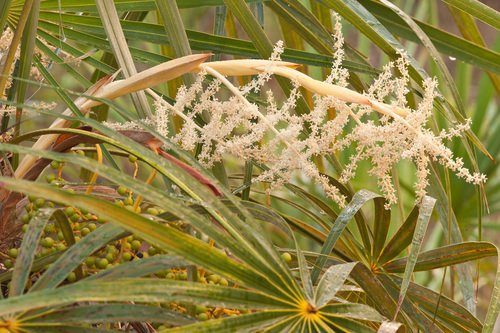
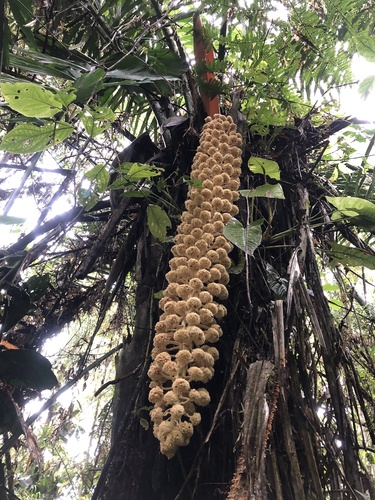
This species, Phytelephas aequatorialis Spruce, is a dioecious palm. Female individuals produce large brown conical fruit that are roughly the size of a grapefruit, though they can occasionally reach up to 35 cm (14 in) in diameter and weigh up to 19 kg (42 lb). Each fruit is covered in a horned husk and usually contains four seeds. Immature seeds hold sweet edible pulp, while mature seeds are harder than wood, encased in a bonelike shell. The endosperm of mature seeds is a white hemicellulose material that is hard enough to be polished and carved like ivory. Male flowers grow in a catkin, and each flower can have as many as 1,000 stamens, which is the highest number recorded for any monocot. Researchers Uhl and Dransfield counted exactly 954 stamens for one individual flower. The genus name Phytelephas translates to "plant elephant". Three other species in this genus are also sources of vegetable ivory. These palms are occasionally cultivated as a cash crop. International conservation organizations pay farmers for harvested vegetable ivory, with the goal that growing demand for the product will lead to more resources being allocated to protect rainforests and preserve their native plant life. Because of the commercial value of these trees, they are typically left standing when rainforest is cleared for agricultural development.