About Physomeloe corallifer (Germar, 1818)
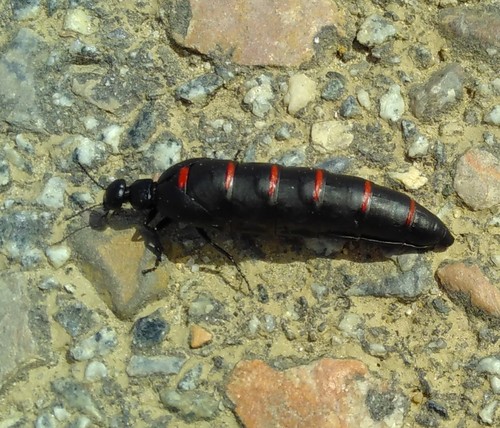
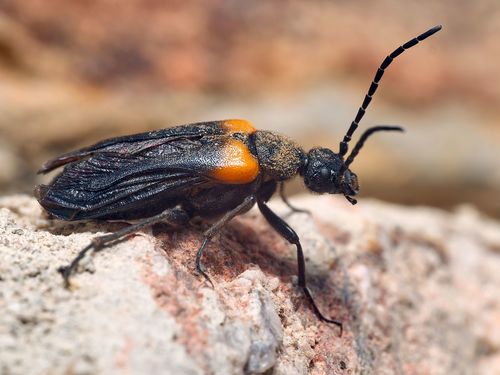
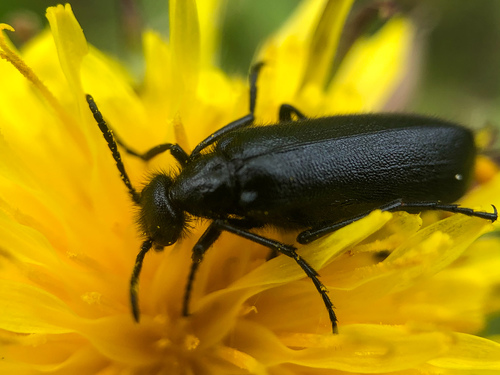
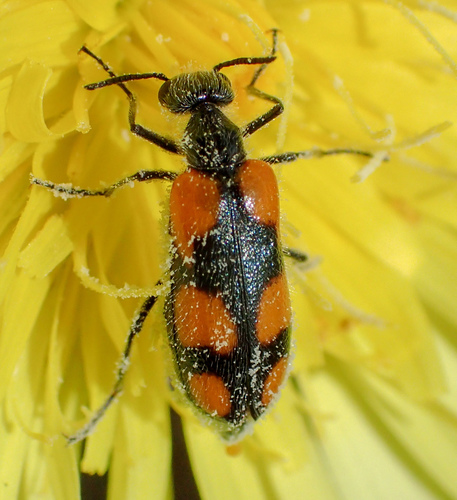
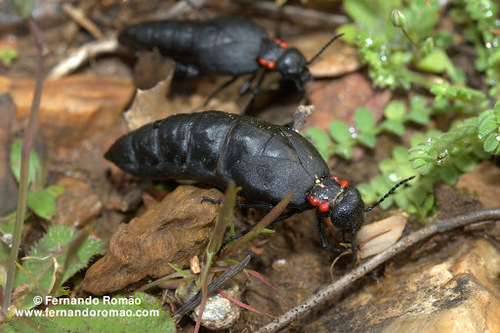
Physomeloe corallifer (Germar, 1818) is a species of blister beetle. Larvae of this species have long hairy bodies, thin legs, large powerful mandibles, and short antennae. Larvae are very rarely observed in the wild because they live underground. Adult beetles have short elytra that barely cover a third of their large abdomens. Their pronotum is decorated with four coral-red spots; this trait gives the species its name corallifer, which means "carrying or possessing coral". These spots have an aposematic function, warning predators that the beetle is dangerous to eat. Like other blister beetles, P. corallifer can secrete hemolymph that contains cantharidin, a highly irritating substance that causes skin lesions and eye conjunctivitis. This toxin does not appear to deter great bustards, which eat small amounts of these beetles to self-medicate and remove parasites. As seen in many insect groups, female P. corallifer are larger than males, and can grow up to four centimeters long. This species is endemic to the Iberian Peninsula. It is typically found near waterways in the Sistema Central, and along the valleys of the Douro and Tagus rivers, though it is less abundant in the Tagus valley. It has also been spotted sporadically in southern parts of the peninsula, as far south as northern Andalucía. Adult P. corallifer are most active during the month of April, similar to its distant relative Berberomeloe majalis, the Red-striped Oil Beetle. Like other blister beetles, P. corallifer parasitizes other insects, most commonly bees. After mating, the female lays her eggs beneath growing plants. Once the eggs hatch, young larvae climb up to flowers and wait for a pollinator to arrive. They cling tightly to the pollinator host's legs, and the host unknowingly carries them back to its nest. Once inside the nest, the beetle larvae eat the host's eggs, larvae, and stored food. Because of this parasitic lifestyle, most P. corallifer do not survive to reach adulthood. It is still unknown which specific plants the species prefers, though researchers Bologna and Aloisi have recorded individuals found near thistles.