About Physocarpus monogynus (Torr.) J.M.Coult.
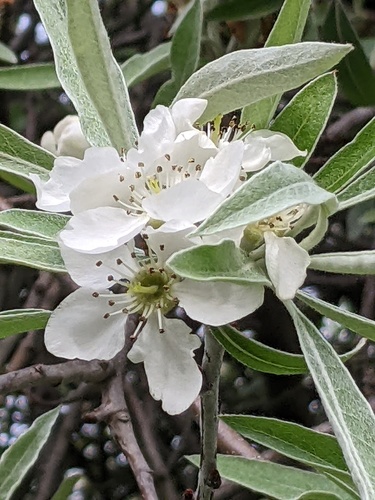
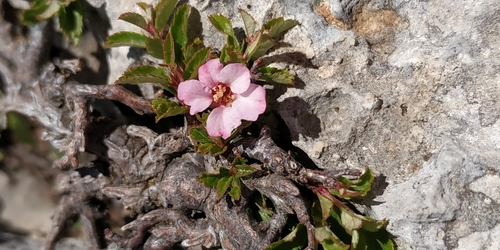
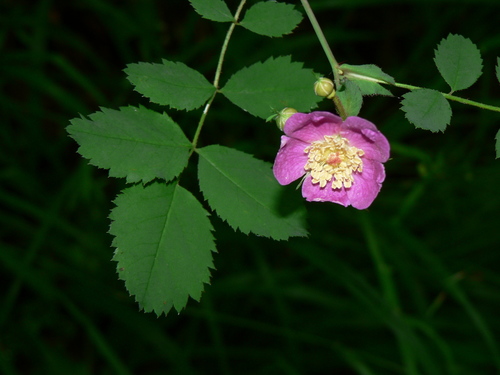
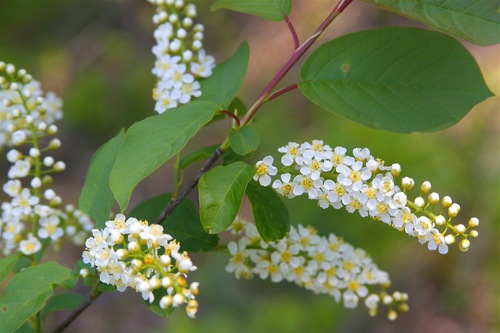
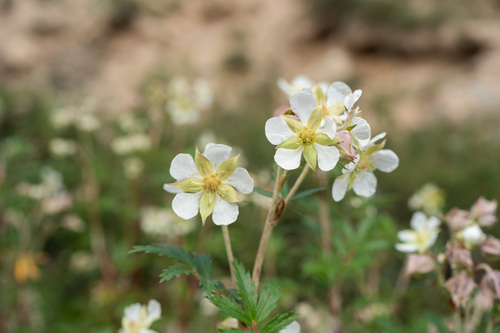
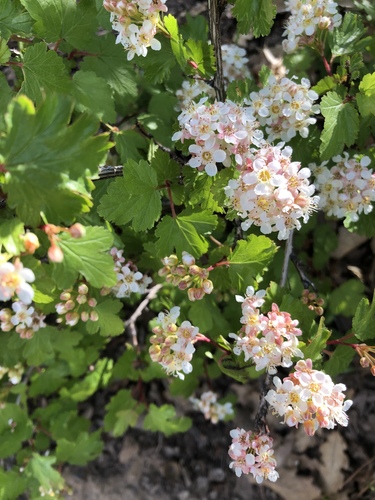
Physocarpus monogynus grows to 1.2 meters (3.9 feet) tall, and spreads to a somewhat greater width than it is tall. Its leaves are dull green on the upper surface, paler on the lower surface, and have 3 to 5 doubly toothed lobes; this shape resembles the leaves of large Ribes (currant) plants. The plant's brownish bark shreds to reveal multiple inner layers, which is where the common name "ninebark" comes from. This species, commonly called mountain ninebark, produces rather lovely white or rose-colored flowers in May or June. Each flower has five petals set in a cup-shaped base, and just one style—this single style is the origin of the specific epithet "monogynus", which literally means "one female part". After flowering, the structures turn red-brown and remain attached to the plant through the winter. The seed pods are inflated and covered in white hairs. The seeds are bean-shaped, around 2 mm long, and have a bright shiny yellowish color. Physocarpus monogynus is distributed from northern Mexico and west Texas north to Montana and South Dakota, and west to Nevada. It grows on shaded slopes, either in canyons or with a north-facing aspect, at altitudes between 1,700 and 3,000 meters (5,600 to 9,800 ft). Across at least the southern part of its range, its typical habitat is dominated by ponderosa pine and scrub oak. Indigenous peoples prepared a pain-relieving poultice by boiling the roots of this plant and applying them to the affected area while still warm. Rocky Mountain goats eat the twigs of Physocarpus monogynus when smaller plants are covered by snow.