About Physetica caerulea Guenée, 1868
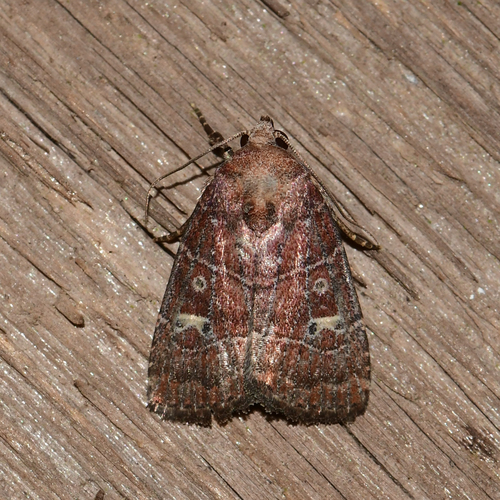
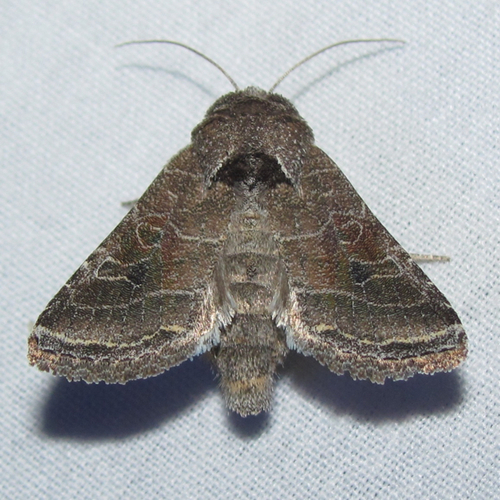
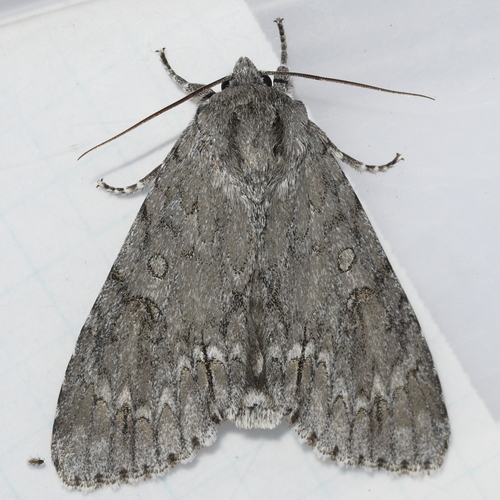
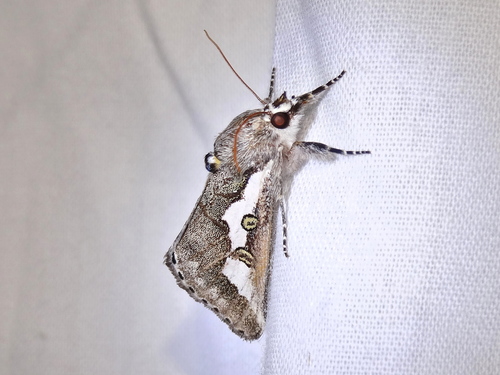
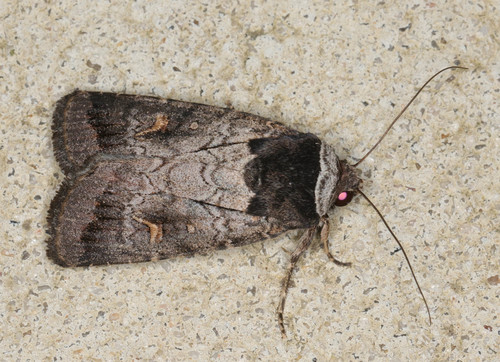
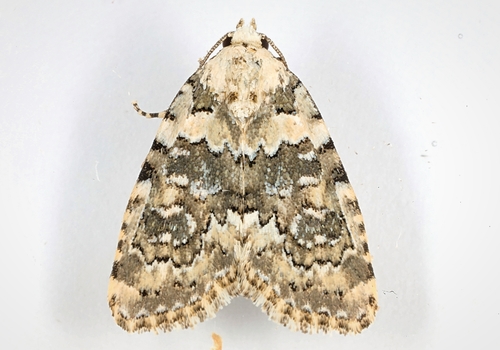
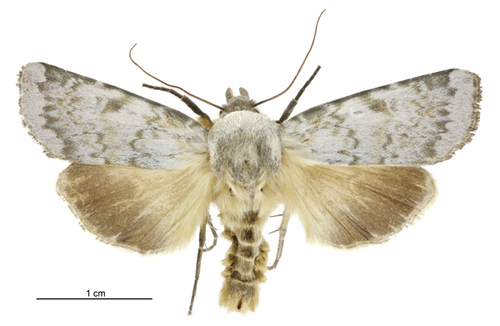
Hudson described this species as follows: The wing expansion is 1+1⁄2 inches. The fore-wings are rich, glossy reddish-brown with several scattered whitish scales; there is a distinct yellow mark on the costa at about one-fourth, forming the start of a broken transverse line; the orbicular spot is small, round, and yellowish; the reniform spot is small, crescentic and yellowish, and the area between the orbicular and reniform spots is very dark blackish-brown; beyond the reniform spot, there is a conspicuous white mark on the costa forming the start of a second broken transverse line; a third shaded line is located near the termen. The hind-wings are pale brown with a dark spot in the middle, which is very conspicuous on the under surface. Adult males have a wingspan between 32.5 and 41 mm, while adult females have a wingspan between 33.5 and 45 mm. Adults of this species vary in appearance, but can be recognized by the bluish tinge to their forewings and the buff color of the wing underside. The species has multiple recorded forms: a very dark bluish black form, a brownish form, and a green-brown form. This species is endemic to New Zealand. It can be found from central North Island southwards, including on the South Island and Stewart Island. It inhabits open habitats, and is often found in tussock grasslands and dunes. It most often occurs at altitudes from sea level up to 900 m, though there is one collection record of the species at 1385 m.