About Phyllostachys nigra (Lodd. ex Lindl.) Munro
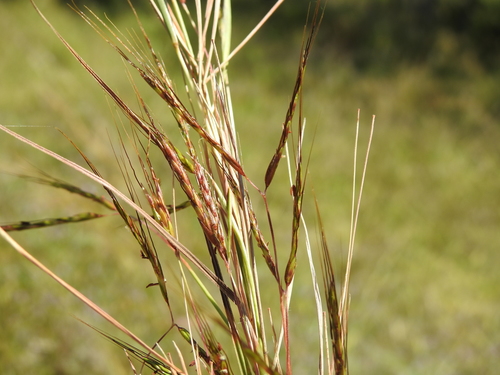
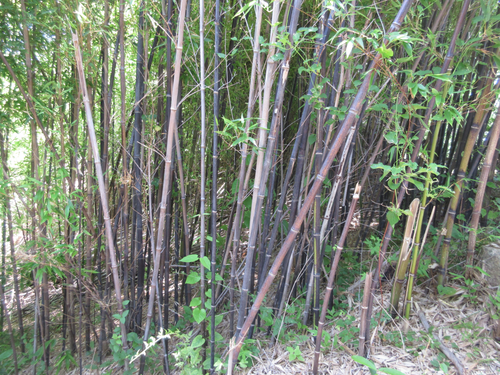
Phyllostachys nigra, commonly called black bamboo or purple bamboo, is a bamboo species native to Hunan Province, China, and is widely cultivated in other regions. It can grow up to 35 feet tall, with canes reaching 2 inches wide, and forms clumps of slender arching canes that turn black after two or three growing seasons. It produces abundant lance-shaped leaves that measure 4–13 cm (2–5 in) in length. Many different forms and cultivars of this species are available for garden cultivation. Both the species itself and the form P. nigra f. henonis have earned the Royal Horticultural Society's Award of Garden Merit. This form, henonis, is also known as Henon bamboo and the cultivar 'Henon'. Like many bamboo species, black bamboo undergoes synchronized flowering, with flowering events occurring every 40 to 120 years. One source notes that it has bloomed every 120 years since records have been kept. It is monocarpic, meaning all plants die after they finish flowering. Henon bamboo flowers every 120 years and was predicted to flower in the 2020s. As it is widely distributed across Japan, widespread dieback of its stands could cause serious social and environmental problems. Additionally, Henon bamboo rarely produces fertile seeds, so it remains unclear how this form has survived over long periods of time in Japan. In its native region of China and across the world, this bamboo is used for timber, food, musical instruments, and other purposes.