About Phyllostachys edulis (Carrière) J.Houz.
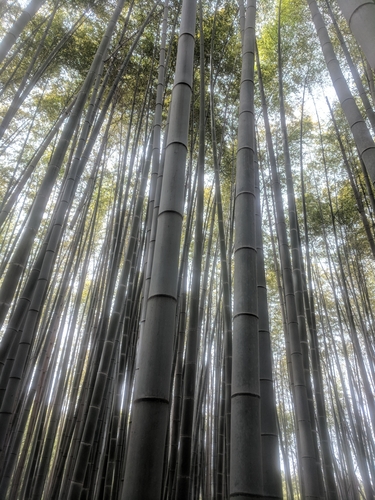
Phyllostachys edulis, known as mōsō bamboo or tortoise-shell bamboo, is a temperate giant timber bamboo species native to China and Taiwan, and it has been naturalized in places such as Japan, where it is found widely from south of Hokkaido to Kagoshima. The name "edulis" indicates its edible shoots. This bamboo can grow up to 28 meters (92 feet) tall and is the most commonly used species in the bamboo textile industry in China and beyond, particularly for rayon production. Mōsō bamboo is less tolerant of cold than many other Phyllostachys species, surviving at reduced heights down to -15 °C (5 °F).
Ecologically, Phyllostachys edulis reproduces both asexually and sexually, with asexual reproduction being the most common. This involves the plant sending up new culms from underground rhizomes, which grow rapidly and can reach heights of 28 meters (92 feet) depending on the plant's age and health. In mature plants, young culms will grow taller and wider as the plant matures, but individual culms do not continue to grow once they stop. The species also flowers and produces seeds approximately every fifty years, but unlike some other bamboo species, its flowering is sporadic. The mature culms can shed seeds in the hundreds of thousands, which germinate quickly. However, many seeds are lost to rodents like mice and field rats, although the seeds that survive typically germinate within weeks. The initial culm from a seedling may only reach around 10 cm (3.9 inches) and could be as thin as 2 mm (0.079 inches). As new seasons progress, the plant's height and cane diameter increase with new culms from developing rhizomes, with growth rates reaching up to 119 cm (47 inches) in just twenty-four hours. Due to the culms reaching up to 22 cm (8.7 inches) in diameter, the volume of growth in Moso bamboo surpasses that of Phyllostachys bambusoides. Additionally, a fungus species called Polyporus phyllostachydis has been documented in Japan, which grows on the living or dead roots of this bamboo species.