About Phyciodes tharos Drury, 1773
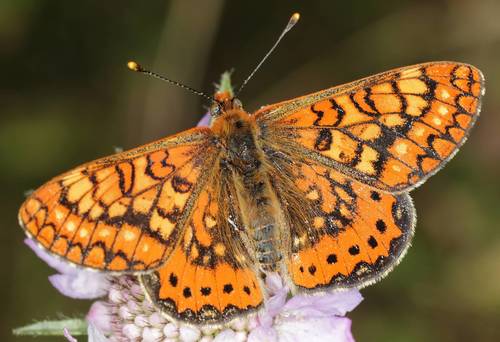
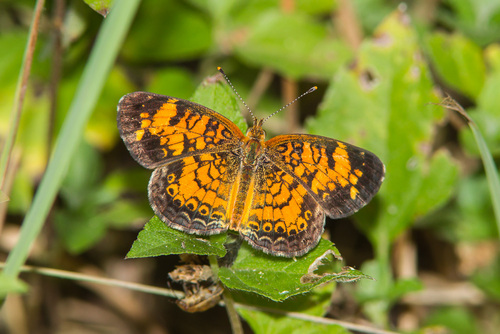
Phyciodes tharos, commonly known as the pearl crescent, is a species of butterfly native to North America. It occurs across most of the United States excluding the west coast, throughout Mexico, and in parts of southern Canada, most notably Ontario. This butterfly occupies open habitat types including pastures, road edges, vacant lots, fields, and open pine woods. The species shows considerable pattern variation across individuals. Males typically have black knobs at the end of their antennae. The upper side of the pearl crescent's wings is orange with black borders; the postmedian and submarginal regions of the wings are crossed by fine black markings. The underside of the hindwing features a dark marginal patch that holds a light-colored crescent marking. Adult pearl crescents have a wingspan ranging from 21 to 34 millimeters. This species produces multiple generations (broods) each year. In the northern part of its range, broods occur from April through November, while broods appear year-round in the deep southern United States and Mexico. Adult pearl crescents feed on nectar from a wide range of flowering plants, including dogbane, swamp milkweed, shepherd's needle, asters, and winter cress. Males patrol open areas to search for potential female mates. Females lay eggs in small batches on the underside of leaves of aster host plants from the family Asteraceae. Caterpillars feed on these host plant leaves, and are gregarious (social) when young. The species overwinters in its third caterpillar larval stage.